


 Filters


The operation names the machine on this leaf, and each operation carries its own capacity figure. Ripping and crosscutting want a table saw measured by blade diameter. Resawing and curves want a bandsaw measured by throat. Flattening and dimensioning want a planer thicknesser measured by width. None of those numbers translate into each other, which is why the machine type is chosen before any size is compared.
Table saws here run 250mm to 315mm with cast iron tops through the SIP professional range at 10in and 12in, a compact 10in body, a 2-in-1 with integrated dust extraction and a version supplied with a stand. Bandsaw throat runs 200mm on the Sealey SM1303 up to 335mm on the SM1306, with SIP heavy-duty bodies at 10in through 16in and Draper machines across the same span. Draper hold a 250mm sliding table saw at 1800W alongside them, where the stock is carried past the blade rather than pushed.
Planer thicknessers are sized on the width they will take in one pass, running 8in x 5in and 10in x 5in on the SIP machines and 330mm at 2000W on the Draper. Spindle moulders and morticers cover the joint-making end, in bench mounted and sliding carriage forms, with scroll saws and mitre saws alongside for the finer and the angled cuts.
Log splitters close the leaf out at the yard end, running 4 to 8 tonne in horizontal and vertical forms, electric and petrol. Cast iron tables and stands matter on any of these machines because vibration is what spoils accuracy. Blade and bandsaw blade sizes are stated per machine, and anything unresolved goes over WhatsApp on 07754288583 with the machine model. Scroll saws at 405mm and mitre saws with laser guides sit alongside for the cuts a table saw cannot make cleanly.
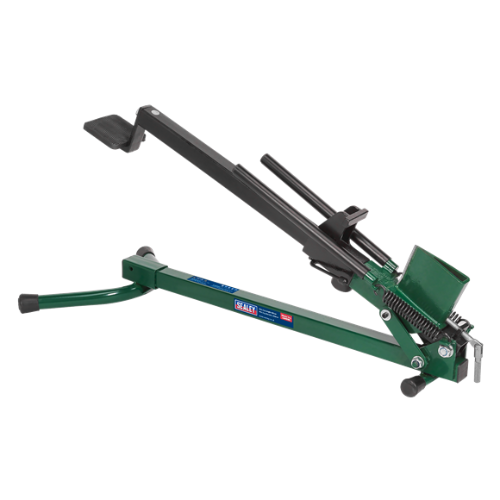
| Model No | LS450H |
|---|---|
| Brand | Sealey |
| Maximum Load Pressure | 1.2tonne |
| Maximum Log Diameter | Ø250mm |
| Maximum Log Length | 450mm |

| Voltage | 230V |
|---|---|
| Frequency | 50Hz |
| Input | 250W |
| No load speed | 1400rpm |
| Maximum throat capacity | 200mm |

| Blade Length | 1400mm |
|---|---|
| Blade Speed | 900M/min |
| Dust Extraction Port | 35mm |
| Max Cutting Height | 80mm |
| Max Width of Cut | 200mm |

| Blade Length | 127mm |
|---|---|
| Dimensions | 330 x 625mm |
| Max Thickness of Cut | 50mm |
| Motor | 90W |
| Stroke Length | 20mm |
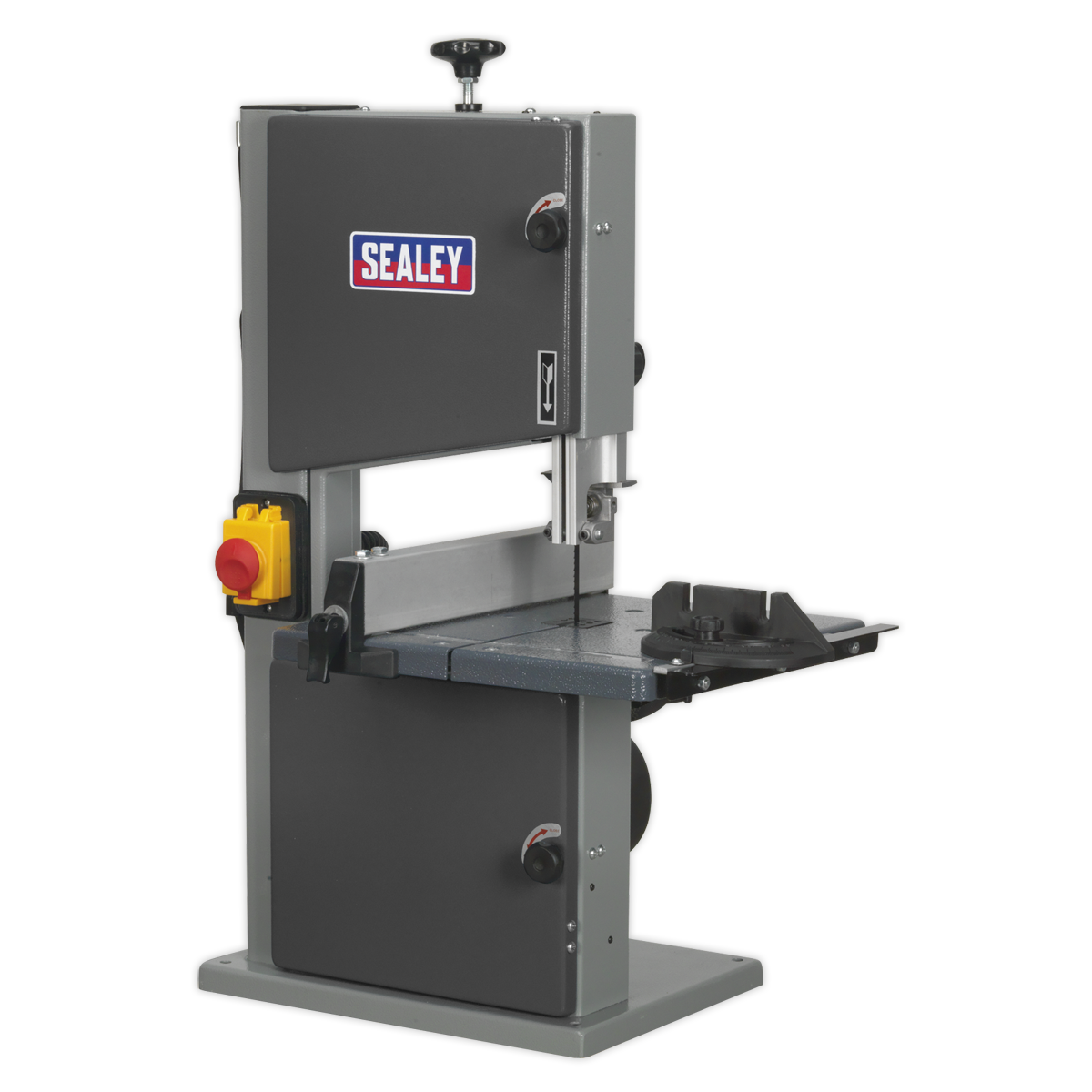
| Model No | SM1303 |
|---|---|
| Blade Length | 1400mm |
| Brand | Sealey |
| Cutting Speed | 900m/min |
| Dust Extraction Diameter | Ø40mm |

| Model No | TS10P |
|---|---|
| Brand | Sealey |
| Nett Weight | 26.70kg |
| Motor Power | 1500W - 230V |
| Saw Blade Diameter | Ø254mm |

| Voltage | 230V |
|---|---|
| Frequency | 50Hz |
| Input | 420W |
| No load speed | 1400rpm |
| Maximum throat capacity | 245mm |

| Model No | SM1302 |
|---|---|
| Brand | Sealey |
| Maximum Cut | 50mm |
| Motor Power | 120W |
| Nett Weight | 10.08kg |

| ITEM NO | 01947 |
|---|---|
| Input Supply | 230v (13A) |
| Motor Power | 90w (0.1hp) |
| Min. Working Speed | 550s/min |
| Max. Working Speed | 1600s/min |

| Blade Diameter | 250mm (10") x 30mm bore |
|---|---|
| Bore | 30mm |
| Max Depth of Cut at 45° | 63mm |
| Max Depth of Cut at 90° | 74mm |
| Speed | 4700r/min |

| Voltage | 230V |
|---|---|
| Frequency | 50Hz |
| Input | 300W |
| No load speed | 1400rpm |
| Maximum throat capacity | 228mm |

| Model No | SM1304 |
|---|---|
| Blade Length | 1712mm |
| Brand | Sealey |
| Cutting Speed | 400/730m/min |
| Dust Extraction Diameter | Ø40mm |

| Base Size | 190 x 255mm |
|---|---|
| Chuck Capacity | 13mm |
| Speed | 1400r/min |
| Table Size | 150 x 340mm |
| Chisel Capacity | 12.7mm (1/2") |

| Spindle Speed | 11,500-24,000r/min |
|---|---|
| Spindle Travel | 0-40mm |
| Table Size | 610 x 360mm |
| Table Size With Ext Wings | 1030 x 360mm |
| Table Size With Wings | 1030 x 360mm |

| ITEM NO | 08209 |
|---|---|
| Input Supply | 230v (13A) |
| Motor Power | 2200w @ S2 15mins |
| Cutting Capacity | Ø 140mm / 300mm - 1000mm length |
| Blade Size | Ø 405mm x Ø 30mm |

| ITEM NO | 08210 |
|---|---|
| Input Supply | 230v (13A) |
| Motor Power | 2200w @ S6 40% 5mins |
| Cutting Capacity | 83mm @ 0° / 58mm @ 45° |
| Blade Size | Ø 315mm x Ø 30mm x 3.6mm |

| ITEM NO | 01505 |
|---|---|
| Input Supply | 230v (13A) |
| Motor Power | 1.8kW (2.4hp) |
| Blade Speed | 3800rpm |
| Blade Diameter | Ø 305mm |

| ITEM NO | 01976 |
|---|---|
| Input Supply | 230v (13A) |
| Motor Power | 2.2kW (3hp) |
| Splitting Force | 5 TON |
| Log Diameter | Ø 50mm - 250mm |

| ITEM NO | 01557 |
|---|---|
| Input Supply | 230v (13A) |
| Motor Power | 1.5kW (2hp) |
| Cutter Block Speed | 9000rpm |
| Dust Extraction Outlet (ID/OD) | 55mm / 62mm |

| ITEM NO | 01475 |
|---|---|
| Input Supply | 230v (13A) |
| Motor Power | 370w (0.5hp) |
| Table Tilting | 0° - 45° |
| Table Size | 350mm x 330mm |

| Blade Diameter | 315mm |
|---|---|
| Bore | 30mm |
| Max Depth of Cut at 45° | 46mm |
| Max Depth of Cut at 90° | 85mm |
| Overall Table Length (With Ext) | 1600mm |

| Model No | LS370H |
|---|---|
| Brand | Sealey |
| Maximum Load Pressure | 4 Tonne |
| Maximum Log Diameter | Ø250mm |
| Maximum Log Length | 370mm |

| ITEM NO | 01558 |
|---|---|
| Input Supply | 230v (13A) |
| Motor Power | 1.5kW (2hp) |
| Cutter Block Speed | 9000rpm |
| Dust Extraction Outlet (ID/OD) | 55mm / 62mm |

| ITEM NO | 01944 |
|---|---|
| Input Supply | 230v (13A) |
| Motor Power | 370w (0.5hp) |
| Morticing Capacity | 6mm - 18mm (1/2" - 5/8") |
| Max. Chisel Stroke | 130mm |

| Model No | LS520H |
|---|---|
| Brand | Sealey |
| Maximum Load Pressure | 5 Tonne |
| Maximum Log Diameter | Ø250mm |
| Maximum Log Length | 520mm |

| Model No | SM1305 |
|---|---|
| Blade Length | 2240mm |
| Brand | Sealey |
| Cutting Speed | 360, 660m/min |
| Dust Extraction Diameter | Ø100mm |

| Voltage | 230V |
|---|---|
| Frequency | 50Hz |
| Input | 750W |
| No load speed | 1400rpm |
| Maximum throat capacity | 305mm |

| ITEM NO | 01457 |
|---|---|
| Carriage Size | 500mm x 480mm |
| Suitable For | 01456 |

| ITEM NO | 01978 |
|---|---|
| Input Supply | 230v (13A) |
| Motor Power | 3kW (4hp) |
| Splitting Force | 7 TON |
| Log Diameter | Ø 80mm - 300mm |

| Model No | SM1306 |
|---|---|
| Blade Length | 2400mm |
| Brand | Sealey |
| Cutting Speed | 540, 660m/min |
| Dust Extraction Diameter | Ø100mm |
By sharing your email, you agree to our privacy policy & terms of service




 Cart
Cart


 POPULAR CATEGORY


