Cart
Cart


 POPULAR CATEGORY


| SERVICE | DELIVERY PRICE | DELIVERY TIME |
|---|---|---|
| Standard Delivery | £49.99 | 7 to 10 working days |
| SERVICE | DELIVERY PRICE | DELIVERY TIME |
|---|---|---|
| Standard Delivery | £75.00 | 7 to 10 working days |
| SERVICE | DELIVERY PRICE | DELIVERY TIME |
|---|---|---|
| Standard Delivery | FREE | 3 to 5 working days |
| SERVICE | DELIVERY PRICE | DELIVERY TIME |
|---|---|---|
| Standard Delivery | £24.95 | 5 to 7 working days |
| SERVICE | DELIVERY PRICE | DELIVERY TIME |
|---|---|---|
| Standard Delivery | £4.95 | 7 to 10 working days |
Product Number: PRD00002279
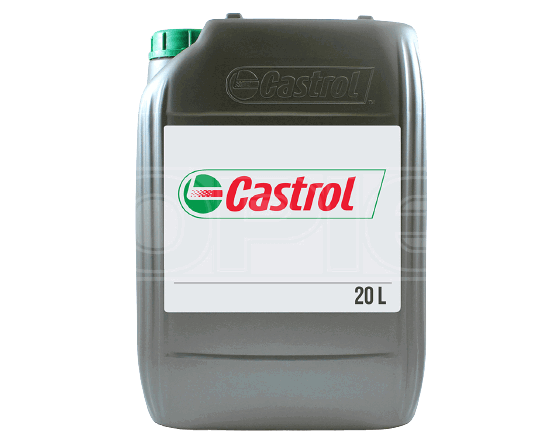
Castrol Transmax Limited Slip Z 85W-90 is a mineral oil-based gear oil suitable for use in limited-slip differentials in cars and commercial vehicles where API GL-5 oils with specific limited-slip friction additives are required. The product is formulated with the friction modifiers needed to prevent clutch chatter and noise in limited-slip differential operation while providing the EP performance required for hypoid axle service.
The SAE 85W-90 multigrade hypoid gear oil viscosity is the typical heavier viscosity used in performance and 4x4 limited-slip differentials. The 'Z' designation indicates the limited-slip friction additive package required for LSD service.
Approvals and performance levels include API GL-5; ZF TE-ML 05C; and DIN 51398 (limited-slip differential gear oil specification).
The 20-litre pack format is suited to single-machine top-up and small workshop service. Store sealed in the original packaging, in a clean, dry area away from extremes of temperature, to preserve product performance over its shelf life.
Castrol Transmax Limited Slip Z 85W-90 is a mineral oil-based gear oil which is suitable for use in limited slip differentials in cars and commercial vehicles where API GL-5 oils with specific limited slip friction performance is required. It can also be used in conventional differentials.
It is approved by ZF for use in their multi-disc wet brakes and self-locking differentials used in a range of commercial vehicle applications including axles in off-road and agricultural equipment.
PartsForMachines is a premier e-commerce platform, founded in 2019 in Warwickshire, UK, specializing in aftermarket parts and services for construction, agriculture, and industrial machinery. We offer an extensive catalog of over 500,000 products. Standard delivery: 1–3 working days within UK mainland. We are proud to be an authorised distributor, giving customers extra confidence when purchasing genuine products from us. In addition, we provide a 30-day return policy for eligible items.
| Density @ 15C, Relative | 0.903 g/ml |
|---|---|
| Viscosity, Kinematic 100C | 16.4 mm²/s |
| Viscosity, Kinematic 40C | 175 mm²/s |
| Viscosity Index | 95 |
| Viscosity, Brookfield @ -12C (85W) | 95000 mPa.s (cP) |
| Pour Point | -30 °C |
| Flash Point, COC | 210 °C |
| Engine Parts | Product Number | Product Name | Recommended Units | Product Price |
|---|
 castrol-transmax-limited-slip-z-85w-90-20-litre.pdf
|
Open Now |
 Standard Delivery: UK Mainland Free
 Delivery Estimate: 3 to 5 working days
 Save Extra With 1 Offer
 Compare With Similar Items
Compare with Similar products
|

Q8 Oils T 45 LS SAE 90, Gear-Transmission Oil - 20 Litre
£159.80
£156.67
2% OFF
Free delivery in UK Mainland
|

Q8 Oils T 45 LS SAE 90, Gear-Transmission Oil - 208 Litre
£1,609.84
£1,578.27
2% OFF
Free delivery in UK Mainland
|

Shell 550027947 Spirax S6 AXME 75W-140, Gear/Transmission Oils - 20 Litre
£335.08
£328.51
2% OFF
Free delivery in UK Mainland
|

Q8 Oils T 55 85W-140, Gear-Transmission Oil - 20 Litre
£138.50
£135.78
2% OFF
Free delivery in UK Mainland
|

Q8 Oils T 65 75W-90, Gear-Transmission Oil - 20 Litre
£188.94
£185.24
2% OFF
Free delivery in UK Mainland
|
| Technical Specification | |||||
|---|---|---|---|---|---|
| PRODUCT NUMBER | PRD00003005 | PRD00003007 | PRD00004056 | PRD00003009 | PRD00003014 |
| Density, 15°C | 0.009 | 0.009 | 0.869 | 0.909 | 0.868 |
| Flash Point (COC) | 182 | 182 | 210 | 178 | |
| Kinematic Viscosity @40°C | 172.5 | 172.5 | 172.4 | 431 | 92.8 |
| Pour Point | -27 | -27 | -42 | -15 | -45 |
| SAE | 75W-140 | 85W-140 | 75W-90 | ||
| Volume | 20 | 208 | 20 | 20 | 20 |
| Viscosity Index | 106 | 106 | 174 | 96 | 156 |
| Oil Type | Synthetic Technology base fluid | ||||
| Show More | |||||
A. Castrol Transmax Limited Slip Z 85W-90 is designed for limited-slip differentials in cars and commercial vehicles where API GL-5 oils with specific limited-slip friction additives are required — performance cars, 4x4s and commercial vehicles fitted with LSD axles.
A. API and ACEA are the universal lubricant performance standards every reputable oil meets. They are your baseline check — match the code your handbook specifies (e.g., API CI-4 or ACEA E7 for heavy-duty diesel) and the oil is technically suitable for your machine. Every oil on our site lists its API and ACEA classifications.
A. Castrol Transmax Limited Slip Z 85W-90 meets API GL-5; and DIN 51398 (limited-slip differential gear oil specification).
A. Yes, Castrol Transmax Limited Slip Z 85W-90 carries ZF TE-ML 05C approval — the ZF specification for limited-slip differential fluids.
A. A limited-slip differential is a type of differential that provides traction by limiting the speed difference between two driven wheels. LSDs use clutch packs or other friction elements that require specific friction-modifier additives in the gear oil to prevent chatter and noise — a standard GL-5 axle oil typically causes LSD chatter.
A. The clutch packs inside an LSD generate friction during operation. Without specific friction-modifier additives, the clutch can shudder or chatter — particularly in cold conditions or low-speed turns. Castrol Transmax Limited Slip Z 85W-90 contains the friction modifiers needed for smooth LSD operation.
A. The 'Z' designation in this product indicates the limited-slip friction additive package and ZF TE-ML 05C approval focus — distinct from the standard Castrol Transmax Axle EPX range which is for non-LSD differentials.
A. An OEM Specification is the lubricant requirement set by a vehicle or equipment manufacturer (e.g., MB 228.3, VW 504.00). When an oil lists the code, the oil manufacturer has developed and tested it to meet the criteria the equipment manufacturer requires. Match the code in your handbook and you have a lubricant engineered for your machine.
A. An OEM Approval means the oil has been formally tested and signed off by the equipment manufacturer and listed on their official approved-products register (e.g., MB-Approval 228.3). An Approval confirms the oil is recognised by the equipment manufacturer for service use in their machines.
By sharing your email, you agree to our privacy policy & terms of service
 Question about this product? Click here