




 Cart
Cart


 POPULAR CATEGORY


 ADD TO CART


| SERVICE | DELIVERY PRICE | DELIVERY TIME |
|---|---|---|
| Standard Delivery | £29.99 | 7 to 10 working days |
| SERVICE | DELIVERY PRICE | DELIVERY TIME |
|---|---|---|
| Standard Delivery | £29.99 | 7 to 10 working days |
| SERVICE | DELIVERY PRICE | DELIVERY TIME |
|---|---|---|
| Standard Delivery | £4.99 | 2 to 4 working days |
| Next Day | £15.54 |
| SERVICE | DELIVERY PRICE | DELIVERY TIME |
|---|---|---|
| Standard Delivery | £29.99 | 5 to 7 working days |
| SERVICE | DELIVERY PRICE | DELIVERY TIME |
|---|---|---|
| Standard Delivery | £29.99 | 7 to 10 working days |
Product Number: 09019
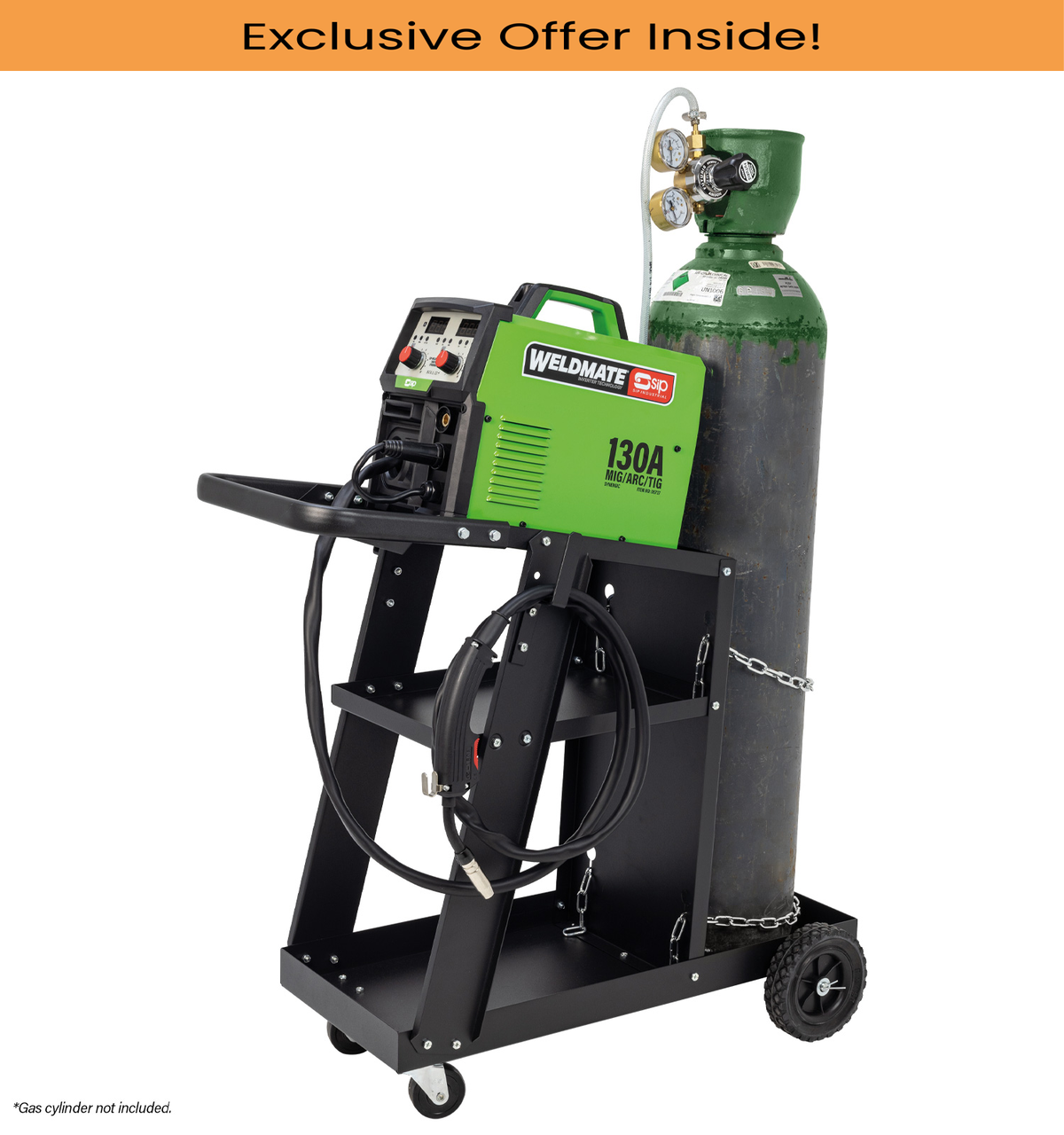
The SIP 09019 argon gas bottle — Designed For: Refillable Bottles (5/8" BSP) / Rented Bottles (5/8" BSP). The SIP Gas Bottle (also known as welding gas cylinder, disposable gas bottle or co2 gas bottle) Regulator with Content Gauges is manufactured from heavy-duty and high-quality brass, ideally suited for demanding use with refillable or rented gas bottles in a variety of welding applications and busy environments. Designed for use with refillable or rented gas bottles. Manufactured for high-quality and heavy-duty quality brass. Compatible across the sip welding, sip gas cylinders welding range — check product specifications for exact model fit. Also categorised as mig gas bottle, argon co2 mix depending on supplier terminology.
Additional Information:
The SIP Gas Bottle Regulator with Content Gauges is manufactured from heavy-duty and high-quality brass, ideally suited for demanding use with refillable or rented gas bottles in a variety of welding applications and busy environments.About PartsForMachines:
PartsForMachines is a premier e-commerce platform, founded in 2019 in Warwickshire, UK, specializing in aftermarket parts and services for construction, agriculture, and industrial machinery. We offer an extensive catalog of over 500,000 products. Standard delivery: 1–3 working days within UK mainland. We are proud to be an authorised distributor, giving customers extra confidence when purchasing genuine products from us. In addition, we provide a 30-day return policy for eligible items.
| ITEM NO | 09019 |
|---|---|
| Designed For | Refillable Bottles (5/8" BSP) / Rented Bottles (5/8" BSP) |
 Standard Delivery: £4.99
 Next Day Delivery Available
 Delivery Estimate: 2 to 4 working days
 Save Extra With 1 Offer
 Compare With Similar Items
Compare with Similar products
|
|||||
| Technical Specification | |||||
|---|---|---|---|---|---|
| PRODUCT NUMBER | 04030 | 02782 | 35010 | 35017 | 44352 |
A. Compatible with: CROSARC CAP0253 and CAP0254 (and 3 more); Clarke MIG200 and MIG270DVMULTI; Draper 70052 and 70057 (and 4 more); SIP 05771 and 05769 (and 9 more).
A. Yes — the SIP 09019 requires a compatible disposable cylinder regulator. Do not connect a disposable cylinder directly to your welder's gas inlet without a regulator. Compatible disposable cylinder regulators — for MIG and TIG use — are listed in the Gas & Regulators section of the catalogue.
A. At a typical flow rate of 8–10 L/min, a 390g cylinder provides roughly 20–40 minutes of actual welding time. This is suitable for light fabrication and repairs. For regular or production welding, consider upgrading to an industrial refillable cylinder with a proper regulator — the ongoing cost is significantly lower.
A. CO2 gives deeper penetration and produces more spatter — it's lower cost and works well for structural MIG work. Argon/CO2 mix (typically 75% Argon/25% CO2 or 80/20) gives a smoother, lower-spatter arc with better bead appearance. The SIP 09019 contains pure CO2 — ideal for deep penetration work and cost-conscious production welding.
A. No — TIG welding requires pure Argon shielding gas. CO2 and Argon/CO2 mix cylinders are for MIG welding only. Pure Argon cylinders for TIG use are available separately in the Gas & Regulators section.
A. Store the SIP 09019 upright in a cool, ventilated area away from heat sources and open flames. Do not puncture, incinerate, or attempt to refill. Keep away from direct sunlight for extended periods. When the bottle is empty, dispose of it according to your local authority guidelines — do not place full or part-full cylinders in household waste.
A. For indoor MIG or TIG welding, start at 8–10 L/min and adjust to suit your joint. Increase to 12–15 L/min for larger welds, higher amperage, or if you're welding in a slightly draughty environment. Setting flow rate too high wastes gas without improving coverage — excessive flow can actually cause turbulence and draw in atmospheric contamination.
A. For light repairs and short tack welds, yes. For a full weekend project — building a frame, repairing a gate, bodywork prep — we'd recommend keeping two or three 390g cylinders in stock or upgrading to an industrial cylinder with a proper regulator. Running out of gas mid-weld is a common frustration; a spare bottle costs less than abandoning the job.
A. CO2 and Argon use different cylinder valve fittings, so regulators are not always interchangeable. A dedicated CO2 regulator fits CO2 cylinders. An Argon regulator fits Argon and Argon/CO2 mix cylinders. Some dual-gauge regulators are designed for both. Check the regulator thread type matches your cylinder before purchasing.
A. Compatible with: CROSARC CAP0253 and CAP0254 (and 3 more); Clarke MIG200 and MIG270DVMULTI; Draper 70052 and 70057 (and 4 more); SIP 05771 and 05769 (and 9 more)
By sharing your email, you agree to our privacy policy & terms of service


 Question about this product? Click here


