


 Cart
Cart


 POPULAR CATEGORY


 ADD TO CART


| SERVICE | DELIVERY PRICE | DELIVERY TIME |
|---|---|---|
| Standard Delivery | £29.99 | 7 to 10 working days |
| SERVICE | DELIVERY PRICE | DELIVERY TIME |
|---|---|---|
| Standard Delivery | £29.99 | 7 to 10 working days |
| SERVICE | DELIVERY PRICE | DELIVERY TIME |
|---|---|---|
| Standard Delivery | £5.99 | 1 to 2 working days |
| Next Day | £23.94 |
| SERVICE | DELIVERY PRICE | DELIVERY TIME |
|---|---|---|
| Standard Delivery | £29.99 | 5 to 7 working days |
| SERVICE | DELIVERY PRICE | DELIVERY TIME |
|---|---|---|
| Standard Delivery | £29.99 | 7 to 10 working days |
Product Number: 33140100
Additional Information
Suitable for use with HGV Cooling System Pressure Test Kit (331400V2)
About PartsForMachines:
PartsForMachines is a premier e-commerce platform, founded in 2019 in Warwickshire, UK, specializing in aftermarket parts and services for construction, agriculture, and industrial machinery. We offer an extensive catalog of over 500,000 products. Standard delivery: 1–3 working days within UK mainland. We are proud to be an authorised distributor, giving customers extra confidence when purchasing genuine products from us. In addition, we provide a 30-day return policy for eligible items.
| Product Dimenstions (L x W x H) | 300 x 135 x 80 mm |
|---|---|
| Product Weight | 0.65 Kg |
| Engine Parts | Product Number | Product Name | Recommended Units | Product Price | |
|---|---|---|---|---|---|
|
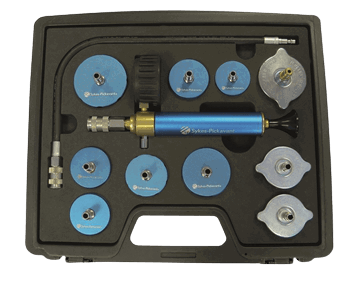
331400V2 | Sykes Pickavant 331400V2 XL Cooling System Pressure Test Kit - UPDATED KIT | 1 Unit |
£301.59
£295.68
|
Add |
 Standard Delivery: £5.99
 Next Day Delivery Available
 Delivery Estimate: 1 to 2 working days
 Save Extra With 1 Offer
 Compare With Similar Items
Compare with Similar products
|
|||||||||||||||
| Technical Specification | |||||||||||||||
|---|---|---|---|---|---|---|---|---|---|---|---|---|---|---|---|
| PRODUCT NUMBER | 33194400 | 31424700 | 31435200 | 02800000 | 02800100 | 02800200 | 2810000 | 02810100 | 02810200 | 02810300 | 03830100 | 03840100 | 031702V2 | 031822V2 | 331942SP |
| Type | Diagnostic Tool Spare | Diagnostic Tool Spare | Diagnostic Tool Spare | Hone Stone | Diagnostic Tool Spare | Diagnostic Tool Spare | Hone Stone | Diagnostic Tool Spare | Diagnostic Tool Spare | Diagnostic Tool Spare | Diagnostic Tool Spare | Diagnostic Tool Spare | Diagnostic Tool Spare | Hose | Diagnostic Tool Spare |
A. It is a pump and gauge assembly for the 331400V2 HGV cooling system pressure test kit.
A. They use it when pressure testing heavy goods vehicle cooling systems using the 331400V2 kit.
A. It allows technicians to check for leaks, weak caps or other sealing issues without running the engine.
A. Larger systems need robust equipment capable of generating and holding the pressures involved.
A. Use the appropriate adaptor from the kit, attach the pump securely and ensure all connections are leak-free.
A. Only pressurise to recommended levels and never remove caps while the system is pressurised.
A. A steady drop indicates leaks, whereas stable pressure suggests the system is sound.
A. Cleaning prevents corrosion and ensures the pump and gauge remain reliable for future tests.
A. It enables quick checks across vehicles, catching issues early and reducing unexpected breakdowns."
By sharing your email, you agree to our privacy policy & terms of service
 Question about this product? Click here


