



 Cart
Cart


 POPULAR CATEGORY


| SERVICE | DELIVERY PRICE | DELIVERY TIME |
|---|---|---|
| Standard Delivery | £49.99 | 7 to 10 working days |
| SERVICE | DELIVERY PRICE | DELIVERY TIME |
|---|---|---|
| Standard Delivery | £49.99 | 7 to 10 working days |
| SERVICE | DELIVERY PRICE | DELIVERY TIME |
|---|---|---|
| Standard Delivery | FREE | 3 to 5 working days |
| SERVICE | DELIVERY PRICE | DELIVERY TIME |
|---|---|---|
| Standard Delivery | £49.99 | 5 to 7 working days |
| SERVICE | DELIVERY PRICE | DELIVERY TIME |
|---|---|---|
| Standard Delivery | £49.99 | 7 to 10 working days |
Product Number: PRD00004107
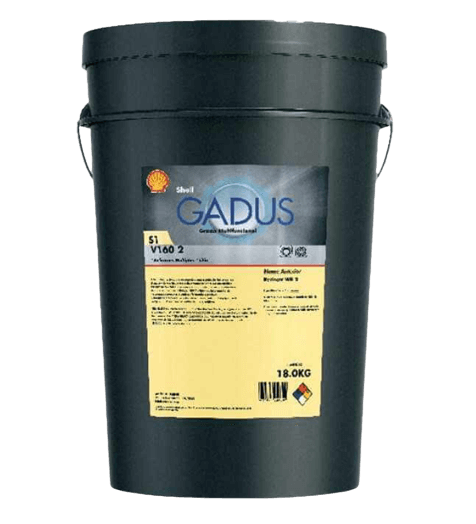
Shell Gadus S1 V160 2 (formerly Shell Retinax Grease WB) is a lithium multi-purpose grease for general industrial and automotive bearing lubrication. The 'WB' historical designation indicates wheel-bearing positioning — the product is suitable for automotive wheel bearings and general chassis lubrication where a standard lithium NLGI 2 grease is required.
The NLGI 2 consistency is the standard bearing-grade grease consistency, and the V160 designation indicates the ISO VG 160 base-oil viscosity — slightly lighter than the more common V220.
Approvals and performance levels are positioned within the standard NLGI 2 lithium-soap multi-purpose grease class — verify the specific OEM-approval set against the current product label.
As with all greases, follow the equipment manufacturer's regreasing schedule and avoid mixing with greases of incompatible thickener type — incompatible thickeners can cause softening, hardening or separation of the grease in service. Store greases sealed in the original packaging, at moderate temperatures and away from direct sunlight, to preserve consistency and additive performance.
Multi-purpose Application • Lithium Multi-purpose Grease Performance, Features & Benefits- Cost savings, Use of a relatively inexpensive grease when grease quality is not an issue. Peace of mind No unexpected Product Health & Safety problems, as Shell Gadus S1 V160 is free from lead and does not require labelling.
About PartsForMachines:PartsForMachines is a premier e-commerce platform, founded in 2019 in Warwickshire, UK, specializing in aftermarket parts and services for construction, agriculture, and industrial machinery. We offer an extensive catalog of over 500,000 products. Standard delivery: 1–3 working days within UK mainland. We are proud to be an authorised distributor, giving customers extra confidence when purchasing genuine products from us. In addition, we provide a 30-day return policy for eligible items.
| Engine Parts | Product Number | Product Name | Recommended Units | Product Price |
|---|
 shell-gadus-s1-v160-2-18-kg.pdf
|
Open Now |
 Standard Delivery: UK Mainland Free
 Delivery Estimate: 3 to 5 working days
 Save Extra With 1 Offer
 Compare With Similar Items
A. Shell Gadus S1 V160 2 is for general industrial and automotive bearing lubrication, including automotive wheel bearings and chassis lubrication where a standard lithium NLGI 2 grease is required.
A. Yes, Shell Gadus S1 V160 2 was formerly known as Shell Retinax Grease WB.
A. NLGI is the universal grease consistency standard every reputable grease meets, ranging from NLGI 000 (semi-fluid) to NLGI 3 (firm). It is your baseline check — match the grade your handbook specifies (e.g., NLGI 2 for most multi-purpose applications) and the grease is technically suitable for your machine. Every grease on our site lists its NLGI grade.
A. Shell Gadus S1 V160 2 is NLGI 2 — the standard bearing-grade grease consistency.
A. Shell Gadus S1 V160 2 uses a lithium soap thickener.
A. The V160 designation indicates the ISO VG 160 base-oil viscosity — slightly lighter than the more common V220 base-oil viscosity used in heavier-duty greases.
A. Both are Shell Gadus lithium NLGI 2 multi-purpose greases. S1 V160 2 (this product) is the entry-level Gadus range with lighter ISO VG 160 base oil — suiting general automotive and light industrial service. S2 V220 2 is the higher-tier mainstream range with heavier ISO VG 220 base oil and EP additive package for heavier-duty service.
A. An OEM Specification is the grease requirement set by a vehicle or equipment manufacturer (e.g., MB 267.0, MAN 283 Li-P 2). When a grease lists the code, the grease manufacturer has developed and tested it to meet the criteria the equipment manufacturer requires. Match the code in your handbook and you have a grease engineered for your machine.
A. An OEM Approval means the grease has been formally tested and signed off by the equipment manufacturer and listed on their official approved-products register (e.g., MB-Approval 267.0). An Approval confirms the grease is recognised by the equipment manufacturer for service use in their machines.
By sharing your email, you agree to our privacy policy & terms of service
 Question about this product? Click here