


 Cart
Cart


 POPULAR CATEGORY


 ADD TO CART


| SERVICE | DELIVERY PRICE | DELIVERY TIME |
|---|---|---|
| Standard Delivery | £49.99 | 7 to 10 working days |
| SERVICE | DELIVERY PRICE | DELIVERY TIME |
|---|---|---|
| Standard Delivery | £75.00 | 7 to 10 working days |
| SERVICE | DELIVERY PRICE | DELIVERY TIME |
|---|---|---|
| Standard Delivery | FREE | 3 to 5 working days |
| SERVICE | DELIVERY PRICE | DELIVERY TIME |
|---|---|---|
| Standard Delivery | £24.95 | 5 to 7 working days |
| SERVICE | DELIVERY PRICE | DELIVERY TIME |
|---|---|---|
| Standard Delivery | £4.95 | 7 to 10 working days |
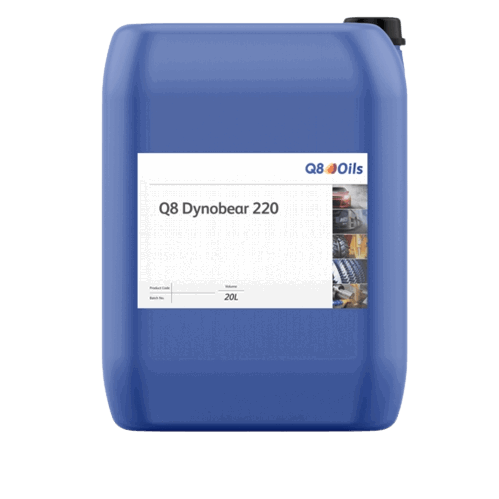
Product Number: PRD00003074
Q8 Oils Dynobear 220 is a multi-purpose circulating lubricant developed for machine tools and general equipment. The product contains a friction-reducing additive that eliminates stick-slip and judder in mechanical and hydraulic machine systems — making it suited to machine tool slideways and combined slideway/hydraulic shared sumps where stick-slip-free operation is critical to accurate machining.
The ISO VG 220 viscosity grade is positioned for medium-duty machine-tool slideway and circulating service.
Approvals and performance levels include ISO 6743-2 (industrial slideway oil); DIN 51517 Part 3 (CLP); and DIN 51524 (hydraulic oil).
The 20-litre pack format is suited to single-machine top-up and small workshop service. Store sealed in the original packaging, in a clean, dry area away from extremes of temperature, to preserve product performance over its shelf life.
With viscosity index 96, Q8 Oils Dynobear 220 maintains consistent film thickness across operating temperature changes.
Q8 Dynobear 220 is an excellent multi-purpose circulating lubricant developed for machine tools and general equipment. It has a certain additive that reduces friction and eliminates stick-slip and judder that might occur in mechanical and hydraulic machines. Q8 Dynobear 220 has outstanding rust- and corrosion protection, excellent anti-wear characteristics and high chemical and thermal stability. Applications Q8 Dynobear 220 is used as vacuum pump oil and in medium duty gear boxes. Q8 Dynobear range is highly recommended for machine tools and general equipment lubrication. It is suited for headstocks, carriage ways, cross feeds saddles and automatic pressures fed slideway lubricators.
Specifications, Approvals & Recommendations:PartsForMachines is a premier e-commerce platform, founded in 2019 in Warwickshire, UK, specializing in aftermarket parts and services for construction, agriculture, and industrial machinery. We offer an extensive catalog of over 500,000 products. Standard delivery: 1–3 working days within UK mainland. We are proud to be an authorised distributor, giving customers extra confidence when purchasing genuine products from us. In addition, we provide a 30-day return policy for eligible items.
| ISO Viscosity Grade | 220 |
|---|---|
| Density, 15 °C | 0.891 g/ml |
| Kinematic Viscosity, 40 °C | 220 mm²/s |
| Kinematic Viscosity, 100 °C | 18.9 mm²/s |
| Viscosity Index | 96 |
| Flash Point, COC | 284°C |
| Colour | L 2.0 |
| Engine Parts | Product Number | Product Name | Recommended Units | Product Price |
|---|
 q8-dynobear-220.pdf
|
Open Now |

Which Gear Oil? ISO 220 or 80W-90, GL-4 or GL-5 Made Simple The gearbox plate says ISO VG 220, the handbook wants 80W-90 GL-5, and the drum says CLP. Match the grading system first, then the exact grade and specificatio...
 Standard Delivery: UK Mainland Free
 Delivery Estimate: 3 to 5 working days
 Save Extra With 1 Offer
 Compare With Similar Items
Compare with Similar products
|
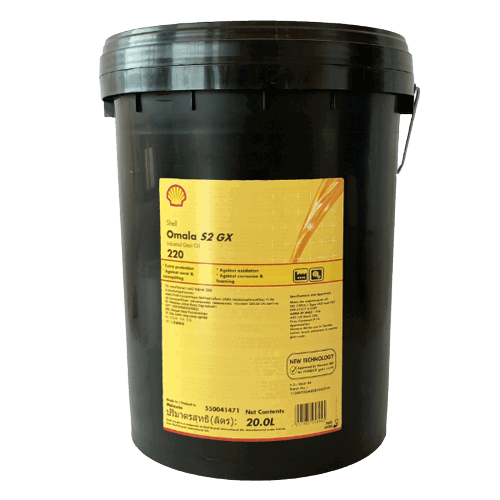
Shell 550041650 Omala S2 GX 220, Gear Oil - 20 Litre
£125.55
£123.09
2% OFF
Free delivery in UK Mainland
|

Shell 550041578 Omala S2 GX 220, Gear Oil - 209 Litre
£1,627.04
£1,595.14
2% OFF
Free delivery in UK Mainland
|
|
| Technical Specification | |||
|---|---|---|---|
| PRODUCT NUMBER | PRD00004212 | PRD00004203 | SE550041650 |
| Density, 15°C | 0.899 | 0.899 | |
| Flash Point (COC) | 240 | 240 | |
| Kinematic Viscosity @40°C | 220 | 220 | |
| Pour Point | -18 | -18 | |
| Volume | 20 | 209 | |
| Viscosity Index | 98 | 98 | |
A. Q8 Oils Dynobear 220 is for machine tool slideways and combined slideway/hydraulic shared sumps in general industrial equipment — particularly applications where stick-slip-free operation is critical to accurate machining.
A. Stick-slip is the alternating sticking and sliding motion that occurs when a machine tool slideway moves at low speed under load. It causes vibration, juddering and inaccurate positioning. Slideway oils such as Q8 Oils Dynobear contain specific friction modifiers that eliminate stick-slip for smooth, accurate slideway operation.
A. Q8 Oils Dynobear 220 meets ISO 6743-2 (industrial slideway oil); DIN 51517 Part 3 (CLP industrial EP gear oil); and DIN 51524 (hydraulic oil).
A. Q8 Oils Dynobear 220 is ISO VG 220 — the heavier slideway/circulating oil viscosity for medium-duty machine-tool service.
A. Yes — Q8 Oils Dynobear 220 meets DIN 51524 hydraulic oil requirements, making it suitable for combined slideway/hydraulic shared sumps in machine tools. For dedicated hydraulic systems, Q8 Holbein or similar dedicated hydraulic oils may be more appropriate.
A. Both are Q8 Oils Dynobear multi-purpose machine slideway and circulating oils with the same DIN/ISO specifications. They differ only in viscosity grade: Dynobear 100 is ISO VG 100 for lighter-duty machine tools; Dynobear 220 (this product) is ISO VG 220 for medium-duty machine tools.
A. API and ACEA are the universal lubricant performance standards every reputable oil meets. They are your baseline check — match the code your handbook specifies (e.g., API CI-4 or ACEA E7 for heavy-duty diesel) and the oil is technically suitable for your machine. Every oil on our site lists its API and ACEA classifications.
A. An OEM Specification is the lubricant requirement set by a vehicle or equipment manufacturer (e.g., MB 228.3, VW 504.00). When an oil lists the code, the oil manufacturer has developed and tested it to meet the criteria the equipment manufacturer requires. Match the code in your handbook and you have a lubricant engineered for your machine.
A. An OEM Approval means the oil has been formally tested and signed off by the equipment manufacturer and listed on their official approved-products register (e.g., MB-Approval 228.3). An Approval confirms the oil is recognised by the equipment manufacturer for service use in their machines.
By sharing your email, you agree to our privacy policy & terms of service
 Question about this product? Click here