

 Cart
Cart


 POPULAR CATEGORY


| SERVICE | DELIVERY PRICE | DELIVERY TIME |
|---|---|---|
| Standard Delivery | £199.99 | 7 to 10 working days |
| SERVICE | DELIVERY PRICE | DELIVERY TIME |
|---|---|---|
| Standard Delivery | £199.99 | 7 to 10 working days |
| SERVICE | DELIVERY PRICE | DELIVERY TIME |
|---|---|---|
| Standard Delivery | FREE | 3 to 5 working days |
| SERVICE | DELIVERY PRICE | DELIVERY TIME |
|---|---|---|
| Standard Delivery | £24.95 | 5 to 7 working days |
| SERVICE | DELIVERY PRICE | DELIVERY TIME |
|---|---|---|
| Standard Delivery | £4.95 | 7 to 10 working days |
Product Number: PRD00003951
Variations
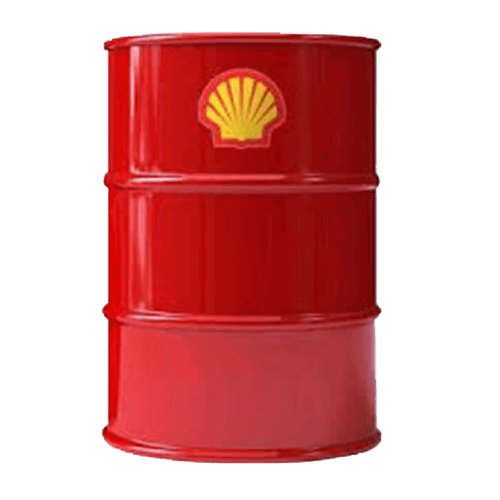
Shell Corena S2 P 100 in the 209-litre drum is supplied for workshop bulk service. It is a mineral-oil-based air compressor lubricant developed for reciprocating (piston) air compressors — providing wear protection, long oil life and system efficiency for standard-life applications.
The 'P' designation indicates reciprocating (Piston) compressor positioning, and the ISO VG 100 viscosity grade is positioned for higher-duty reciprocating compressor service.
Approvals and performance levels include ISO 6743-3 (compressor oil classification); DIN 51506; and DIN 51575.
For single-machine service, Shell Corena S2 P 100 is also available in a 20-litre pack (PRD00003952).
This drum format is suited to workshop bulk supply, fleet service and high-throughput dispensing via a workshop pump or filtration cart. Store the drum on its side in a bunded area, with the bung uppermost to limit moisture and contamination ingress around the fitting.
This drum format is suited to workshop bulk supply, fleet service and high-throughput dispensing via a workshop pump or filtration cart. Store the drum on its side in a bunded area, with the bung uppermost to limit moisture and contamination ingress.
The Shell Corena range of air compressor oils has been developed to let you select the oil that will help deliver optimum value to your operation through enhanced wear protection, long oil life and high system efficiency.Reliable protection.Standard life applications.Reciprocating air compressors.
Specifications, Approvals & Recommendations:PartsForMachines is a premier e-commerce platform, founded in 2019 in Warwickshire, UK, specializing in aftermarket parts and services for construction, agriculture, and industrial machinery. We offer an extensive catalog of over 500,000 products. Standard delivery: 1–3 working days within UK mainland. We are proud to be an authorised distributor, giving customers extra confidence when purchasing genuine products from us. In addition, we provide a 30-day return policy for eligible items.
| ISO Viscosity Grade ISO 3448 | 100 |
|---|---|
| Kinematic Viscosity @40°C ASTM D445 | 100 mm2/s |
| Kinematic Viscosity @100°C ASTM D445 | 9.2 mm2/s |
| Density @15°C ASTM D1298 | 899kg/m3 |
| Flash Point (COC) ASTM D92 | 205 °C minimum |
| Pour Point ASTM D97 | -33 °C |
| Neutralisation Value ASTM D974 | 0.3 mg KOH/g |
| Sulphated Ash DIN 51575 | 0.06 % m |
| Rust Prevention - Synthetic Sea Water ASTM D665B | Degree Pass |
| Water Sperability @40°C ASTM D1401 | 20 min |
| Engine Parts | Product Number | Product Name | Recommended Units | Product Price |
|---|
 Standard Delivery: UK Mainland Free
 Delivery Estimate: 3 to 5 working days
 Save Extra With 1 Offer
 Compare With Similar Items
Compare with Similar products
|

Castrol - Aircol CM 68, Compressor Oil - 20 Litre
£148.97
£146.05
2% OFF
Free delivery in UK Mainland
|

Castrol - Aircol CM 46, Compressor Oil - 20 Litre
£169.35
£166.03
2% OFF
Free delivery in UK Mainland
|
||
| Technical Specification | ||||
|---|---|---|---|---|
| PRODUCT NUMBER | PRD00002591 | PRD00002590 | PRD00002994 | |
| Density, 15°C | 0.862 | 0.858 | 0.867 | |
| Flash Point (COC) | 240 | 230 | 242 | |
| Kinematic Viscosity @40°C | 68 | 46 | 68 | |
| Pour Point | -36 | -38 | -18 | |
| Colour | L 0.5 | |||
| Volume | 20 | 20 | 20 | |
| Viscosity Index | 100 | 100 | 107 | |
| Show More | ||||
A. Shell Corena S2 P 100 is for reciprocating (piston) air compressors in higher-duty service where ISO VG 100 mineral compressor oil is specified.
A. Shell Corena S2 P 100 is ISO VG 100 — the heavier mineral compressor oil viscosity for higher-duty reciprocating compressor service.
A. Shell Corena S2 P 100 meets ISO 6743-3 (compressor oil classification); DIN 51506 (industrial compressor oil specification); and DIN 51575.
A. All three are Shell Corena S2 P mineral reciprocating compressor oils. They differ only in viscosity grade: S2 P 68 is ISO VG 68 for standard service; S2 P 100 (this product) is ISO VG 100 for higher-duty service; S2 P 150 is ISO VG 150 for high-duty service with elevated discharge temperatures.
A. No — Shell Corena S2 P is specifically positioned for reciprocating (piston) compressors. Rotary screw compressors require Corena R variants (such as Corena S3 R or S4 R) with formulation suited to continuous-rotation duty.
A. API and ACEA are the universal lubricant performance standards every reputable oil meets. They are your baseline check — match the code your handbook specifies (e.g., API CI-4 or ACEA E7 for heavy-duty diesel) and the oil is technically suitable for your machine. Every oil on our site lists its API and ACEA classifications.
A. An OEM Specification is the lubricant requirement set by a vehicle or equipment manufacturer (e.g., MB 228.3, VW 504.00). When an oil lists the code, the oil manufacturer has developed and tested it to meet the criteria the equipment manufacturer requires. Match the code in your handbook and you have a lubricant engineered for your machine.
A. An OEM Approval means the oil has been formally tested and signed off by the equipment manufacturer and listed on their official approved-products register (e.g., MB-Approval 228.3). An Approval confirms the oil is recognised by the equipment manufacturer for service use in their machines.
By sharing your email, you agree to our privacy policy & terms of service

 Question about this product? Click here