



 Cart
Cart


 POPULAR CATEGORY


| SERVICE | DELIVERY PRICE | DELIVERY TIME |
|---|---|---|
| Standard Delivery | £199.99 | 7 to 10 working days |
| SERVICE | DELIVERY PRICE | DELIVERY TIME |
|---|---|---|
| Standard Delivery | £199.99 | 7 to 10 working days |
| SERVICE | DELIVERY PRICE | DELIVERY TIME |
|---|---|---|
| Standard Delivery | FREE | 3 to 5 working days |
| SERVICE | DELIVERY PRICE | DELIVERY TIME |
|---|---|---|
| Standard Delivery | £24.95 | 5 to 7 working days |
| SERVICE | DELIVERY PRICE | DELIVERY TIME |
|---|---|---|
| Standard Delivery | £4.95 | 7 to 10 working days |
Product Number: 550027125
Shell Tellus S3 V 68 (formerly Shell Tellus STX) in the 209-litre drum is supplied for workshop bulk service of hydraulic equipment operating across very wide temperature ranges. It is a premium zinc-free industrial hydraulic fluid using exclusive ashless technology with a high viscosity index, providing protection and performance across varied operating temperatures.
The ISO VG 68 viscosity grade is the heavier general-service grade, suited to warm-ambient and higher-pressure hydraulic operations. The 'V' designation indicates the high-viscosity-index variant of the Shell Tellus S3 range.
Approvals and performance levels include ISO 6743-4; and DIN 51524.
The Shell Tellus S3 V range covers ISO VG 32, 46 and 68 in our catalogue.
This drum format is suited to workshop bulk supply, fleet service and high-throughput dispensing via a workshop pump or filtration cart. Store the drum on its side in a bunded area, with the bung uppermost to limit moisture and contamination ingress around the fitting.
This drum format is suited to workshop bulk supply, fleet service and high-throughput dispensing via a workshop pump or filtration cart. Store the drum on its side in a bunded area, with the bung uppermost to limit moisture and contamination ingress.
Shell Tellus S3 V 68 has long life and improved efficiency, it has versatile applications. As a premium Zinc-Free Industrial Hydraulic Fluid for very wide temperature range Shell Tellus S3 V hydraulic fluids are high performance lubricants that use exclusive ashless technology, coupled with highly shear stable viscosity modifiers.
About PartsForMachines:PartsForMachines is a premier e-commerce platform, founded in 2019 in Warwickshire, UK, specializing in aftermarket parts and services for construction, agriculture, and industrial machinery. We offer an extensive catalog of over 500,000 products. Standard delivery: 1–3 working days within UK mainland. We are proud to be an authorised distributor, giving customers extra confidence when purchasing genuine products from us. In addition, we provide a 30-day return policy for eligible items.
| ISO Viscocity Grade | 68 |
|---|---|
| ISO Fluid Type | HM |
| Kinematic Viscosity@0°C | 4200 cSt |
| Kinematic Viscosity@40°C | 68 cSt |
| Kinematic Viscosity@100°C | 11.4 cSt |
| Viscosity Index | 162 |
| Density@15°C | 0.868 kg/l |
| Flash Point (COC) | 200 °C |
| Pour Point | -33 °C |
| Engine Parts | Product Number | Product Name | Recommended Units | Product Price |
|---|
 shell-tellus-s3-v-68-209-litre.pdf
|
Open Now |
 Standard Delivery: UK Mainland Free
 Delivery Estimate: 3 to 5 working days
 Save Extra With 1 Offer
 Compare With Similar Items
Compare with Similar products
|
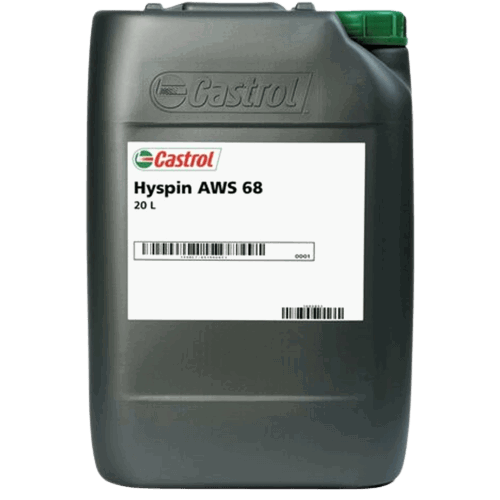
Castrol - Hyspin AWS 68, Hydraulic Oil - 20 litre
£114.93
£112.68
2% OFF
Free delivery in UK Mainland
|

Castrol - Hyspin AWS 68, Hydraulic Oil - 208 litre
£1,134.82
£1,112.57
2% OFF
Free delivery in UK Mainland
|
|||
| Technical Specification | |||||
|---|---|---|---|---|---|
| PRODUCT NUMBER | PRD00002391 | PRD00002392 | 602021229 | 602019134 | Renolin B 32 Plus_205 |
| Density, 15°C | 0.88 | 0.88 | |||
| Flash Point (COC) | 225 | 225 | |||
| Kinematic Viscosity @40°C | 68 | 68 | |||
| Pour Point | -21 | -21 | |||
| SAE | 68 | 68 | |||
| Volume | 20 | 208 | |||
| Viscosity Index | 95 | 95 | |||
| Oil Type | Anti-wear hydraulic oil | Anti-wear hydraulic oil | |||
| Show More | |||||
A. Shell Tellus S3 V 68 is designed for hydraulic systems operating across very wide temperature ranges, including outdoor mobile equipment and applications subject to wide seasonal temperature variation. The ISO VG 68 viscosity is suited to warm-ambient and higher-pressure operations.
A. Yes, Shell Tellus S3 V 68 was formerly known as Shell Tellus STX.
A. Shell Tellus S3 V 68 is supplied at ISO VG 68 — the heavier general-service hydraulic viscosity.
A. Shell Tellus S3 V 68 meets ISO 6743-4; and DIN 51524.
A. Yes, Shell Tellus S3 V uses exclusive zinc-free ashless additive technology.
A. Both are Shell Tellus S3 premium zinc-free ashless ISO VG 68 hydraulic oils. S3 M 68 is the standard-VI range for general industrial hydraulic service. S3 V 68 (this product) is the high-VI range for hydraulic systems operating across varied ambient temperatures.
A. API and ACEA are the universal lubricant performance standards every reputable oil meets. They are your baseline check — match the code your handbook specifies (e.g., API CI-4 or ACEA E7 for heavy-duty diesel) and the oil is technically suitable for your machine. Every oil on our site lists its API and ACEA classifications.
A. An OEM Specification is the lubricant requirement set by a vehicle or equipment manufacturer (e.g., MB 228.3, VW 504.00). When an oil lists the code, the oil manufacturer has developed and tested it to meet the criteria the equipment manufacturer requires. Match the code in your handbook and you have a lubricant engineered for your machine.
A. An OEM Approval means the oil has been formally tested and signed off by the equipment manufacturer and listed on their official approved-products register (e.g., MB-Approval 228.3). An Approval confirms the oil is recognised by the equipment manufacturer for service use in their machines.
By sharing your email, you agree to our privacy policy & terms of service
 Question about this product? Click here