


 Cart
Cart


 POPULAR CATEGORY


 ADD TO CART


| SERVICE | DELIVERY PRICE | DELIVERY TIME |
|---|---|---|
| Standard Delivery | £29.99 | 7 to 10 working days |
| SERVICE | DELIVERY PRICE | DELIVERY TIME |
|---|---|---|
| Standard Delivery | £29.99 | 7 to 10 working days |
| SERVICE | DELIVERY PRICE | DELIVERY TIME |
|---|---|---|
| Standard Delivery | £5.99 | 2 to 4 working days |
| Next Day | £15.54 |
| SERVICE | DELIVERY PRICE | DELIVERY TIME |
|---|---|---|
| Standard Delivery | £29.99 | 5 to 7 working days |
| SERVICE | DELIVERY PRICE | DELIVERY TIME |
|---|---|---|
| Standard Delivery | £29.99 | 7 to 10 working days |
Product Number: 15063
The SIP 15063 tungsten electrode — Welding Tip 0 — 9% Zirconiated Tungsten. 9% Zirconiated Tungsten Electrodes are designed for powerful performance on all alloys, producing a more stable arc, spit resistance, and providing a higher current carrying capability than some other electrode types during welding. Product Key Features:-. 9% zirconiated Tungsten electrodes. Compatible across the sip welding, sip tungsten electrodes welding range — check product specifications for exact model fit. In the welding trade, this product type is also known as tig tungsten or ceriated tungsten.
Additional Information:
The SIP 2.4mm 0.9% Zirconiated Tungsten Electrodes are designed for powerful performance on all alloys, producing a more stable arc, spit resistance, and providing a higher current carrying capability than some other electrode types during welding.About PartsForMachines:
PartsForMachines is a premier e-commerce platform, founded in 2019 in Warwickshire, UK, specializing in aftermarket parts and services for construction, agriculture, and industrial machinery. We offer an extensive catalog of over 500,000 products. Standard delivery: 1–3 working days within UK mainland. We are proud to be an authorised distributor, giving customers extra confidence when purchasing genuine products from us. In addition, we provide a 30-day return policy for eligible items.
| ITEM NO. | 15063 |
|---|---|
| Welding Tip Type | 0.9% Zirconiated Tungsten |
| Welding Tip Size | Ø 2.40mm / 150mm |
| Net Weight | 0.10kg |
| Gross Weight | 1.00kg |
| Engine Parts | Product Number | Product Name | Recommended Units | Product Price | |
|---|---|---|---|---|---|
|
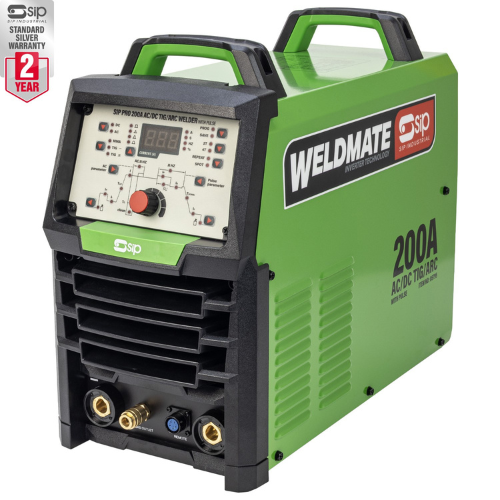
05795 | SIP 05795 WELDMATE® PRO 200A AC/DC TIG/ARC Welder with Pulse | 1 Unit |
£971.42
£952.37
|
Add |
 Standard Delivery: £5.99
 Next Day Delivery Available
 Delivery Estimate: 2 to 4 working days
 Save Extra With 1 Offer
 Compare With Similar Items
Compare with Similar products
|
|||||||||||||||
| Technical Specification | |||||||||||||||
|---|---|---|---|---|---|---|---|---|---|---|---|---|---|---|---|
| PRODUCT NUMBER | 02689 | 02691 | 02692 | 02693 | 02777 | 02779 | 02666 | 02668 | 02669 | 02671 | 02678 | 02681 | 02706 | 04000 | 04010 |
| Type | Electrodes | Electrodes | Electrodes | Electrodes | Electrodes | Electrodes | Welding Wire | Welding Wire | Welding Wire | Welding Wire | Welding Wire | Welding Wire | Welding Wire | Welding Wire | Welding Wire |
| Size | 1.60mm | 2.00mm | 2.50mm | 2.50mm | 4.00mm | ||||||||||
| Weight | 5kg | 5kg | |||||||||||||
| Dia | 1.60mm | 2.00mm | 2.50mm | 2.50mm | 4.00mm | 0.6mm | 0.6mm | 0.8mm | 0.8mm | 0.8mm | 1.0mm | 0.8mm | 0.6mm | 0.8mm | |
| Pack Qty | 10 | 10 | 10 | ||||||||||||
| Reel | 5kg | 5kg | 5kg | 15kg | 5kg | 15kg | 0.9kg | 15kg | 4.5kg | 0.7kg | 0.45kg | ||||
| Size Range | Up to 10mm | Up to 10mm | Up to 10mm | Up to 10mm | Up to 10mm | ||||||||||
| Wire | Gasless/Flux | Gasless/Flux | Gasless/Flux | ||||||||||||
| Show More | |||||||||||||||
A. Compatible with: Draper 70052 and 70048; SIP 05795 and 05795 Any TIG welder that accepts Ø 2.40mm / 150mm diameter tungsten with the appropriate collet will use this electrode.
A. Yes — zirconiated tungsten is specifically designed for AC TIG welding of aluminium. The balled end that forms during AC welding provides stable arc ignition and consistent bead profile on aluminium sections.
A. Ø 2.40mm / 150mm diameter tungsten is typically used from about 100–250A. For lower-amperage work, step down to 1.6mm or 2.0mm tungsten. For higher-amperage work above 150A, step up to 3.2mm tungsten. Always stay within the amperage range for your tungsten diameter to prevent tip damage.
A. For AC TIG welding of aluminium (zirconiated tungsten), allow the tip to form a natural ball during welding — do not grind to a point. The balled tip provides stable arc ignition and holds its shape better than other types. For DC TIG welding of steel and stainless (ceriated or thoriated tungsten), grind to a pointed tip — a taper of 2 to 2.5x the electrode diameter, ground lengthwise along the rod. A correctly prepared tungsten gives clean, consistent arc starts and precise weld control.
A. Replace or re-grind when: the tip becomes contaminated (black or green discolouration), the arc starts wandering or splitting, or the tip has cracked or cratered. For AC aluminium welding, replace the tungsten when the balled end becomes irregular or oversized.
A. The SIP 15063 pack contains 10 x Ø 2.40mm / 150mm tungsten electrodes. With careful handling and proper grinding technique, a single tungsten can last for several welding sessions. Keep spares — tungsten is brittle and a dropped electrode will often crack even if it looks undamaged.
A. No — zirconiated tungsten is specifically designed for AC aluminium welding. For DC steel and stainless work, use ceriated tungsten instead. Using the wrong type causes arc instability and premature tungsten degradation.
A. You need a Ø 2.40mm / 150mm collet and matching collet body for your TIG torch. Collets are size-specific — a 1.6mm collet will not grip 2.4mm tungsten securely. The full range of TIG collets for SR-series and compatible torches is available in the TIG Consumables — Collets section.
A. Check your machine's specification for the accepted wire diameter range (typically 0.6mm-1.2mm for MIG) or electrode diameter range (typically 1.6mm-4.0mm for ARC/MMA). The machine's output amperage determines the maximum electrode size it can run — higher amperage machines handle thicker electrodes.
A. If your TIG welder is AC/DC capable (and you are welding aluminium), the SIP 15063 is the correct tungsten type. Confirm the Ø 2.40mm / 150mm diameter matches your available collet set and your required amperage range.
By sharing your email, you agree to our privacy policy & terms of service
 Question about this product? Click here


