A square is only as good as its accuracy, and that accuracy is stated rather than assumed on the tools where it matters. Engineers precision squares carry a tolerance figure; a carpenters try square does not, because the work it checks does not need one. Reading whether a tolerance is quoted at all is the quickest way to tell the two classes apart.
That difference decides which square the job needs. Marking a timber shoulder wants a try square, which is fast and accurate enough. Checking a machined face wants a precision square, where a fraction of a degree over 150mm is a visible gap at the joint. A square that has been dropped may still look right and no longer be, which is why the class matters.
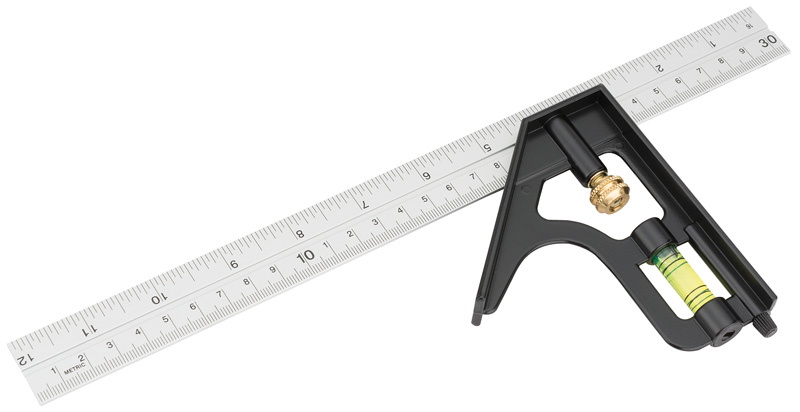
Combination squares do more than check a right angle. The head slides along the blade, so it also sets a depth, marks a parallel line and marks a mitre from the angled face on the head. Versions with a centre head and protractor add finding a centre and setting any angle. Combination squares are held in 150mm and 300mm in metric and imperial marking.
Blade length decides the reach across the work. 150mm covers most bench work and 300mm reaches across a board. A drywall T square spans a full sheet width to mark a cut in one pass. Send the work and the accuracy needed to 07754288583 on WhatsApp. A try and mitre square at 150mm covers both a right angle and a mitre in one fixed tool.


 Filters






 Cart
Cart


 POPULAR CATEGORY


