Head weight is the whole decision on a hammer and it is chosen against the work rather than by preference. A light head is controllable and does less per blow. A heavy head does more per blow and is harder to place accurately, and fatigue arrives sooner. A hammer that is too heavy for the work is also the one most likely to mark what it is striking.
The range runs 12oz through 16oz to 32oz, quoted alongside 450g, 680g and 900g on the metric lines. Those are the same weights expressed two ways rather than separate ranges, which is worth knowing when comparing across brands. Estwing hold one-piece hammers at 12oz, 16oz and 32oz across the same span.
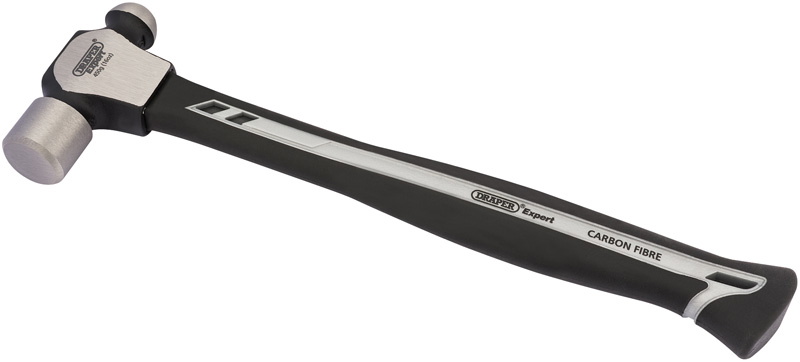
Shaft construction changes how the blow feels in the hand. A one-piece forged hammer has no joint to work loose, which is why they last. A carbon fibre or fibreglass shaft absorbs more of the shock, which matters where the hammer is used all day. Carbon fibre shafts are the lightest for their strength, which matters over a full day at a bench.
The ball pein itself is for peening and shaping metal rather than driving, which is why the head carries a rounded face as well as a flat one. Replacement copper and rawhide faces at 32mm and 38mm fit the soft-faced hammers alongside. Send the work to 07754288583 on WhatsApp. Faces are held at two sizes so the replacement matches the hammer rather than being approximate.


 Filters






 Cart
Cart


 POPULAR CATEGORY


