



 Cart
Cart


 POPULAR CATEGORY


 ADD TO CART


| SERVICE | DELIVERY PRICE | DELIVERY TIME |
|---|---|---|
| Standard Delivery | £29.99 | 7 to 10 working days |
| SERVICE | DELIVERY PRICE | DELIVERY TIME |
|---|---|---|
| Standard Delivery | £29.99 | 7 to 10 working days |
| SERVICE | DELIVERY PRICE | DELIVERY TIME |
|---|---|---|
| Standard Delivery | £4.99 | 2 to 4 working days |
| Next Day | £15.54 |
| SERVICE | DELIVERY PRICE | DELIVERY TIME |
|---|---|---|
| Standard Delivery | £29.99 | 5 to 7 working days |
| SERVICE | DELIVERY PRICE | DELIVERY TIME |
|---|---|---|
| Standard Delivery | £29.99 | 7 to 10 working days |
Product Number: 05004
The SIP 05004 plasma nozzle. 7mm Inverter Plasma Nozzle focuses the plasma arc and gas to provide high-quality and clean plasma cutting performance, and manufactured for durability and high performance in tandem with premium SIP HG700 Inverter Plasma Cutter. High-quality and robust 1. 7mm inverter plasma nozzle. Compatible across the sip welding, sip plasma consumables welding range — check product specifications for exact model fit. When ordering, search under plasma cutter nozzle or plasma electrode for this and compatible alternatives.
Additional Information:
The SIP 1.7mm Inverter Plasma Nozzle focuses the plasma arc and gas to provide high-quality and clean plasma cutting performance, and manufactured for durability and high performance in tandem with premium SIP HG700 Inverter Plasma Cutter.About PartsForMachines:
PartsForMachines is a premier e-commerce platform, founded in 2019 in Warwickshire, UK, specializing in aftermarket parts and services for construction, agriculture, and industrial machinery. We offer an extensive catalog of over 500,000 products. Standard delivery: 1–3 working days within UK mainland. We are proud to be an authorised distributor, giving customers extra confidence when purchasing genuine products from us. In addition, we provide a 30-day return policy for eligible items.
| ITEM NO | 05004 |
|---|---|
| Component Type | Plasma Nozzle |
| Nozzle Diameter | Ø 1.7mm |
| Suitable For | 05789 |
| Engine Parts | Product Number | Product Name | Recommended Units | Product Price | |
|---|---|---|---|---|---|
|
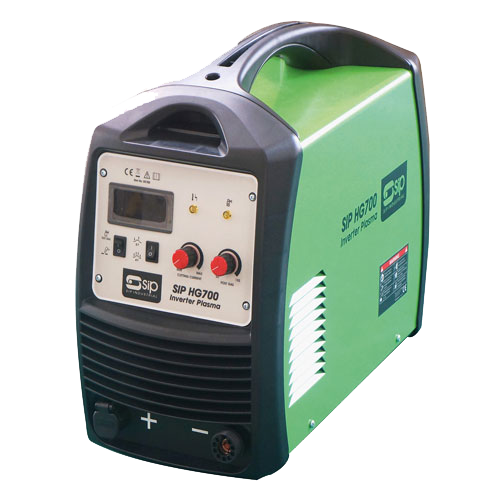
05789 | SIP 05789 HG700 Plasma Inverter Cutter 400v, Single Phase 70A | 1 Unit |
£521.41
£511.19
|
Add |
 Standard Delivery: £4.99
 Next Day Delivery Available
 Delivery Estimate: 2 to 4 working days
 Save Extra With 1 Offer
 Compare With Similar Items
Compare with Similar products
|

Welding No.2 Swaged Heavy Duty Nozzle for Oxy-Acetylene Welding, 35035, Draper
£13.54
£13.27
2% OFF
|
||||
| Technical Specification | |||||
|---|---|---|---|---|---|
| PRODUCT NUMBER | 09070 | 09080 | 35105 | 35035 | 35036 |
A. The SIP 05004 is designed for use with SIP 05783 and 05787 (and 6 more). Plasma nozzles are machine-specific — always confirm your plasma cutter model before ordering. Using an incorrect nozzle damages the torch body and produces poor cut quality.
A. The nozzle orifice size determines the plasma arc diameter and kerf width. The 05004 has a 1.7mm orifice. A worn nozzle with an enlarged orifice produces a wider, less precise cut. Replace when you notice increased kerf width or reduced cut quality.
A. Replace nozzles when the orifice shows visible enlargement or distortion, when cut edge squareness deteriorates, or when dross increases at correct speed settings. Replacing nozzle and electrode together as a set gives the best results — mismatched wear states cause arc instability.
A. Common causes: moisture in the air supply (use an inline dryer/filter), incorrect air pressure, excessive pierce height (use a piercing shield), cutting above the machine's rated capacity, and slow travel speed. Correct settings dramatically extend nozzle life.
A. Yes — best practice is to replace nozzle, electrode, and diffuser as a set. The three components wear together; leaving worn components alongside new ones limits the performance improvement and shortens the life of the new parts.
A. Consult your plasma cutter manual for the specified inlet pressure — typically 4.5–6 bar (65–90 PSI). Insufficient pressure causes rapid nozzle erosion and double-arcing. Excessive pressure reduces cut efficiency and blows out the plasma column.
A. Double-arcing (arc splitting between electrode and nozzle) is usually caused by a worn nozzle orifice, contaminated nozzle, incorrect standoff distance, or moisture in the air supply. Replace the nozzle and check air supply quality — do not continue cutting with a double-arcing machine as it damages the torch body rapidly.
A. Only use manufacturer-specified nozzles in your plasma cutter. Generic nozzles may have incorrect orifice geometry, different orifice diameter tolerances, or sub-standard copper alloy that wears faster. Using non-specified nozzles risks arc instability, poor cut quality, and accelerated torch body wear.
A. MIG tips and nozzles are torch-specific. Check your machine's torch type — common types include MB14, MB15, MB25, and MB36. The contact tip thread size must match your torch body. The tip bore size must match your wire diameter. Using the wrong tip or nozzle will cause poor wire feed and inconsistent welds.
A. Yes — the SIP 05004 is UK stocked for fast despatch. Check current availability at PartsForMachines.com.
By sharing your email, you agree to our privacy policy & terms of service
 Question about this product? Click here