Phone Phone 01926754100 Cart Cart
Fit guarantee icon
FIT GUARANTEE or Hassle-Free Returns
Quick delivery icon
QUICK DELIVERY On All Products Across UK
Customer support icon
GREAT SUPPORT 24/7 Support For Any Query
rating icon
TOP RATED Trusted by Our Customers

find the right

Parts & Spares

Start Now

Shop by Sub Category

FAQs

Wire size first, the tip bore equals it exactly, then the torch pattern from the old tip or the torch model, MB15 among the named families here. The thread is stated on each listing, and a photo of the tip and torch over WhatsApp settles an unmarked one.

0.8mm tips exactly: the MB15 packs of five here come in 0.8 and 1.0mm, and running the matching bore is what keeps the arc steady and the tip alive.

When the arc tells you: spatter building up, the arc wandering, or the wire dragging all point to a worn bore. Tips are the fastest wearing consumable on a MIG torch, which is why they sell in packs of five.

The number tracks the flame size and so the thickness of the metal: the swaged range here runs No.2 for thin sheet up to No.10 for heavy sections, and matching the number to the job is the whole choice.

Yes, by machine: nozzle and shroud packs are listed for the 03357, 03358, 70058 and 70066 cutters among others, and the number on the machine is the match key.

Usually the gas is not reaching the weld: a spattered or cracked shroud, a blocked diffuser or a draught across the job. Cleaning or replacing the shroud is the first, cheapest fix, and the nozzle cleaner here does the maintenance in between.

Clear

Welding Tips & Nozzles

FilterFilters
View as Grid List

A contact tip matches its wire exactly: the tip bore equals the wire size, 0.8mm wire through a 0.8mm tip, and the torch pattern names the family, with MB15 tips here in 0.8 and 1.0mm packs of five among 122 lines from the Sealey, SIP and Draper ranges, and the thread, M6 on the light torch families, stated on each listing. A worn tip announces itself in spatter and a wandering arc, which is why tips sell in packs.

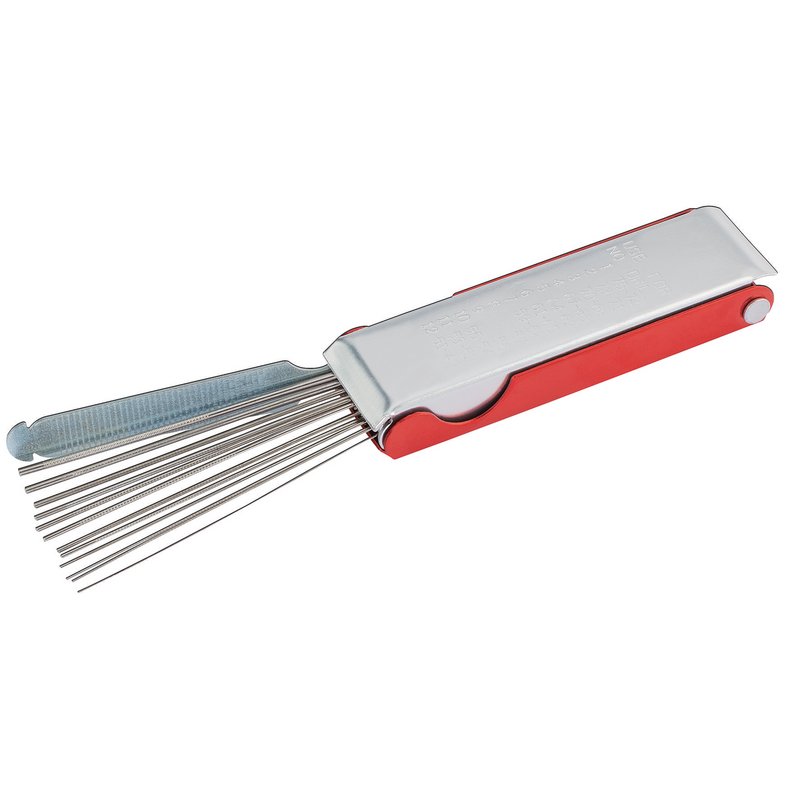
Around the tip sits the gas hardware: ceramic shrouds, the No.6 pack of five among them, direct the shield onto the weld, and a damaged shroud shows up as porous, dirty welds long before it looks broken. Diffusers spread the gas behind the shroud, and the nozzle cleaner sits on the same shelf, the small tool that keeps the whole gas end alive between replacements.

The flame side picks by number. Swaged heavy duty oxy acetylene welding nozzles run No.2 through No.10, the number rising with the thickness of the metal being welded, and cutting nozzles split by gas: acetylene types in 1/32, 3/64 and 1/16 inch seats, propane types in the same seats for propane rigs, so the gas in the hose chooses the nozzle family before the size does.

Plasma cutters take machine matched consumables: nozzles and ceramic shrouds are listed against their cutter, the 03357, 03358, 70058 and 70066 among the machines served, in packs of three and five, with the matching electrodes one shelf over so a cutter can be reconsumabled in one pass. A photo of the old part over WhatsApp on 07754288583 settles anything unmarked.

Show Only My Country Products
In this feature, you can view only your country products.
Showing 1 to 30 of 37 entries
FAQs

Wire size first, the tip bore equals it exactly, then the torch pattern from the old tip or the torch model, MB15 among the named families here. The thread is stated on each listing, and a photo of the tip and torch over WhatsApp settles an unmarked one.

0.8mm tips exactly: the MB15 packs of five here come in 0.8 and 1.0mm, and running the matching bore is what keeps the arc steady and the tip alive.

When the arc tells you: spatter building up, the arc wandering, or the wire dragging all point to a worn bore. Tips are the fastest wearing consumable on a MIG torch, which is why they sell in packs of five.

The number tracks the flame size and so the thickness of the metal: the swaged range here runs No.2 for thin sheet up to No.10 for heavy sections, and matching the number to the job is the whole choice.

Yes, by machine: nozzle and shroud packs are listed for the 03357, 03358, 70058 and 70066 cutters among others, and the number on the machine is the match key.

Usually the gas is not reaching the weld: a spattered or cracked shroud, a blocked diffuser or a draught across the job. Cleaning or replacing the shroud is the first, cheapest fix, and the nozzle cleaner here does the maintenance in between.

Get exclusive updates on offers & latest trends in construction industry

By sharing your email, you agree to our privacy policy & terms of service