


 Filters


Output has to cover what starts as well as what runs. A motor draws far more current at the moment it starts than while it turns, so a generator sized to the running figure will trip or stall when the tool is switched on. Allowing headroom over the running figure is what keeps a generator working rather than cutting out.
Inverter or conventional decides what the generator can safely power. An inverter generator produces a clean, stable output suitable for electronics and chargers. A conventional generator is cheaper per kW and fine for lighting, heating and motors that do not care about waveform. Waveform is stated per machine rather than being implied by the price or the output.
Fuel follows how long the machine runs and where. Petrol machines are lighter and start easily. Diesel machines run longer per tank and are the usual choice for extended site use, with silenced forms where noise matters. Clarke run petrol machines from 2.7kVA to 6.5kVA with inverter generators at 2.2kW, 3.8kW and 7.5kW.
Supply voltage matters on site. Dual voltage machines give 230V and 110V from the same generator, which removes the need for a transformer alongside it. Electric start and long run tanks reduce the attention the machine needs during a shift. List the tools that will run at once, with their starting figures, and send it to 07754288583 on WhatsApp for a size. Silenced diesel machines cover site work where the generator runs beside people all day.

| ITEM NO | 04468 |
|---|---|
| Engine Type | HONDA GX200 EURO V 196cc (7hp) |
| Alternator Type | Maintenance-free |
| Max. Rated Output | 3.75kVA |
| Contin. Rated Output | 3.50kVA |

| ITEM NO. | 25402 |
|---|---|
| Rated Output | 2700w |
| Max. Rated Output | 3000w |
| Output Supply | 2x 230v, 1x 12v DC (8.3A unregulated) |
| USB Output | 2x 5v (2A) |

| Max Output | 3.4kVA |
|---|---|
| Engine | 6.5HP |
| Output | 110 & 230V |
| Engine type | Honda 4 Stroke |
| Starting System | Recoil |

| Model No | GG7500 |
|---|---|
| Brand | Sealey |
| Continuous Power Rating | 5000W |
| Current Rating | 22A/45A/8.3A |
| Fuel Tank | 25L |

| Model No | G3500I |
|---|---|
| Brand | Sealey |
| Continuous Power Rating | 3200W |
| Current Rating | 13.9A |
| Dimensions (W x D x H) | 590 x 456 x 511mm |

| Max. Output | 2.2kW |
|---|---|
| Output | 12 & 230V |
| Fuel Tank Capacity | 6.1Litres |
| Engine type | 4 Stroke |
| Starting System | Recoil |

| Max Output | 8.5kVA |
|---|---|
| Engine | 16HP |
| Output | 110 & 230V |
| Engine type | Dual Voltage |
| Starting System | Electric/Recoil |

| Max Output | 5.0kVA |
|---|---|
| Engine | 9HP |
| Output | 110 & 230V |
| Engine type | Honda 4 Stroke |
| Starting System | Recoil |

| Model No | DG5000 |
|---|---|
| Brand | Sealey |
| Continuous Power Rating | 4600W |
| Current Rating | 32A/16A/8A |
| Dimensions (W x D x H) | 940 x 540 x 705mm |

| ITEM NO | 04355 |
|---|---|
| Engine Type | KOHLER EURO V 429cc (14hp) |
| Alternator Type | Maintenance-free |
| Max. Rated Output | 7.50kVA |
| Contin. Rated Output | 7.00kVA |

| Model No | DG7000 |
|---|---|
| Brand | Sealey |
| Continuous Power Rating | 6.5kW |
| Current Rating | 32A/16A/8A |
| Dimensions (W x D x H) | 935 x 525 x 785mm |

| ITEM NO | 04357 |
|---|---|
| Engine Type | KOHLER EURO V 429cc (14hp) |
| Alternator Type | Maintenance-free |
| Max. Rated Output | 7.50kVA |
| Contin. Rated Output | 7.00kVA |
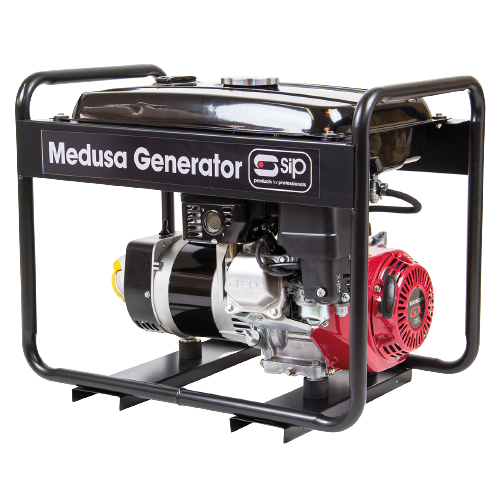
| ITEM NO | 04476 |
|---|---|
| Engine Type | HONDA GX390 EURO V 389cc (12hp) |
| Alternator Type | Maintenance-free |
| Max. Rated Output | 7.20kVA |
| Contin. Rated Output | 6.00kVA |

| ITEM NO. | 25153 |
|---|---|
| Engine Type | EURO V 0.5ltr diesel single cylinder |
| Start System | Key ignition electric start |
| Alternator Type | Single phase AC generator |
| Regulation | Automatic Voltage Regulator (AVR) |

| ITEM NO | 04478 |
|---|---|
| Engine Type | HONDA GX390 EURO V 389cc (12hp) |
| Alternator Type | Maintenance-free |
| Max. Rated Output | 7.20kVA |
| Contin. Rated Output | 6.00kVA |

| Electric Starting | No |
|---|---|
| Engine Type | HONDA GX390 389cc EURO V |
| Output Current | 60A - 200A AC |
| Output Supply | 230v / 115v |
| Duty Cycle | 180A @ 60% |

| Max. Output | 7.5kW |
|---|---|
| Output | USB 12 & 230V |
| Engine | 16HP |
| Fuel Tank Capacity | 26Litres |
| Engine type | 4 Stroke |

| Max Output | 6.5kVA |
|---|---|
| Engine | 13HP |
| Output | 110 & 230V |
| Engine type | Honda 4 Stroke |
| Starting System | Electric start |

| Electric Starting | No |
|---|---|
| Engine Type | HONDA GX390 389cc EURO V |
| Output Current | 50A - 200A DC |
| Output Supply | 230v / 115v |
| Duty Cycle | 170A @ 60% |

| Electric Starting | Yes |
|---|---|
| Engine Type | HONDA GX390 389cc EURO V |
| Output Current | 50A - 200A DC |
| Output Supply | 230v / 115v |
| Duty Cycle | 170A @ 60% |

| ITEM NO. | 25155 |
|---|---|
| Engine Type | EURO V 1ltr twin-cylinder diesel |
| Start System | Key ignition electric start |
| Alternator Type | 3-phase AC generator with brushed AVR |
| Peak Output | 12kW / 15kVA |

|
Kit Contents SIP Inline Fuel Filter, SIP Oil Filter, SIP Oval Air Cleaner Element
|
|
| Suitable For | SIP MEDUSA T5500 Silenced Diesel Generator (25153) |
|---|---|


| Electric Starting | No |
|---|---|
| Engine Type | KOHLER 14HP 429cc EURO V |
| Output Current | 60A - 200A AC |
| Output Supply | 230v / 115v |
| Duty Cycle | 180A @ 60% |


| Electric Starting | Yes |
|---|---|
| Engine Type | HONDA GX390 389cc EURO V |
| Output Current | 60A - 200A AC |
| Output Supply | 230v / 115v |
| Duty Cycle | 180A @ 60% |
By sharing your email, you agree to our privacy policy & terms of service





 Cart
Cart


 POPULAR CATEGORY


