


 Filters


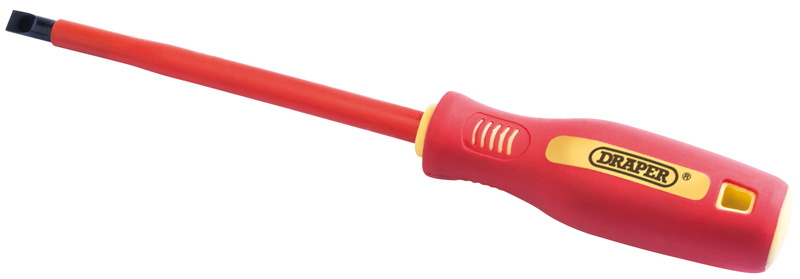
The insulation runs all the way to the tip on a VDE driver, leaving only the working face exposed. That is what the 1000V test covers, and it is why a nick or a burn anywhere along the blade takes the driver out of service even though the tip is undamaged. Inspection before use is therefore part of using a VDE driver rather than an occasional check.
The marking on the driver is the evidence rather than the appearance of the handle. An insulated-looking driver without the marking is not a VDE driver, and the difference matters only at the moment it is being relied upon. A driver that has been used on a live circuit and dropped is inspected before it is used again.
Once the rating is established the driver is chosen as any driver would be. Tips run PH/S and PZ/S cross slot and plain slot, and blades run 80mm and 100mm. Slimline blades reach a terminal set in a recess where a standard blade fouls the surround. Blade length is stated per driver alongside the tip so the reach is known before buying.
Sets matter here more than on general drivers because a workshop doing electrical work needs the whole range rated rather than some of it. A 6 piece set covers the common tips, and slat wall sets at 34 and 48 hold a full range at the bench. Send the work to 07754288583 on WhatsApp. Dispensers hold the same range where a wall panel is not available.




By sharing your email, you agree to our privacy policy & terms of service


 Cart
Cart


 POPULAR CATEGORY


