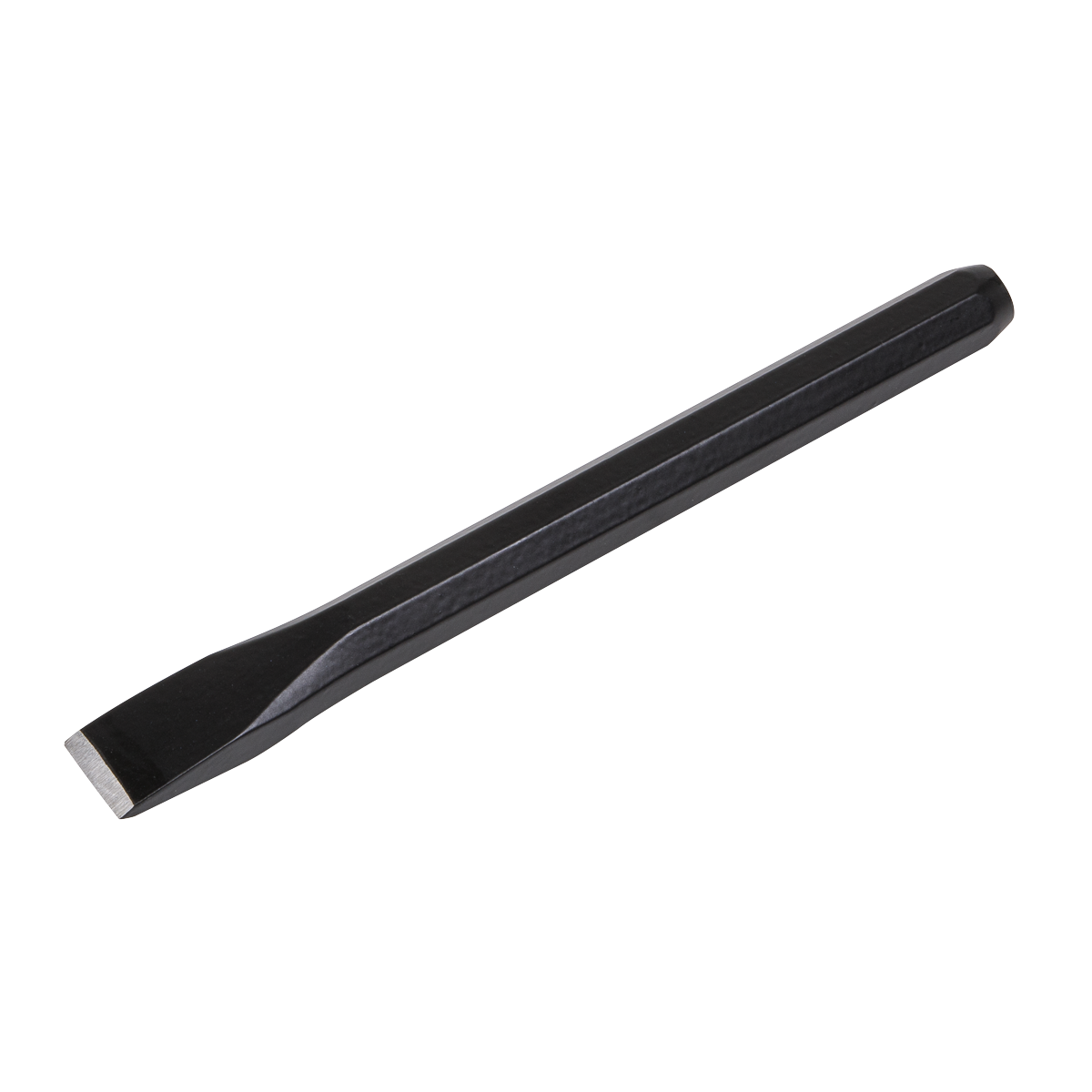
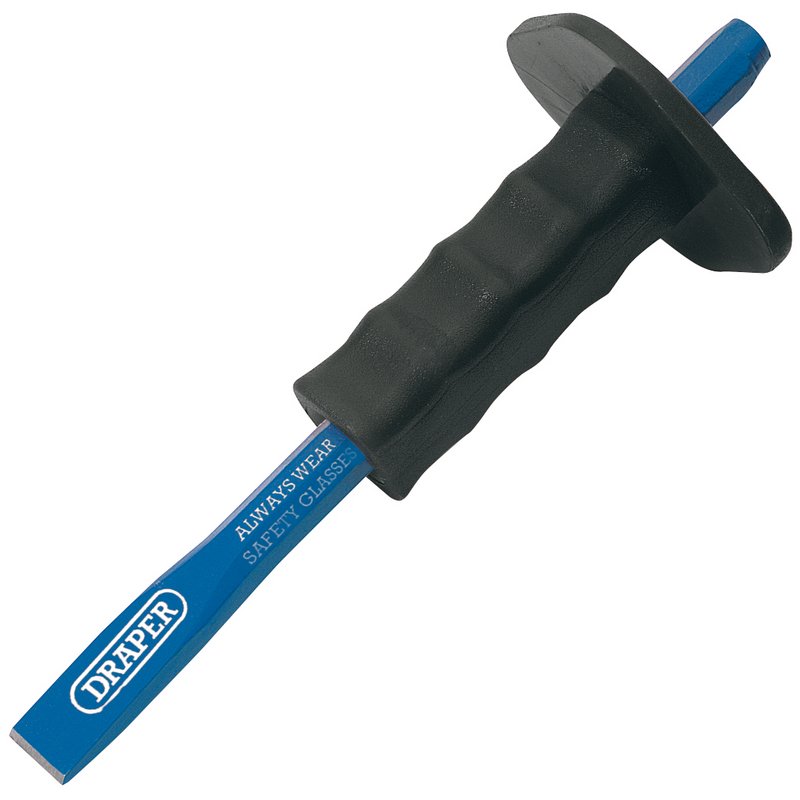
Blade width sets the cut and length sets how far the hand is from the blow. A short chisel is controllable but puts the fingers close to the hammer. A long chisel moves them away at the cost of some accuracy, and a hand grip achieves the same protection without adding length. Chisel length is also what decides whether the blade reaches into a recess at all.
Shank section is a grip and control feature rather than a strength one. An octagonal shank cannot roll in the hand between blows, which keeps the blade at the angle it was set at. A round shank turns, and the cut wanders with it. The section is stated on the listing rather than being judged from the photograph of the shank.
The sizes here run 10 x 100mm, 12 x 125mm, 15 x 150mm and 20 x 175mm on the octagonal chisels, with a 16 x 100mm flat chisel alongside. Width rises with length across that ladder because a wider blade needs a heavier blow behind it. A worn or mushroomed head is dressed back rather than left, since it can shed material under a blow.
Specialist forms cover what a flat chisel does badly. A splitting chisel at 25 x 250mm is shaped to open masonry along a line rather than cut through it, and a plugging chisel rakes a joint. Send the material and the cut to 07754288583 on WhatsApp. Blade width and length are stated together on every chisel in the ladder.


 Filters






 Cart
Cart


 POPULAR CATEGORY


