


 Filters


Lying under a vehicle and sitting beside one are different positions needing different equipment, and the products that try to do both are a compromise on each. A creeper is built to be low and to roll flat. A seat is built to hold a working height. A creeper seat converts between the two and does neither as well. Most bays end up with one of each rather than one that tries to be both.
Deck construction is what makes a creeper usable. A steel deck at 1120 x 500 x 200mm is rigid and takes weight without flexing. A composite deck is lighter and does not transmit cold from a concrete floor, which matters more over a morning than the specification suggests.
Wheel count and size decide how the creeper behaves on a real workshop floor. Six wheels spread the load and roll over a joint or a cable that would stop a four wheel body, and larger wheels cross debris that smaller ones catch on. A plain steel creeper and a car creeper are held alongside the composite bodies at different deck sizes.
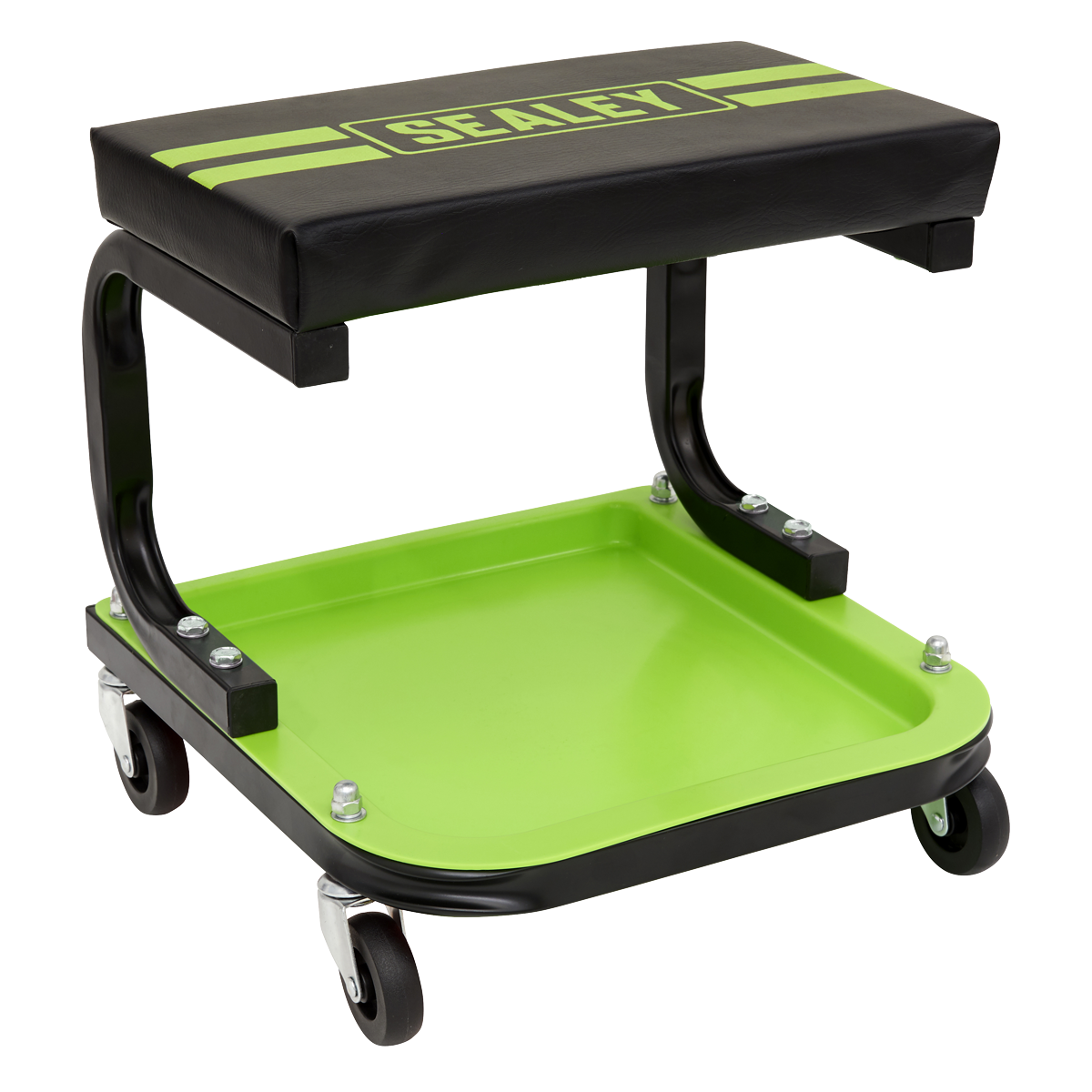
Seats and stools are chosen on adjustment rather than capacity. A pneumatic stool sets its own height with a lever and swivels, so the operator turns rather than shuffling the stool. A back rest matters where the work is long rather than occasional. Capacity runs to 181kg on the creepers. Questions go over WhatsApp on 07754288583.

| Length | 220mm |
|---|---|
| Width | 336mm |
| Foam thickness | 30mm |
| Weight | 0.125kg |


| Model No | VS8581 |
|---|---|
| Brand | Sealey |
| Folded (L x W x D) | 250 x 230 x 46mm |
| Nett Weight | 0.15kg |
| Unfolded (L x W x D) | 500 x 230 x 23mm |


| Model No | VS8595 |
|---|---|
| Brand | Sealey |
| Nett Weight | 0.306kg |
| Size (L x W x D) | 280 x 470 x 40mm |


| Model No | SCR86HV |
|---|---|
| Brand | Sealey |
| Capacity | 30kg |
| Nett Weight | 1.88kg |
| Size(s) | 465 x 480 x 100mm |

| Length | 990mm |
|---|---|
| Width | 380mm |
| Foam thickness | 30mm |
| Weight | 0.725kg |

| Model No | VS8582 |
|---|---|
| Brand | Sealey |
| Folded (L x W x D) | 200 x 455 x 136mm |
| Nett Weight | 0.50kg |
| Unfolded (L x W x D) | 1200 x 455 x 23mm |

| Model No | VS8597 |
|---|---|
| Brand | Sealey |
| Nett Weight | 0.68kg |
| Size (L x W x D) | 380 x 800 x 40mm |


| Model No | VS858 |
|---|---|
| Brand | Sealey |
| Folded (L x W x D) | 610 x 444 x 76mm |
| Nett Weight | 0.90kg |
| Unfolded (L x W x D) | 1220 x 444 x 38mm |


| ITEM NO | 03639 |
|---|---|
| Wheel Mounted | 6x swivel castors |
| Creeper Adjustment | Headrest / backrest |
| Manufactured From | Oil-resistant vinyl |

| Model No | VS8583 |
|---|---|
| Brand | Premier |
| Folded (L x W x D) | 200 x 565 x 174mm |
| Nett Weight | 0.80kg |
| Unfolded (L x W x D) | 1200 x 565 x 31mm |

| Model No | SCR9 |
|---|---|
| Brand | Sealey |
| Capacity | 110kg |
| Height(s) | 385mm |
| Nett Weight | 3.76kg |
| Model No | SCR9HV |
|---|---|
| Brand | Sealey |
| Capacity | 110kg |
| Height(s) | 385mm |
| Nett Weight | 3.76kg |

| Model No | SCRBB |
|---|---|
| Brand | Sealey |
| Capacity | 100kg |
| Nett Weight | 5.94kg |
| Size(s) | 1020 x 500 x 480mm |

| Model No | SCR75 |
|---|---|
| Brand | Sealey |
| Capacity | 150kg |
| Nett Weight | 6kg |
| Size(s) | 910 x 425 x 95mm |

| Model No | SCR75B |
|---|---|
| Brand | Sealey |
| Capacity | 150kg |
| Nett Weight | 6kg |
| Size(s) | 910 x 425 x 95mm |

| Model No | SCR75HV |
|---|---|
| Brand | Sealey |
| Capacity | 150kg |
| Nett Weight | 6kg |
| Size(s) | 910 x 425 x 95mm |

| Model No | SCR10 |
|---|---|
| Brand | Sealey |
| Capacity | 136kg |
| Height(s) | Minimum - 390mm, Maximum - 520mm |
| Nett Weight | 5.20kg |

| Colour | Blue |
|---|

| Model No | SCR85 |
|---|---|
| Brand | Sealey |
| Capacity | 150kg |
| Nett Weight | 7.72kg |
| Size(s) | 730 x 320 x 610mm |

| Model No | SCR16 |
|---|---|
| Brand | Sealey |
| Capacity | Seat - 158kg, Step - 180kg |
| Height(s) | n/a |
| Nett Weight | 7.31kg |

| Model No | SCR91 |
|---|---|
| Brand | Sealey |
| Capacity | 150kg |
| Nett Weight | 5.0kg |
| Overall Size (W x D x H) | 990 x 470 x 400mm |
By sharing your email, you agree to our privacy policy & terms of service


 Cart
Cart


 POPULAR CATEGORY


