


 Filters


Every tool on this leaf runs a 1/4 inch hex drive, so the bits are common across the range and the decision moves straight to torque and speed. Torque sets what the driver will do to the fastener and free speed sets how quickly it gets there, and the two are stated together on the listing rather than one being implied by the other. A driver that stalls before the fastener seats is under-torqued for the job, whatever its speed figure says.
Body form is the access and endurance decision. A pistol grip puts the hand behind the driver and gives push as well as turn, which suits a screw being started. A straight body lines the driver up with the fastener and reaches into a recess a pistol grip cannot enter. Both forms run through the range at similar torque figures.
Speed matters on repetition rather than on a single screw. A high free speed driver runs a long screw down quickly and then torques it, which over a run of fasteners is the difference between a shift and a long shift. Free speed is stated on 20 of the 22 lines, with drive size and weight on all of them. Composite bodies keep the weight down on a tool that is held for a full run rather than a single screw.
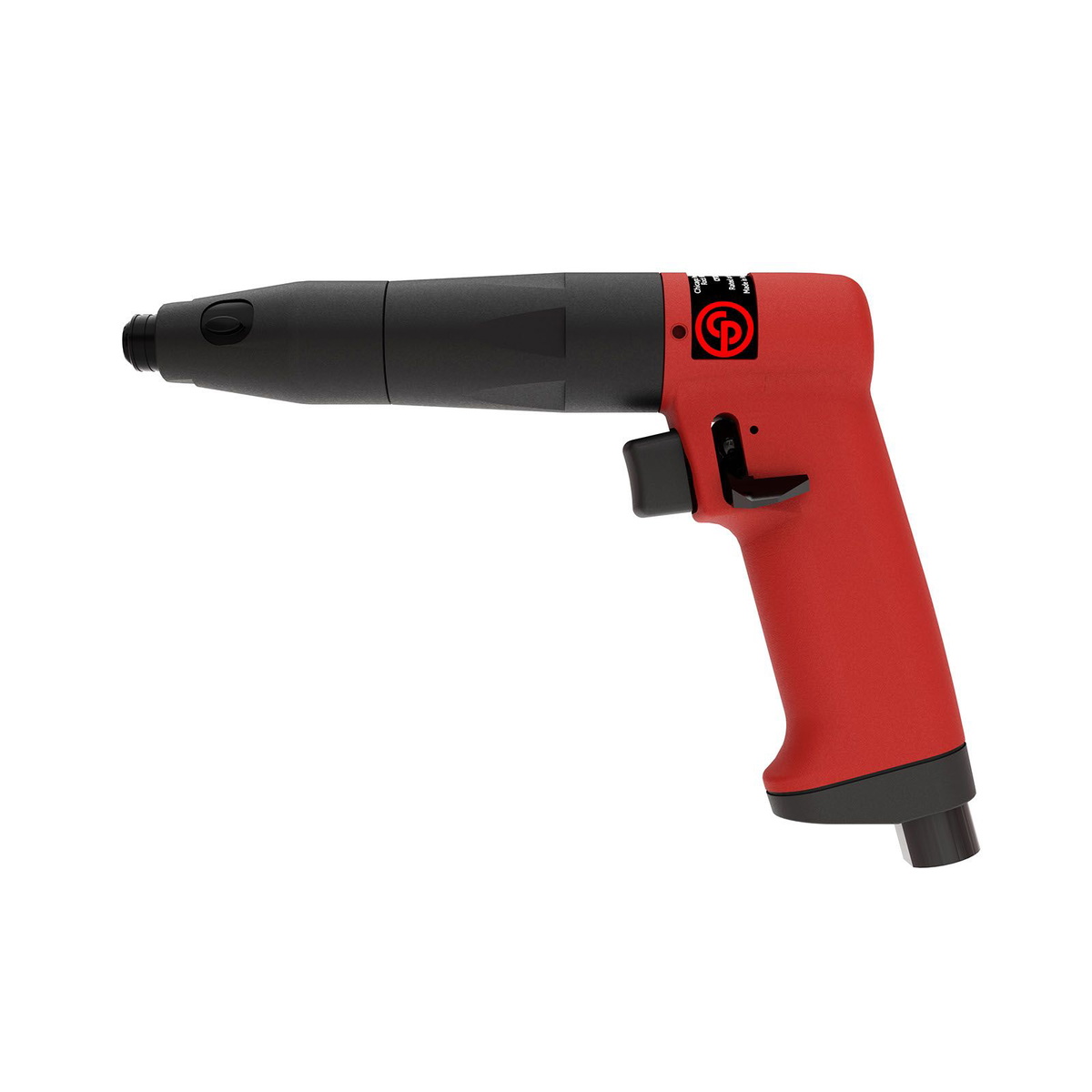
The Chicago Pneumatic CP2136 and CP2141 sit alongside the CP2611 and CP2621 bodies, with PCL APT407 and APT408 and the Sealey SA58 pistol grip and SA623 mini composite at 600lb.in, 67Nm. Where a screw specification applies, the forward torque figure on the listing is the number to read. Anything unresolved goes over WhatsApp on 07754288583.

| Model No | SA58 |
|---|---|
| Air Consumption | 4cfm |
| Air Inlet Size | 1/4"BSP |
| Brand | Sealey |
| Chuck Size | 1/4"Hex Quick Release Type |

| Model No | SA623 |
|---|---|
| Air Consumption | 3cfm |
| Air Inlet Size | 1/4"BSP |
| Brand | Premier |
| Chuck Size | 1/4"Hex Quick Release Type |

| Brand | PCL |
|---|---|
| Number | APT407 |
| Size | 1/4" |
| Torque | 17 Nm |
| Weight | 1.2 kg |

| Brand | PCL |
|---|---|
| Number | APT408 |
| Size | 1/4" |
| Torque | 17 Nm |
| Weight | 1.1 kg |

| Max torque in forward | 21 Nm |
|---|---|
| Min torque in forward | 8 Nm |
| Torque Control System | Non shut-off-clutch |
| Body | Aluminium |
| Clutch housing | Aluminium |

| Max torque in forward | 24 Nm |
|---|---|
| Min torque in forward | 10 Nm |
| Torque Control System | Non shut-off-clutch |
| Body | Aluminium |
| Clutch housing | Aluminium |

| Max torque in forward | 7.3 Nm |
|---|---|
| Torque Control System | Non shut-off-stall |
| Body | Aluminium |
| Clutch housing | Steel |
| Clutch Type | Direct drive |

| Max torque in forward | 10 Nm |
|---|---|
| Torque Control System | Non shut-off-stall |
| Body | Aluminium |
| Clutch housing | Steel |
| Clutch Type | Positive clutch |

| Max torque in forward | 9 Nm |
|---|---|
| Torque Control System | Non shut-off-stall |
| Body | Aluminium |
| Clutch housing | Steel |
| Clutch Type | Direct drive |

| Max torque in forward | 5.5 Nm |
|---|---|
| Min torque in forward | 1.5 Nm |
| Torque Control System | Non shut-off-clutch |
| Adjustment | Rotative ring |
| Body | Steel |

| Max torque in forward | 4.97 Nm |
|---|---|
| Min torque in forward | 3.5 Nm |
| Torque Control System | Non shut-off-clutch |
| Adjustment | Rotative ring |
| Body | Aluminium |

| Max torque in forward | 11.3 Nm |
|---|---|
| Min torque in forward | 6.2 Nm |
| Torque Control System | Non shut-off-clutch |
| Adjustment | Rotative ring |
| Body | Aluminium |

| Max torque in forward | 6 Nm |
|---|---|
| Min torque in forward | 1 Nm |
| Torque Control System | Non shut-off-clutch |
| Adjustment | Rotative ring |
| Body | Composite |

| Max torque in forward | 4.5 Nm |
|---|---|
| Min torque in forward | 0.5 Nm |
| Torque Control System | Shut-off-pneumatic valve |
| Adjustment | Rotative ring |
| Body | Steel |

| Max torque in forward | 6.5 Nm |
|---|---|
| Min torque in forward | 0.8 Nm |
| Torque Control System | Shut-off-pneumatic valve |
| Adjustment | Rotative ring |
| Body | Steel |

| Max torque in forward | 7.5 Nm |
|---|---|
| Min torque in forward | 1 Nm |
| Torque Control System | Shut-off-pneumatic valve |
| Adjustment | Rotative ring |
| Body | Composite |

| Max torque in forward | 4.5 Nm |
|---|---|
| Torque Control System | None |
| Body | Aluminium |
| Clutch housing | Steel |
| Clutch Type | Direct drive |
| Max torque in forward | 4.3 Nm |
|---|---|
| Min torque in forward | 0.4 Nm |
| Torque Control System | Shut-off-pneumatic valve |
| Adjustment | Key |
| Body | Aluminium |

| Max torque in forward | 12 Nm |
|---|---|
| Torque Control System | None |
| Body | Aluminium |
| Clutch housing | Steel |
| Clutch Type | Direct drive |

| Max torque in forward | 11 Nm |
|---|---|
| Min torque in forward | 2.5 Nm |
| Torque Control System | Non shut-off-clutch |
| Adjustment | Key |
| Body | Aluminium |

| Max torque in forward | 6 Nm |
|---|---|
| Min torque in forward | 2 Nm |
| Torque Control System | Non shut-off-clutch |
| Adjustment | Key |
| Body | Aluminium |

| Max torque in forward | 1.6 Nm |
|---|---|
| Min torque in forward | 0.5 Nm |
| Torque Control System | Shut-off-pneumatic valve |
| Adjustment | Key |
| Body | Aluminium |
By sharing your email, you agree to our privacy policy & terms of service




 Cart
Cart


 POPULAR CATEGORY


