


 Filters


Two unrelated jobs share this leaf. Sieving separates soil from stones and lumps so what goes back is workable. Aerating punches holes in a lawn so air and water reach the roots through compacted ground. Neither has anything to do with the other beyond both happening in a garden.
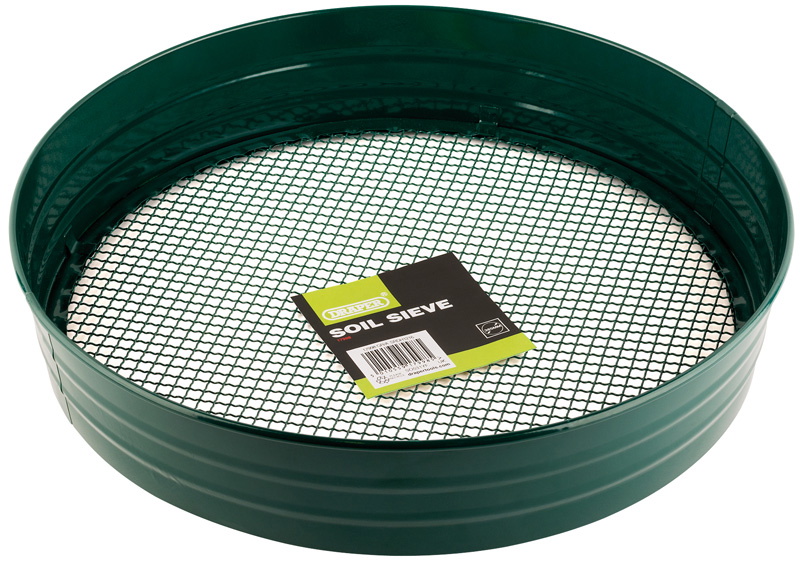
Sieve choice is about volume. A flat garden sieve is held and shaken by hand, which is fine for a bucket of compost. An adjustable sieve changes the mesh so the same frame separates coarse and fine. A rotary sieve at 16 inches turns instead of being shaken, which is what makes a large quantity practical. Sieve diameter and frame depth decide how much can be worked at once as much as the mesh does.
Aerating splits the same way between hand and rolling tools. A 4-prong hand aerator is pushed in with a foot, one spot at a time, which suits a small lawn or a patch that has gone hard. A rolling aerator with a spiked drum at 450mm covers a lawn by walking it. A hand aerator is also the only option where the ground is too uneven for a drum to roll evenly across it.
Working width and sieve diameter are stated per item, and those are the figures that decide how long either job takes. Compacted lawns benefit most from aerating, which is why it is done before feeding rather than after. Send the area to 07754288583 on WhatsApp for a recommendation. Dellonda hold the rotary sieve where Draper cover the flat and adjustable frames.

| Size | W 560 x H 80 x D 323mm |
|---|---|
| Adjustable mesh | 3.7–10mm |


| Total height | 990mm |
|---|---|
| Handle width | 310mm |
| Height of prongs | 145mm |
| Width of foot plate | 265mm |
By sharing your email, you agree to our privacy policy & terms of service





 Cart
Cart


 POPULAR CATEGORY


