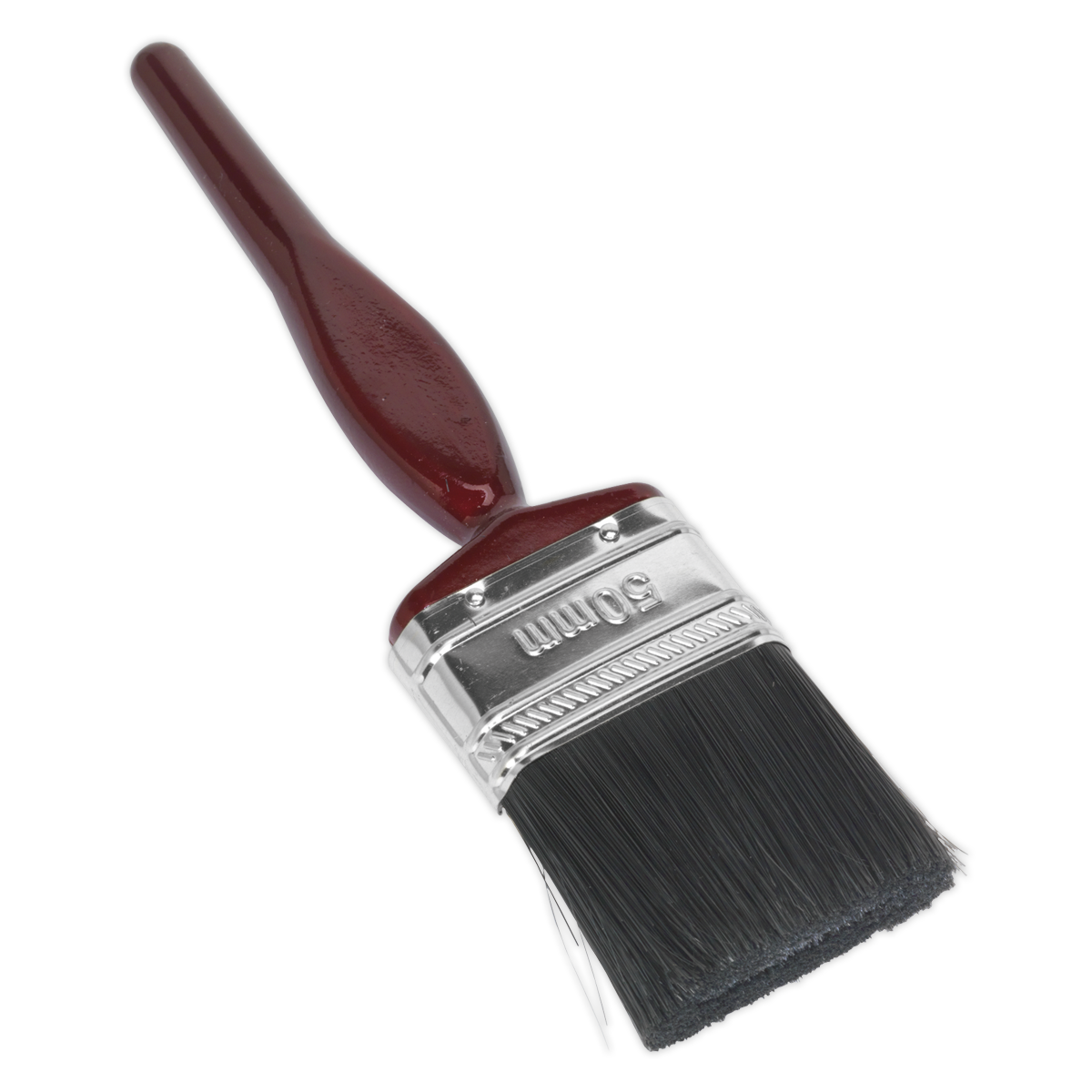
Brush width is chosen against the surface being painted rather than the size of the job. A wide brush on a narrow surface loads paint onto everything either side of it, and a narrow brush on a wall takes far longer than a roller would. Loading the brush correctly matters as much, since an overloaded brush runs whatever its width.
Head shape decides what the brush can do at an edge. A flat brush lays paint across a face. An angled brush presents a chisel edge to a line, which is what makes cutting in against a ceiling or a frame possible without masking every edge first. An angled brush also holds more paint along its edge than a flat brush of the same width does.
Handle shape changes how long the brush can be held. A beaver tail handle fills the palm and suits a large brush held for long periods. A slimmer handle is held like a pencil, which gives control on fine work. Both handle shapes are held across the same widths, so the grip does not restrict the size.
Widths run 20mm, 25mm, 30mm, 35mm, 40mm and 45mm on the metric ranges and 1in, 1.5in, 2in, 2.5in and 3in on the flat brushes. Sets in three and five pieces cover a spread rather than buying one at a time. Send the surfaces to 07754288583 on WhatsApp. Sealey brushes sit alongside the Rollingdog ranges across the same width span. Widths overlap between the flat and angled ranges so the shape is chosen without changing size.


 Filters










 Cart
Cart


 POPULAR CATEGORY


