Phone Phone 01926754100 Cart Cart
Fit guarantee icon
FIT GUARANTEE or Hassle-Free Returns
Quick delivery icon
QUICK DELIVERY On All Products Across UK
Customer support icon
GREAT SUPPORT 24/7 Support For Any Query
rating icon
TOP RATED Trusted by Our Customers

Shop by Sub Category

Brands

FAQs

Always pressurise to the rating stamped on the radiator or expansion-tank cap (typically 1.0-1.6 bar / 14-23 PSI on most modern automotive systems). Never exceed that pressure — the system isn't designed for higher pressures and you can blow heater hoses, hose clamps, or weak welds on the radiator. Allow the system to cool before testing — pressurising a hot system risks instant boiling. Hold the test pressure for 5-10 minutes and watch for the gauge dropping. Slow drop = internal leak (head, head gasket); fast drop = external leak.

A coolant refractometer measures the freezing-point protection level of the coolant — i.e., how much antifreeze (glycol) is mixed with the water. Place a drop of coolant on the prism, look through the eyepiece toward a light source, and read the freezing-point on the scale. Most refractometers show separate scales for ethylene-glycol antifreeze (the most common automotive coolant) and propylene-glycol antifreeze (used in some food and pharmaceutical applications). A standard reading should show -25°C to -40°C protection for UK use. Lower protection means dilute coolant — top up with neat antifreeze to restore.

Two methods. Bleed-screw method: refill slowly with the bleed screws open until coolant flows clear from each bleed point, then close. Vacuum-fill method: apply vacuum to the empty system using a vacuum-fill kit (typically connected via the radiator cap or expansion-tank cap), allow the vacuum to draw all air out, then open the coolant feed line — atmospheric pressure pushes coolant in, completely filling the system without airlocks. Vacuum-fill is faster, more reliable, and the workshop standard for modern systems with complex coolant routing.

Generally no — mixing different antifreeze types (ethylene-glycol vs propylene-glycol, or different OAT/HOAT/IAT chemistries) can cause precipitation, corrosion-inhibitor degradation, and gel formation in extreme cases. For top-up, use the same antifreeze type as is already in the system — check the vehicle manufacturer's specification or the existing coolant colour/spec. If you don't know what's currently in the system, drain and refill with a known antifreeze rather than mix.

Returns are accepted within 30 days of purchase, in original packaging, on orders delivered within the United Kingdom. For damaged-on-arrival items, report within 24 hours with photographs to [email protected] — we will typically arrange collection and replacement at no cost to you. For parts that don't fit your machine, the Fit Guarantee covers a hassle-free return at no cost. For buyer's remorse — you've changed your mind or ordered the wrong item, email us first to obtain a Return Merchandise Number; a restocking fee may apply. Refunds are issued to the original payment method once the return is inspected.

Delivery time depends on the product, your destination, and availability — the estimated time for any item appears on the product page, and 'Check where we deliver' confirms coverage for your postcode before you order. Next-day delivery is available on most products; the option appears at checkout when applicable. We deliver across the UK, Europe, the Middle East, and Africa. Use the country selector at checkout to confirm coverage and delivery options for your destination.

Clear

Cooling System

FilterFilters
View as Grid List

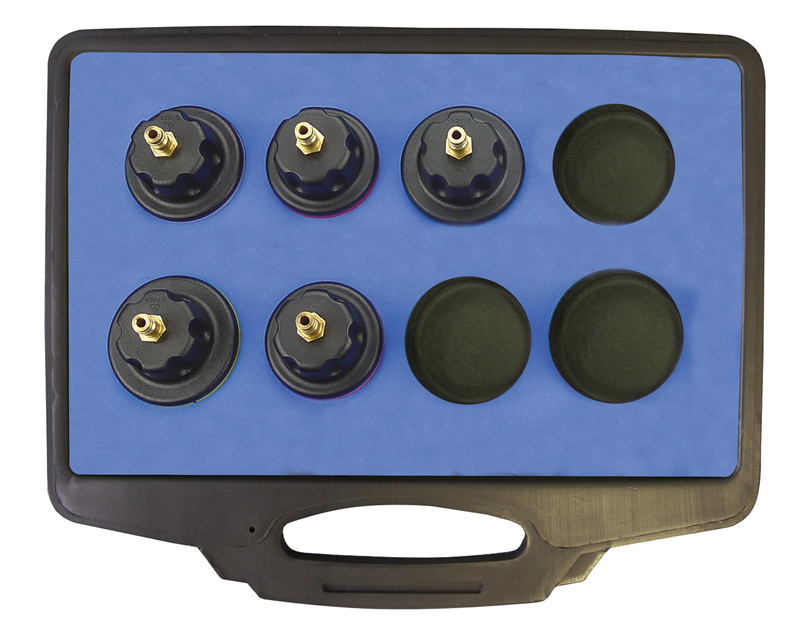
Within Vehicle Cooling Equipment, Cooling System covers the workshop test, service, and maintenance equipment used on vehicle and equipment cooling systems — radiator pressure testers, coolant condition refractometers, expansion-tank cap test kits, vacuum-fill kits, coolant-flush equipment, and the diagnostic tools used to find leaks, weak components, and coolant-mixing problems on petrol, diesel, and heavy-vehicle cooling systems. Cooling System tools at this sub-level cover the day-to-day workshop tasks — verify cap pressure, test for radiator leaks, check coolant freezing point and protection level, evacuate and refill the system without airlocks.

The category sits alongside Radiator Testers (specialist test kits) within the wider Vehicle Cooling Equipment family. Parts For Machines supplies cooling-system tools and consumables for trade workshops. Parts For Machines is an Authorised Distributor and Seller of Sealey and SIP across cooling-system test and service equipment.

Both brands cover the standard cap-test kits, pressure-test kits with adapter sets for major vehicle and plant ranges, and vacuum-fill systems for airlock-free refilling. Product pages list the application (vehicle range — automotive, commercial, plant, agricultural), kit contents (typical pressure-test kits include the pump-and-gauge unit plus the radiator and cap adapter set), pressure rating (typical workshop kits 0-2.0 bar / 0-30 PSI), and any fluid-compatibility notes. Refractometers for coolant condition typically read both glycol concentration (with separate scales for ethylene-glycol and propylene-glycol antifreeze) and battery acid SG — multi-purpose units are common in the workshop.

Pressure-testing the system at 1.4-1.6 bar (the typical cap pressure on most modern automotive systems) for 5-10 minutes finds the majority of coolant leaks; a slow drop indicates an internal leak (head gasket, head crack) while a fast drop indicates an external leak. Trade pricing on multi-tool orders is available; contact the team via WhatsApp 07754288583.

Show Only My Country Products
In this feature, you can view only your country products.
Showing 1 to 25 of 25 entries
FAQs

Always pressurise to the rating stamped on the radiator or expansion-tank cap (typically 1.0-1.6 bar / 14-23 PSI on most modern automotive systems). Never exceed that pressure — the system isn't designed for higher pressures and you can blow heater hoses, hose clamps, or weak welds on the radiator. Allow the system to cool before testing — pressurising a hot system risks instant boiling. Hold the test pressure for 5-10 minutes and watch for the gauge dropping. Slow drop = internal leak (head, head gasket); fast drop = external leak.

A coolant refractometer measures the freezing-point protection level of the coolant — i.e., how much antifreeze (glycol) is mixed with the water. Place a drop of coolant on the prism, look through the eyepiece toward a light source, and read the freezing-point on the scale. Most refractometers show separate scales for ethylene-glycol antifreeze (the most common automotive coolant) and propylene-glycol antifreeze (used in some food and pharmaceutical applications). A standard reading should show -25°C to -40°C protection for UK use. Lower protection means dilute coolant — top up with neat antifreeze to restore.

Two methods. Bleed-screw method: refill slowly with the bleed screws open until coolant flows clear from each bleed point, then close. Vacuum-fill method: apply vacuum to the empty system using a vacuum-fill kit (typically connected via the radiator cap or expansion-tank cap), allow the vacuum to draw all air out, then open the coolant feed line — atmospheric pressure pushes coolant in, completely filling the system without airlocks. Vacuum-fill is faster, more reliable, and the workshop standard for modern systems with complex coolant routing.

Generally no — mixing different antifreeze types (ethylene-glycol vs propylene-glycol, or different OAT/HOAT/IAT chemistries) can cause precipitation, corrosion-inhibitor degradation, and gel formation in extreme cases. For top-up, use the same antifreeze type as is already in the system — check the vehicle manufacturer's specification or the existing coolant colour/spec. If you don't know what's currently in the system, drain and refill with a known antifreeze rather than mix.

Returns are accepted within 30 days of purchase, in original packaging, on orders delivered within the United Kingdom. For damaged-on-arrival items, report within 24 hours with photographs to [email protected] — we will typically arrange collection and replacement at no cost to you. For parts that don't fit your machine, the Fit Guarantee covers a hassle-free return at no cost. For buyer's remorse — you've changed your mind or ordered the wrong item, email us first to obtain a Return Merchandise Number; a restocking fee may apply. Refunds are issued to the original payment method once the return is inspected.

Delivery time depends on the product, your destination, and availability — the estimated time for any item appears on the product page, and 'Check where we deliver' confirms coverage for your postcode before you order. Next-day delivery is available on most products; the option appears at checkout when applicable. We deliver across the UK, Europe, the Middle East, and Africa. Use the country selector at checkout to confirm coverage and delivery options for your destination.

Get exclusive updates on offers & latest trends in construction industry

By sharing your email, you agree to our privacy policy & terms of service