


 Filters


A gauge is only useful if it seats on the valve without losing pressure as it comes off, and that is a property of the connector rather than the dial. A gauge that bleeds air every time it is removed sends the reading down while it is being taken.
Reading type then decides how the figure is used. A dial gauge is read at the wheel while the connector is held on. A digital gauge captures and holds the figure, so it can be read standing up rather than crouched at the valve. Both are accurate; they suit different working positions. A gauge with a flexible hose separates the connector from the body entirely, which suits a valve behind a wheel trim.
Dial diameter affects readability more than accuracy. The dial gauges here run 63mm and 80mm, and the larger face is easier to read in poor light at ground level. Pressure ranges run 0 to 170psi and 0 to 12 bar on the dial gauges, with a 0 to 60psi gauge for lower pressures. End mount and side mount forms change the angle the gauge presents at the valve rather than the reading it gives.
Tread depth sits on the same leaf because it is checked at the same moment. Gauges run 1 to 26mm, and one carries a 1.6mm mark and is stated as DVSA approved, which matters where the reading has to stand up as a record. Send the fleet and pressures to 07754288583 on WhatsApp.

| Model No | TSTPG1 |
|---|---|
| Brand | Sealey |
| Nett Weight | 0.00kg |
| Range | 5-50psi |

| Model No | TST/DGE |
|---|---|
| Brand | Sealey |
| Nett Weight | 0.02kg |
| Range | 0-25mm(0-1") |

| Model No | TSTPG9 |
|---|---|
| Accuracy | ±3psi |
| Brand | Sealey |
| Nett Weight | 0.03kg |
| Range | 6-50psi |


| Model No | TST/DG |
|---|---|
| Brand | PCL |
| Nett Weight | 0.03kg |
| Range | 0-26mm |


| Model No | TSTPG8 |
|---|---|
| Accuracy | ±3psi |
| Brand | Sealey |
| Nett Weight | 0.05kg |
| Range | 6-50psi |

| Brand | PCL |
|---|---|
| Shipping Weight (kg) | 0.017 |
| Approvals | Department of Transport accepted for MOT testing |
| Accuracy | +/- 0.25 mm |
| Calibration | 1-26 mm |


| Brand | PCL |
|---|---|
| EAN | 5014875057309 |

| Model No | TSTPG43 |
|---|---|
| Accuracy | ±3psi |
| Brand | Sealey |
| Nett Weight | 0.08kg |
| Range | 0-100psi(7kg/cm²) |


| Model No | TST/PG97 |
|---|---|
| Accuracy | ±2psi |
| Brand | Sealey |
| Nett Weight | 0.09kg |
| Range | 0-4.5bar(0-60psi) |

| Model No | TSTPG10 |
|---|---|
| Accuracy | ±1% Full Scale |
| Battery | 1 x CR2032 (supplied) |
| Brand | Sealey |
| Nett Weight | 0.04kg |


| Brand | PCL |
|---|---|
| Shipping Weight (kg) | 0.04 |
| EAN | 5014875152424 |

| Brand | PCL |
|---|---|
| Number | TPG1H07 |
| Head Type | Angled |
| Packaging | Blister packed |
| Shipping Weight (kg) | 0.041 |


| Brand | PCL |
|---|---|
| Number | CO1A03 |
| Description | Long stem |
| Valve Style | Open end |
| Inlet Size | Rp 1/4 |
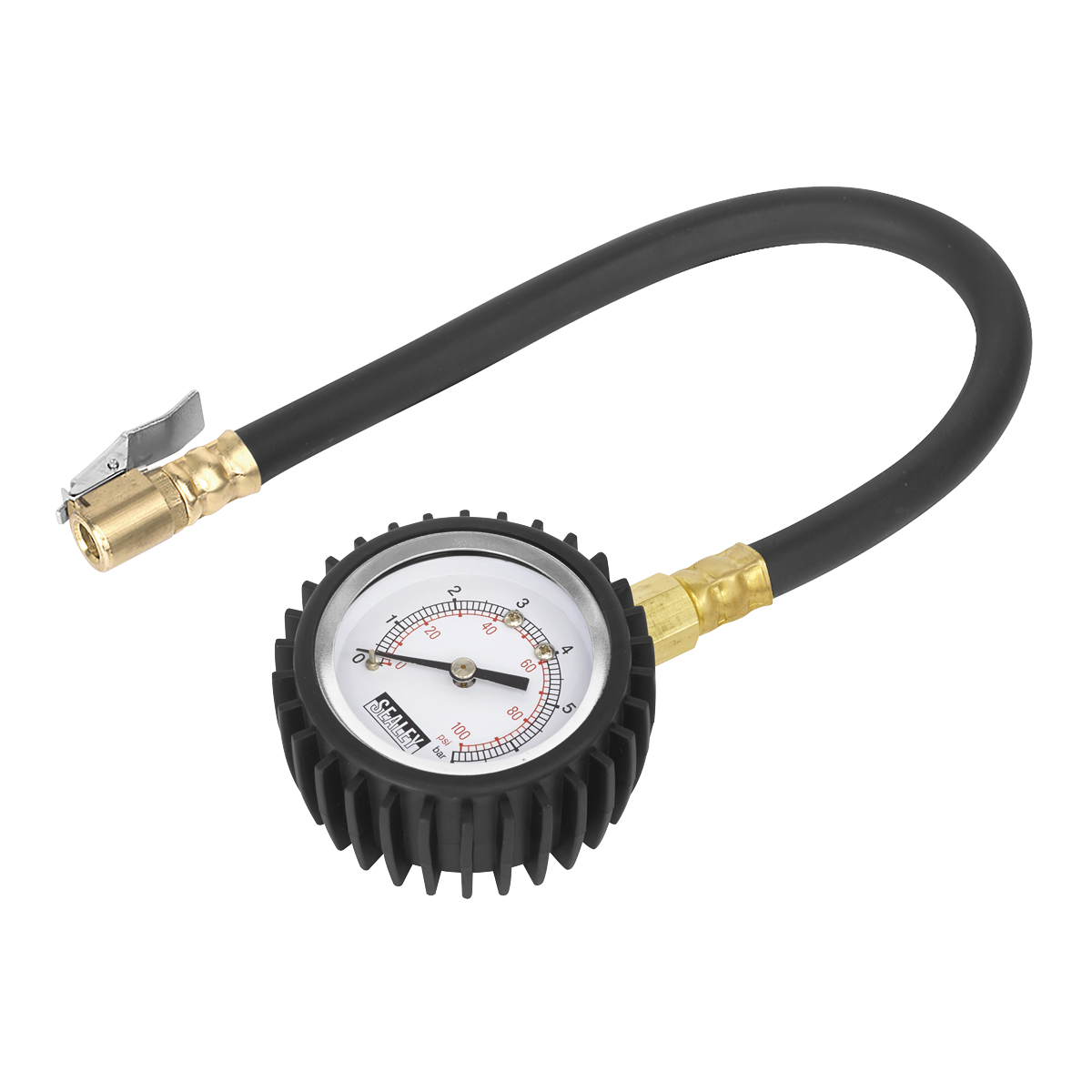
| Model No | TST/PG6 |
|---|---|
| Accuracy | ±1.6psi |
| Brand | Sealey |
| Nett Weight | 0.16kg |
| Range | 0-7bar(0-100psi) |

| Model No | TSTPG34 |
|---|---|
| Accuracy | ±2.0psi |
| Brand | Sealey |
| Nett Weight | 0.12kg |
| Range | 0-220psi |

| Model No | VS0564 |
|---|---|
| Accuracy | ±0.02mm(0.001") |
| Battery | LR44 - 1.5V (supplied) |
| Brand | Sealey |
| Nett Weight | 0.04kg |
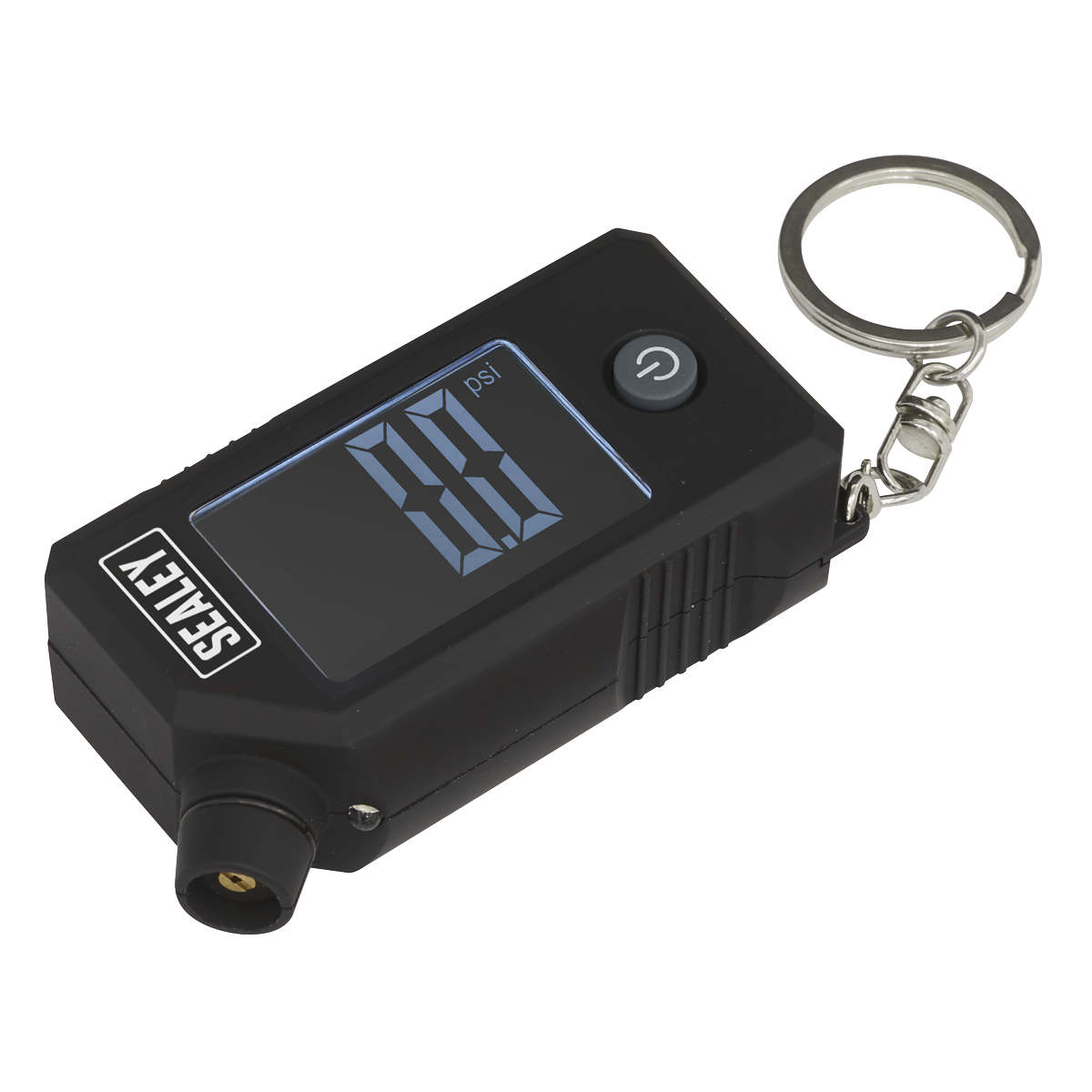
| Model No | TSTPG12 |
|---|---|
| Accuracy | ±1psi |
| Battery | 2 x CR2032 (supplied) |
| Brand | Sealey |
| Nett Weight | 45g |

| Brand | PCL |
|---|---|
| Shipping Weight (kg) | 0.046 |
| Accuracy | +/- 2 psi |
| Calibration | 10-120 psi / 0.8-8.2 bar |
| Display Resolution | 2 psi / 0.2 bar |

| Model No | TST/PG99 |
|---|---|
| Accuracy | ±1.6psi |
| Brand | Sealey |
| Nett Weight | 0.22kg |
| Range | 0-4bar(0-60psi) |

| Model No | TSTPG11 |
|---|---|
| Accuracy | ±1psi |
| Battery | 2 x CR2032 3V (supplied) |
| Brand | Sealey |
| Connector Length | n/a |
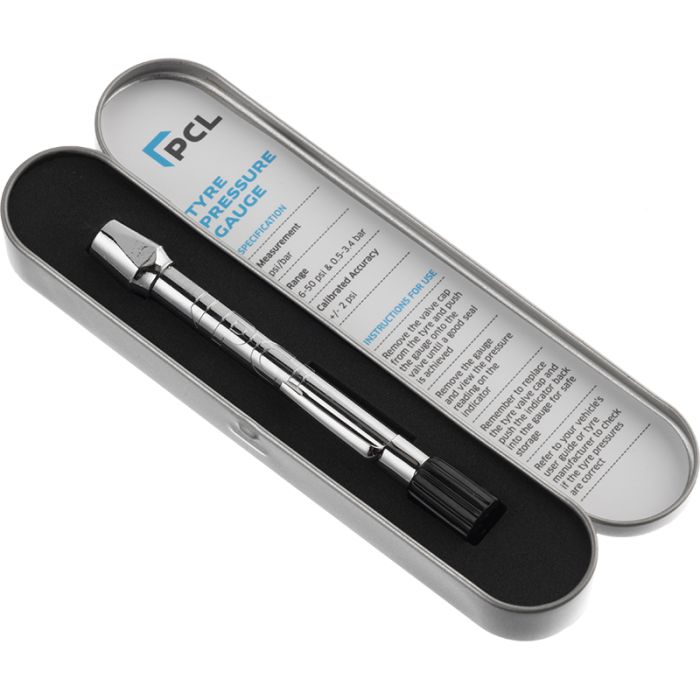
| Brand | PCL |
|---|---|
| Shipping Weight (kg) | 0.04 |
| Accuracy | +/- 2 psi |
| Calibration | 6-50 psi / 0.5-3.4 bar |
| Display Resolution | 1 psi / 0.1 bar |

| Brand | PCL |
|---|---|
| Number | TPG1H17 |
| Head Type | Angled |
| Packaging | Storage Tin |
| Shipping Weight (kg) | 0.108 |

| Model No | TST001 |
|---|---|
| Accuracy | ±2% Full Scale |
| Battery | 2 x AAA (supplied) |
| Brand | Sealey |
| Nett Weight | 0.175kg |
By sharing your email, you agree to our privacy policy & terms of service


 Cart
Cart


 POPULAR CATEGORY


