Floor area divided by tile size gives the pack count, and every tile here is 400 x 400mm so the arithmetic is straightforward. What is easy to forget is the edging, which is bought separately and is what stops the run lifting at the perimeter. Ordering the perimeter at the same time avoids a floor sitting unfinished while the edging is sourced.
Tile material decides how the floor behaves under load. Polypropylene tiles interlock and flex, which suits a floor that takes a jack or a trolley. Vinyl tiles are laid rather than clipped and give a flatter surface with less movement between tiles.
Wear layer thickness is the figure that decides how long the floor lasts, and it is stated separately from tile thickness. A jack wheel or a trolley castor concentrates load on a small area, and it is the wear layer rather than the overall depth that takes that. Tile thickness and wear layer are both stated on all eight lines, so the two can be compared directly.
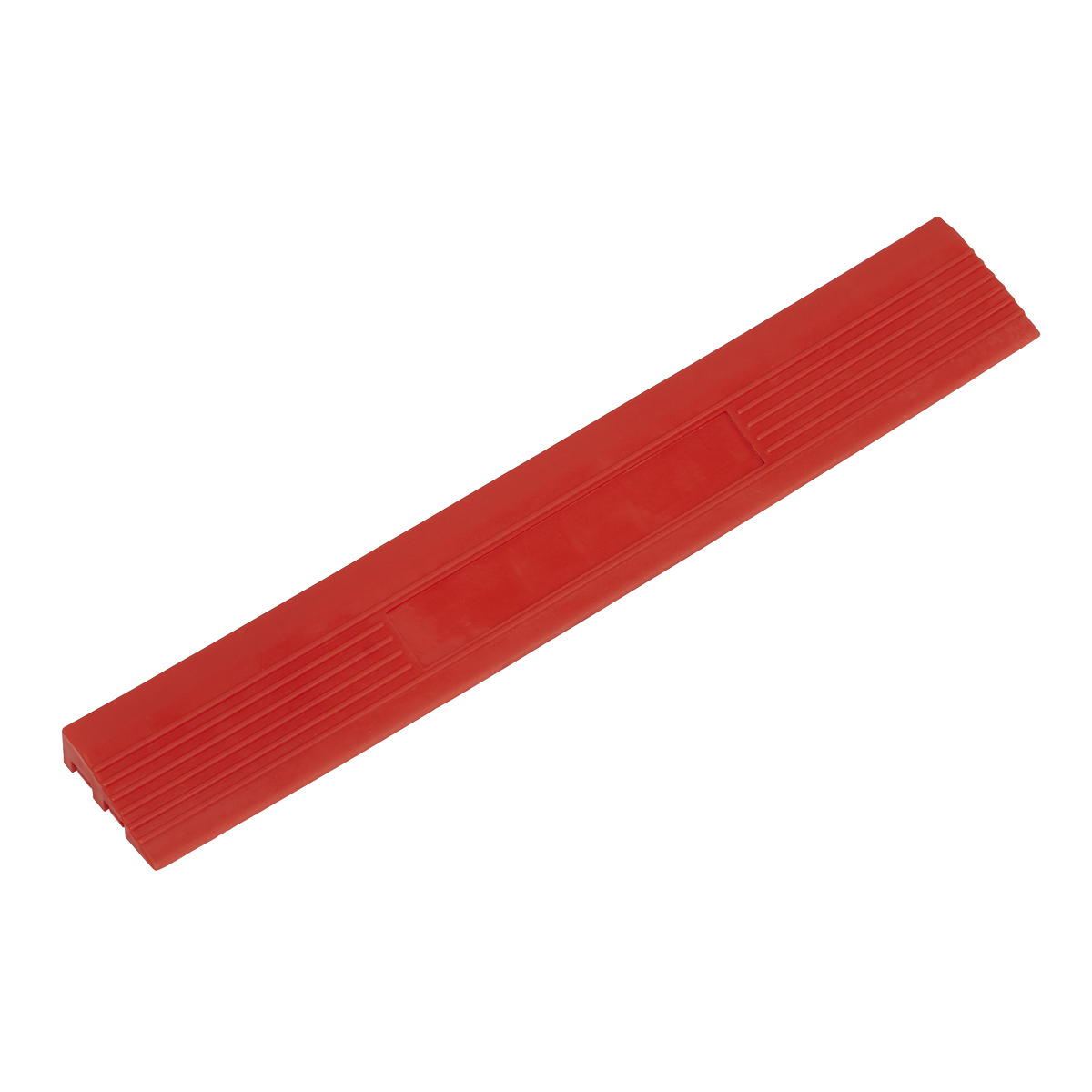
Edge strips finish the run against a wall or a doorway and are handed, held as male and female in black and male in red. Corners at 60 x 60mm close the four ends. Edging comes in packs of six and corners in fours. Send the floor dimensions to 07754288583 on WhatsApp. Male and female strips are used together along a run, so both are needed rather than one or the other.


 Filters








 Cart
Cart


 POPULAR CATEGORY


