


 Filters


The material sets the cutter and it is not a matter of degree. A plastics-only cutter will be ruined by piano wire, and using a general cutter on hardened wire chips the edge in one cut rather than dulling it over time. Edge hardness is set at manufacture and cannot be recovered once it has chipped.
That is why cutters are listed with the material they are rated for rather than with a capacity alone. A cutter rated for soft wire, hard wire or piano wire states which, and a cutter rated for plastics or lead states that it is for nothing else. Reading that line before the length is what keeps a cutter working rather than being replaced. A cutter used within its rating also holds its edge over years rather than months.
Length gives the leverage and the capacity rises with it, running 110mm, 115mm, 140mm and 180mm here. A mini cutter at 110mm works where nothing longer fits; a 180mm cutter takes heavier wire for the same hand effort. Capacity is stated per cutter alongside the material it is rated for.
High leverage designs multiply the force at the pivot rather than needing a longer handle, which is what cuts heavy wire in a confined space. Spring loaded jaws reopen between cuts, which matters over a run of cuts rather than one. Send the material to 07754288583 on WhatsApp. Both features are held on the same lengths rather than only on the largest bodies.

| Model No | S0439 |
|---|---|
| Brand | Siegen |
| Length | 150mm |
| Maximum Jaw Capacity | 10mm |
| Nett Weight | 0.14kg |

| Model No | S0813 |
|---|---|
| Brand | Siegen |
| Length | 150mm |
| Maximum Jaw Capacity | 20mm |
| Nett Weight | 0.1945kg |


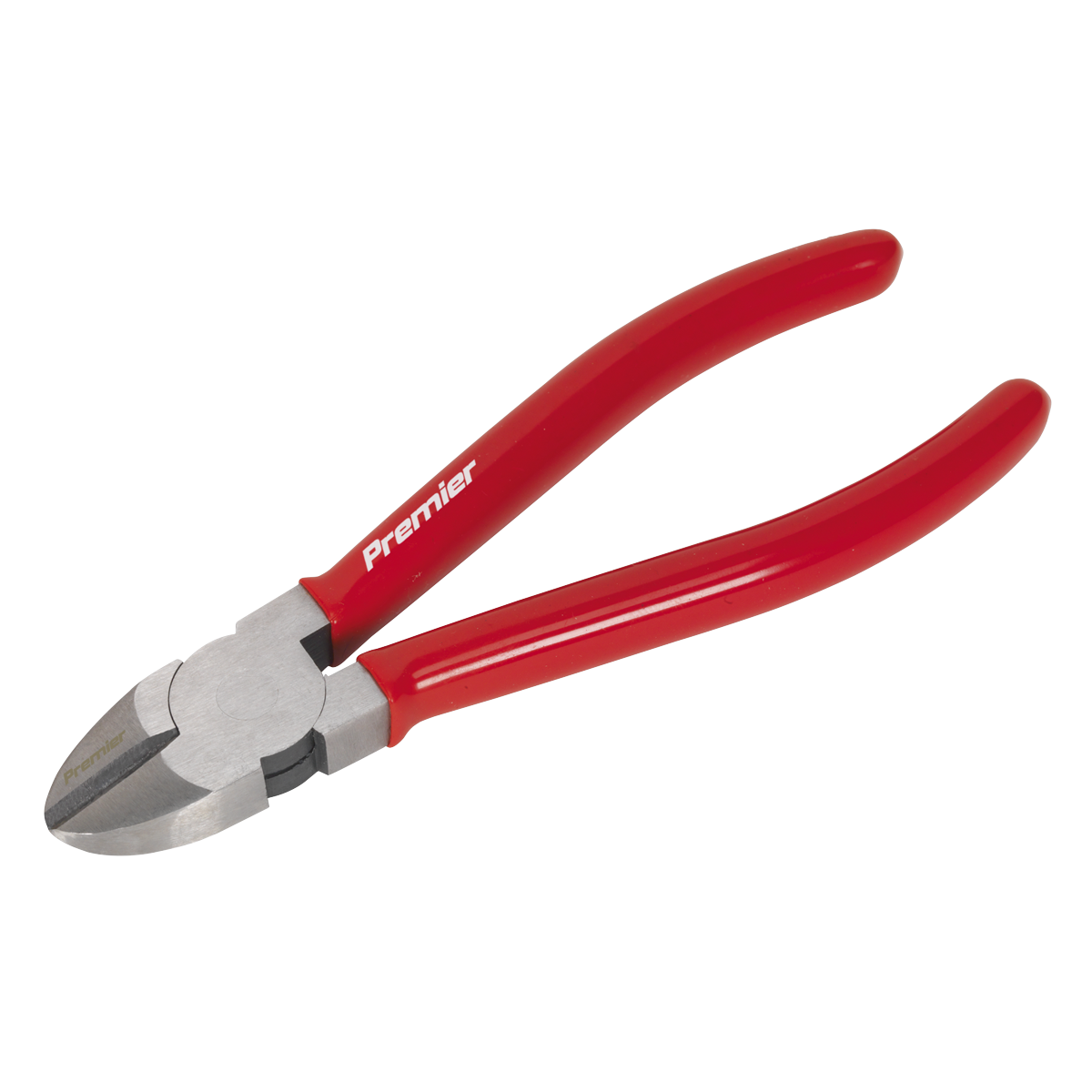
| Model No | AK8565 |
|---|---|
| Brand | Premier |
| Length | 160mm |
| Nett Weight | 0.13kg |
| Type | Side Cutters |

| Model No | AK8516 |
|---|---|
| Brand | Premier |
| Length | 160mm |
| Maximum Jaw Capacity | 18mm |
| Nett Weight | 0.22kg |

| Model No | AK8374 |
|---|---|
| Brand | Premier |
| Length | 160mm |
| Nett Weight | 0.17kg |
| Type | Side Cutters |


| Model No | AK8517 |
|---|---|
| Brand | Premier |
| Length | 190mm |
| Maximum Jaw Capacity | 10mm |
| Nett Weight | 0.30kg |

| Model No | AK8566 |
|---|---|
| Brand | Premier |
| Length | 180mm |
| Nett Weight | 0.21kg |
| Type | Side Cutters |

| Model No | AK8375 |
|---|---|
| Brand | Premier |
| Length | 190mm |
| Nett Weight | 0.30kg |
| Type | Side Cutters |

| Model No | AK83458 |
|---|---|
| Brand | Premier |
| Length | 160mm |
| Nett Weight | 0.00kg |
| Type | Side Cutters |

| Model No | AK83459 |
|---|---|
| Brand | Premier |
| Length | 180mm |
| Nett Weight | 0.00kg |
| Type | Side Cutters |


| Model No | AK8593 |
|---|---|
| Brand | Premier |
| Length | 290mm |
| Nett Weight | 0.33kg |
| Type | Side Cutters |


| Model No | S01100 |
|---|---|
| Brand | Siegen |
| Length | 270mm |
| Maximum Capacity | Ø1.5mm |
| Nett Weight | 0.44kg |




By sharing your email, you agree to our privacy policy & terms of service


 Cart
Cart


 POPULAR CATEGORY


