


 Filters


Jaw width sets what the vice will hold and vice type sets how it holds it. Engineers jaws are hardened and serrated to grip metal firmly, which marks anything softer. Woodworking jaws are wide, smooth and mounted flush with the bench so a board can be held on edge without the vice getting in the way.
Those are different designs for different work rather than better and worse versions of the same thing. An engineers vice in a joinery shop marks every piece it holds; a woodworking vice in a fitting shop will not grip steel hard enough to file it. Holding the right vice for the material is what keeps both the work and the jaws in usable condition.
Jaw width across the leaf runs 36mm on a hand vice up to 225mm on the largest quick release woodworking vice, with engineers bench vices at 100mm, 125mm and 150mm covering most metalworking. Width is chosen against the largest work to be held rather than the average. Draper hold engineers vices in plain and bench forms at 100mm with larger bodies above them.
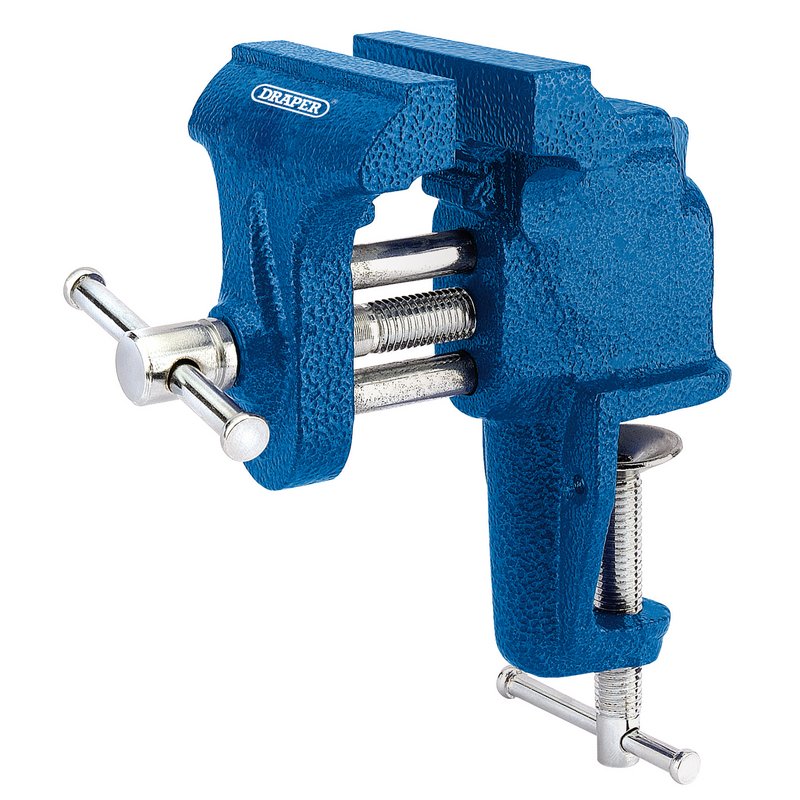
Mounting decides where the vice can be used. A bolt-down vice is permanent and rigid. A vacuum base holds to a smooth surface and releases, which suits a bench that is also used for other things. A portable hobby vice with an integrated clamp fixes to any edge. Questions go over WhatsApp on 07754288583. A hand vice at 36mm covers the opposite case again, holding small work in the hand rather than on a bench at all.

| ITEM NO | 01722 |
|---|---|
| Drill Vice Size | 2.5" (63.5mm) |
| Manufactured From | Cast Iron |


| Model No | S01081 |
|---|---|
| Brand | Siegen |
| Clamping Force kg/m² | 1600 |
| Jaw Opening | 100mm |
| Jaw Width | 100mm |

| ITEM NO | 01724 |
|---|---|
| Drill Vice Size | 5" (127mm) |
| Manufactured From | Cast Iron |

| Model No | CV50 |
|---|---|
| Brand | Sealey |
| Jaw Opening | 50mm |
| Jaw Width | 50mm |
| Nett Weight | 1.5kg |

| Model No | DS01 |
|---|---|
| Brand | Sealey |
| Nett Weight | 0.00kg |
| Collar Centre to Column | 120mm |
| Maximum Distance Collar to Base | 345mm |

| ITEM NO | 01726 |
|---|---|
| Drill Vice Size | 6" (152mm) |
| Manufactured From | Cast Iron |



| Model No | WV175I |
|---|---|
| Brand | Sealey |
| Dimensions (W x D x H) | 178 x 260 x 100mm |
| Jaw Height | 65mm |
| Jaw Opening | 150mm |

| Model No | S01083 |
|---|---|
| Brand | Siegen |
| Clamping Force kg/m² | 2400 |
| Jaw Opening | 150mm |
| Jaw Width | 150mm |

| Model No | CV100E |
|---|---|
| Brand | Sealey |
| Clamping Force kg/m² | 1300 |
| Jaw Opening | 100mm |
| Jaw Width | 100mm |


| Model No | CV125E |
|---|---|
| Brand | Sealey |
| Clamping Force kg/m² | 1500 |
| Jaw Opening | 125mm |
| Jaw Width | 125mm |

| Model No | CV100XT |
|---|---|
| Brand | Sealey |
| Clamping Force kg/m² | 1200 |
| Jaw Opening | 100mm |
| Jaw Width | 100mm |

| Size | 4" |
|---|---|
| Jaw Width | 102 mm |
| Jaw Opening | 132 mm |
| Throat Depth | 74 mm |
| Product Dimensions (L x W x H) | 350 x 180 x 170 mm |

| Model No | QAVE100 |
|---|---|
| Brand | Sealey |
| Clamping Force kg/m² | 2000 |
| Jaw Opening | 100mm |
| Jaw Width | 100mm |

| Model No | DV3D |
|---|---|
| Brand | Sealey |
| Jaw Opening | 90mm |
| Jaw Width | 100mm |
| Nett Weight | 4.78kg |


| Size | 6 |
|---|---|
| Jaw Width | 153mm |
| Jaw Opening | 206mm |
| Throat Depth | 95mm |

| Model No | CV150E |
|---|---|
| Brand | Sealey |
| Clamping Force kg/m² | 1900 |
| Jaw Opening | 150mm |
| Jaw Width | 150mm |


| Model No | CV125XT |
|---|---|
| Brand | Sealey |
| Clamping Force kg/m² | 1500 |
| Jaw Opening | 125mm |
| Jaw Width | 125mm |


| Model No | CV4 |
|---|---|
| Brand | Sealey |
| Jaw Opening | 90mm |
| Jaw Width | 102mm |
| Nett Weight | 12.5kg |

| Model No | CV200E |
|---|---|
| Brand | Sealey |
| Clamping Force kg/m² | 2400 |
| Jaw Opening | 200mm |
| Jaw Width | 200mm |


| Model No | 120DV |
|---|---|
| Brand | Sealey |
| Jaw Opening | 120/130mm |
| Jaw Width | 132mm |
| Nett Weight | 5.06kg |
By sharing your email, you agree to our privacy policy & terms of service


 Cart
Cart


 POPULAR CATEGORY


