


 Cart
Cart


 POPULAR CATEGORY


 ADD TO CART

.jpg?v=1791969583)


| SERVICE | DELIVERY PRICE | DELIVERY TIME |
|---|---|---|
| Standard Delivery | FREE | 7 to 10 working days |
| SERVICE | DELIVERY PRICE | DELIVERY TIME |
|---|---|---|
| Standard Delivery | FREE | 7 to 10 working days |
| SERVICE | DELIVERY PRICE | DELIVERY TIME |
|---|---|---|
| Standard Delivery | FREE | 2 to 4 working days |
| Next Day | £15.54 |
| SERVICE | DELIVERY PRICE | DELIVERY TIME |
|---|---|---|
| Standard Delivery | FREE | 5 to 7 working days |
| SERVICE | DELIVERY PRICE | DELIVERY TIME |
|---|---|---|
| Standard Delivery | FREE | 7 to 10 working days |

Product Number: 25113
Consistent, repeatable spot welds for body repair and sheet metal work. Fitted with a weld timer for repeatable, consistent spot welds mild steel. It also features pulse mode for high-strength and advanced steels.
Water-cooled torch circuit.
Suitable for welding mild steel and stainless steel. suited to automotive, industrial environments.
Fan-assisted cooling manages operating temperature during sustained welding. Automatic thermal overload protection cuts output if the machine exceeds safe temperature. Bodyshop and fabrication operators comparing spot welders will find the 25113 rated for its specified sheet thickness. Spot welding is the standard joining method for automotive body panels — faster and less distortion than MIG for sheet-to-sheet joints. Open-circuit voltage: 1.4v. Covered by SIP's standard warranty — register at time of purchase to activate. Replacement consumables including contact tips, nozzles, and electrodes for the 25113 are available at PartsForMachines.com. Refer to the operating manual for full setup instructions, safety information, and recommended maintenance intervals.
Additional Information:
The SIP 25KVA Pneumatic Column Spot Welder is operated through a foot pedal control and an electronic controller which features a 5-step welding sequence and an easy user interface.
SIP Industrial are machinery specialists, with the SIP catalogue of products including welding, metalwork, air compressors and tools, power, cleaning, charging, heating, automotive, and more.
About PartsForMachines:
PartsForMachines is a premier e-commerce platform, founded in 2019 in Warwickshire, UK, specializing in aftermarket parts and services for construction, agriculture, and industrial machinery. We offer an extensive catalog of over 500,000 products. Standard delivery: 1–3 working days within UK mainland. We are proud to be an authorised distributor, giving customers extra confidence when purchasing genuine products from us. In addition, we provide a 30-day return policy for eligible items.
| Input Supply | 400v (50A) 1PH |
|---|---|
| Max. Welding Power | 50KVA |
| Duty Cycle @ 50% | 25KVA |
| Welding Capacity | Mild Steel 5+5mm (flat) / 20+20mm (bar) |
| Stainless Steel | 3+3mm (flat) / 12+12mm (bar) |
| No Load Voltage | 1.4v |
| Short Circuit Current | 13.8KA |
| Max. Electrode Force | 204kgF @ 340mm 140kgF @ 450mm |
| Distance Between Arms | 200mm (standard) 320mm (optional) |
| Arms Length | 340 to 480mm (standard) 200 to 1000mm (optional) |
| Electrode Throat Size | 100mm |
| Electrode Holder â | 25mm |
| Electrode Size â | 20mm |
| Arms â | 45mm |
| Noise Level | < 70dB |
| Air Pressure | 70psi (4.8bar) |
| Water Flow | 4litres/min |
| Gross Weight | 178kg Packaged |
| Dimensions | 1450(H) x 520(W) x 1070mm(D) |
| Warranty | 2 Year |
| Engine Parts | Product Number | Product Name | Recommended Units | Product Price | |
|---|---|---|---|---|---|
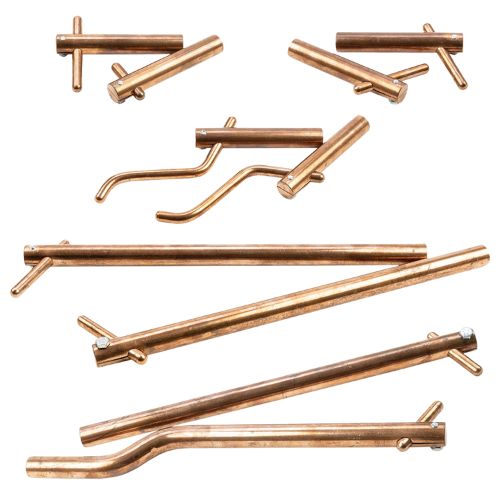
|
25425 | SIP 25425 Spot Welder 5pc Bodywork Kit (ø 20mm) | 1 Unit |
£541.65
£531.03
|
Add |
|
|
25424 | SIP 25424 Spot Welder 5pc Bodywork Kit (ø 16mm) | 1 Unit |
£441.23
£432.58
|
Add |

Pro Tips for Buying Welding Machines: Types, Uses, and Choosing the Perfect Fit Introduction:Welding, the art of joining metals through heat and precision, has evolved significantly with the advent of adv...
 Standard Delivery: UK Mainland Free
 Next Day Delivery Available
 Delivery Estimate: 2 to 4 working days
 Save Extra With 1 Offer
 Compare With Similar Items
Compare with Similar products
|

SIP 25288 HELVi Professional Spotweld 22E, 230v, Single Phase
£909.72
£891.88
2% OFF
Free delivery in Channel Island
|

SIP 25287 HELVi Professional Spotweld 21, 230v, Single Phase
£787.63
£772.19
2% OFF
Free delivery in Channel Island
|
|||
| Technical Specification | |||||
|---|---|---|---|---|---|
| PRODUCT NUMBER | 25288 | 25287 | 6030005 | 6030010 | SR123 |
| Warranty | 24 | 24 | |||
| Dimensions | 440x110x185mm | 440x110x185mm | |||
| Duty Cycle | 0.015 | ||||
| Length (mm) | 100 | 100 | |||
| Voltage (V) | 230 | 230 | 230 | 230 | 230 |
| Weight (kg) | 120 | 120 | 68 | 32 | 11 |
A. The 25113 is rated for Mild Steel 5+5mm (flat) / 20+20mm (bar). It is designed for automotive body panel repairs, general sheet metal fabrication, and light industrial production.
A. Yes. The 25113 requires a 3-phase 400V supply and must be hardwired by a qualified electrician. It is designed for professional workshop and industrial environments where 3-phase power is available.
A. The 25113 has a duty cycle of 25KVA @ 50%. Duty cycle is measured over a 10-minute period — a 60% duty cycle means 6 minutes of continuous welding followed by a 4-minute cool-down. Operating at lower amperages increases available run time.
A. The 25113 accepts electrodes of Ø 20mm in diameter. Compatible rod types include rutile and basic electrodes for mild steel, and specialist stainless and cast iron rods where relevant.
A. The 25113 is primarily designed for workshop use. Check the specification for weight and portability details.
A. The 25113 welds mild steel and stainless steel. Use the appropriate electrode type for each base metal.
A. Yes. The 25113 is fitted with automatic thermal overload protection that cuts output if the machine exceeds safe operating temperature. It will restart automatically once it has cooled. Operating within the rated duty cycle minimises the frequency of thermal interruptions.
A. Spot welding galvanised steel is possible but produces zinc fumes — adequate ventilation or fume extraction is essential. Zinc coatings also accelerate electrode wear, so check electrode condition regularly when welding zinc-coated materials.
A. Yes, but with precautions. Zinc coating produces fumes during spot welding — adequate ventilation or fume extraction is essential. Zinc also accelerates electrode tip wear, so inspect tips more frequently when welding galvanised material. Test on scrap of the same gauge first to confirm the weld schedule.
By sharing your email, you agree to our privacy policy & terms of service

 Question about this product? Click here

.jpg)


