


 Filters


A quarter turn is the enclosure trade's standard fastener, a quarter of a rotation between locked and open, and the 238 latches and locks on this shelf are picked on three choices: the insert that drives the lock, the grip height it clamps, and the body finish for the duty.
The insert is the security decision. Double bit forms in 3, 4 and 5 millimetre sizes, square drives in 7 and 8 millimetre, the 7 millimetre triangle, slotted and coin slot heads that open with what is to hand, and full key locking forms up to the key retaining versions, whose randomly generated key codes leave the key held captive in the lock until it is closed and locked again: the same body line, the 1401 and 1420 families among them, carries the whole spread, so security is chosen without changing the cut-out.
The grip height is the fit itself: 18 millimetres across the standard forms, the measure of frame the cam clamps down on when it turns, and the non locking handle versions serve the doors that need closing rather than securing. Stainless steel bodies, 316 grade in the marine forms, carry the outdoor and washdown duty right through the range, with bright chrome on the handled versions for indoor cabinets.
A worn or seized quarter turn is identified by its insert and body: the insert shape and size, the grip height and the cut-out dimensions, photographed together over WhatsApp on 07754288583, come back with the lock named and the finish matched, and the cams that do the actual clamping behind the panel sit one shelf over with the cam locks, swapped by length and bend height.

| Manufacturer | Metrol |
|---|---|
| Lock Types | Key Locking 333 (Keys supplied) |
| Colour/Finish | Black |
| Material | Die Cast Zinc Alloy, Nylon 6 GF30 |
| Panel Cutout | 20.1x20.1mm |

| Manufacturer | Metrol |
|---|---|
| Lock Types | Triangle 8mm |
| Colour/Finish | Black Powder Coated |
| Material | Die Cast Zinc Alloy |
| Panel Cutout | 20.1x20.1mm |

| Manufacturer | Metrol |
|---|---|
| Lock Types | Double Bit 3mm |
| Colour/Finish | Bright Chrome |
| Material | Die Cast Zinc Alloy |
| Panel Cutout | 20.1x20.1mm |
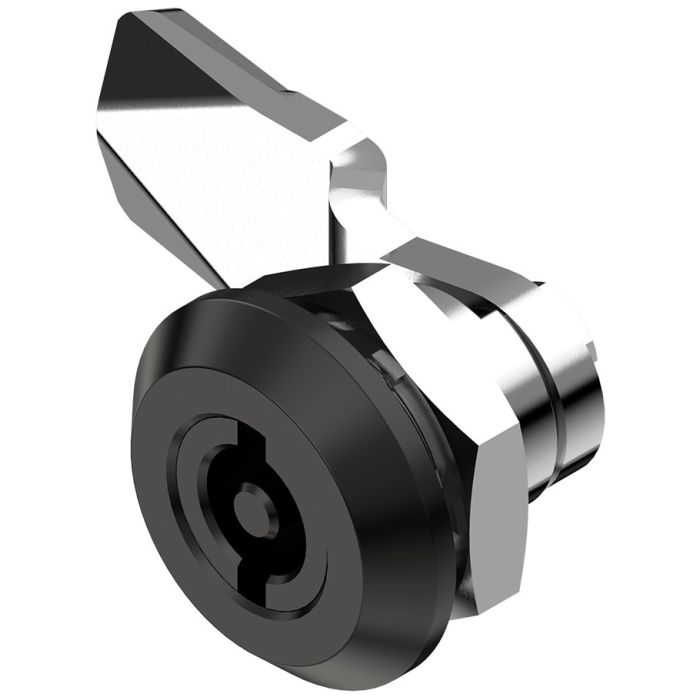
| Manufacturer | Metrol |
|---|---|
| Lock Types | Double Bit 5mm |
| Colour/Finish | Bright Chrome |
| Material | Die Cast Zinc Alloy |
| Panel Cutout | 20.1x20.1mm |

| Manufacturer | Metrol |
|---|---|
| Lock Types | Double Bit 5mm |
| Colour/Finish | Black Powder Coated |
| Material | Die Cast Zinc Alloy |
| Panel Cutout | 20.1x20.1mm |

| Manufacturer | Metrol |
|---|---|
| Lock Types | Square 8mm |
| Colour/Finish | Bright Chrome |
| Material | Die Cast Zinc Alloy |
| Panel Cutout | 20.1x20.1mm |

| Manufacturer | Metrol |
|---|---|
| Lock Types | 2x4 Coin Proof Slot |
| Colour/Finish | Bright Chrome |
| Material | Die Cast Zinc Alloy |
| Panel Cutout | 20.1x20.1mm |

| Manufacturer | Metrol |
|---|---|
| Lock Types | Square 7mm |
| Colour/Finish | Bright Chrome |
| Material | Die Cast Zinc Alloy |
| Panel Cutout | 20.1x20.1mm |

| Manufacturer | Metrol |
|---|---|
| Lock Types | Square 8mm |
| Colour/Finish | Black Powder Coated |
| Material | Die Cast Zinc Alloy |
| Panel Cutout | 20.1x20.1mm |

| Manufacturer | Metrol |
|---|---|
| Lock Types | 2x4 Coin Proof Slot |
| Colour/Finish | Black Powder Coated |
| Material | Die Cast Zinc Alloy |
| Panel Cutout | 20.1x20.1mm |

| Manufacturer | Metrol |
|---|---|
| Lock Types | Triangle 8mm |
| Colour/Finish | Bright Chrome |
| Material | Die Cast Zinc Alloy |
| Panel Cutout | 20.1x20.1mm |

| Manufacturer | Metrol |
|---|---|
| Lock Types | Triangle 7mm |
| Colour/Finish | Bright Chrome |
| Material | Die Cast Zinc Alloy |
| Panel Cutout | 20.1x20.1mm |

| Manufacturer | Metrol |
|---|---|
| Lock Types | Triangle 7mm |
| Colour/Finish | Black Powder Coated |
| Material | Die Cast Zinc Alloy |
| Panel Cutout | 20.1x20.1mm |

| Manufacturer | Metrol |
|---|---|
| Lock Types | 2x4 Slot |
| Colour/Finish | Bright Chrome |
| Material | Die Cast Zinc Alloy |
| Panel Cutout | 20.1x20.1mm |

| Manufacturer | Metrol |
|---|---|
| Lock Types | Double Bit 3mm |
| Colour/Finish | Black Powder Coated |
| Material | Die Cast Zinc Alloy |
| Panel Cutout | 20.1x20.1mm |

| Manufacturer | Metrol |
|---|---|
| Lock Types | Square 7mm |
| Colour/Finish | Black Powder Coated |
| Material | Die Cast Zinc Alloy |
| Panel Cutout | 20.1x20.1mm |

| Manufacturer | Metrol |
|---|---|
| Lock Types | Key Locking 333 (Keys supplied) |
| Colour/Finish | Black Textured Powder Coated |
| Material | Die Cast Zinc Alloy |
| Panel Cutout | 16.5x19mm |

| Manufacturer | Metrol |
|---|---|
| Lock Types | Key Locking 333 (Keys supplied) |
| Colour/Finish | Bright Chrome |
| Material | Die Cast Zinc Alloy |
| Panel Cutout | 16.5x19mm |

| Manufacturer | Metrol |
|---|---|
| Lock Types | Key Locking 333 (Keys supplied) |
| Colour/Finish | Bright Chrome |
| Material | Die Cast Zinc Alloy, Nylon 6 GF30 |
| Panel Cutout | 20.1x20.1mm |

| Manufacturer | Metrol |
|---|---|
| Lock Types | Double Bit 5mm |
| Colour/Finish | Black Textured Powder Coated |
| Material | Die Cast Zinc Alloy, Nylon 6 GF30 |
| Panel Cutout | 20.1x20.1mm |

| Manufacturer | Metrol |
|---|---|
| Colour/Finish | Black Powder Coated |
| Material | Die Cast Zinc Alloy, Nylon 6 GF30 Handle |
| Panel Cutout | 20.1x20.1mm |
| Panel Thickness | 1 - 8mm |

| Manufacturer | Metrol |
|---|---|
| Lock Types | Double Bit 5mm |
| Colour/Finish | Bright Chrome |
| Material | Die Cast Zinc Alloy, Nylon 6 GF30 |
| Panel Cutout | 20.1x20.1mm |

| Manufacturer | Metrol |
|---|---|
| Lock Types | Square 7mm |
| Colour/Finish | Black Textured Powder Coated |
| Material | Die Cast Zinc Alloy, Nylon 6 GF30 |
| Panel Cutout | 20.1x20.1mm |

| Manufacturer | Metrol |
|---|---|
| Lock Types | Triangle 7mm |
| Colour/Finish | Black Textured Powder Coated |
| Material | Die Cast Zinc Alloy, Nylon 6 GF30 |
| Panel Cutout | 20.1x20.1mm |

| Manufacturer | Metrol |
|---|---|
| Lock Types | 2x4 Coin Proof Slot |
| Colour/Finish | Black Textured Powder Coated |
| Material | Die Cast Zinc Alloy, Nylon 6 GF30 |
| Panel Cutout | 20.1x20.1mm |

| Manufacturer | Metrol |
|---|---|
| Lock Types | Square 7mm |
| Colour/Finish | Black Textured Powder Coated |
| Material | Die Cast Zinc Alloy, Nylon 6 GF30 |
| Panel Cutout | 20.1x20.1mm |

| Manufacturer | Metrol |
|---|---|
| Lock Types | 2x4 Slot |
| Colour/Finish | Black Textured Powder Coated |
| Material | Die Cast Zinc Alloy, Nylon 6 GF30 |
| Panel Cutout | 20.1x20.1mm |

| Manufacturer | Metrol |
|---|---|
| Lock Types | Triangle 8mm |
| Colour/Finish | Black Textured Powder Coated |
| Material | Die Cast Zinc Alloy, Nylon 6 GF30 |
| Panel Cutout | 20.1x20.1mm |

| Manufacturer | Metrol |
|---|---|
| Lock Types | Female Hexagon 10mm |
| Colour/Finish | Black Textured Powder Coated |
| Material | Die Cast Zinc Alloy, Nylon 6 GF30 |
| Panel Cutout | 20.1x20.1mm |

| Manufacturer | Metrol |
|---|---|
| Lock Types | Double Bit 3mm |
| Colour/Finish | Black Textured Powder Coated |
| Material | Die Cast Zinc Alloy |
| Panel Cutout | 20.1x20.1mm |
By sharing your email, you agree to our privacy policy & terms of service


 Cart


 POPULAR CATEGORY


