


 Filters


A gas strut is picked on four numbers, force, extended length, stroke and end fittings, and the variable force ranges carry the first number's answer built in: the force is adjustable, released down from maximum to the lid or hatch it holds, so one strut body covers what would otherwise take a shelf of fixed newton ratings, with strokes running from 100 millimetres through the working middle to 700, and extended lengths reaching 1511 millimetres on the longest forms.
The end fittings are a system of their own, threaded to the strut in 6, 8, 10 and 14 millimetre sizes and swapped freely within a thread: ball joints for angular freedom, eye ends and shoulderless eyes for pinned mounting, clevis forks with their matching fork clips, and rose eyes for the joints that must articulate hard, with stainless steel 316 versions across all the families for washdown, marine and weather-exposed duty.
The mounting and safety hardware finishes an installation properly: brackets in right angle, circular, triangular and U shaped forms picked by their fixing centres, with internal and external angle versions in the deeper series and stainless forms alongside, metal safety locking tubes in 8, 10 and 14 millimetre bores and stepped lengths that clamp an extended strut against creep for safe working under a raised load, and matching protection tubes in the same sizes that shield the rod from knocks and grit.
The four numbers typed into search find the strut, the thread finds its ends, and a failing strut, one that sinks, weeps oil or no longer holds, is measured extended, eye to eye, and photographed over WhatsApp on 07754288583, coming back with the replacement and its fittings named.

| Stud/Ball Diameter | 6mm |
|---|---|
| Stud Type | Pin Stud |
| Material | Steel |

| Stud/Ball Diameter | 8mm |
|---|---|
| Stud Type | Pin Stud |
| Material | Steel |

| Stud/Ball Diameter | 10mm |
|---|---|
| Stud Type | Pin Stud |
| Material | Steel |
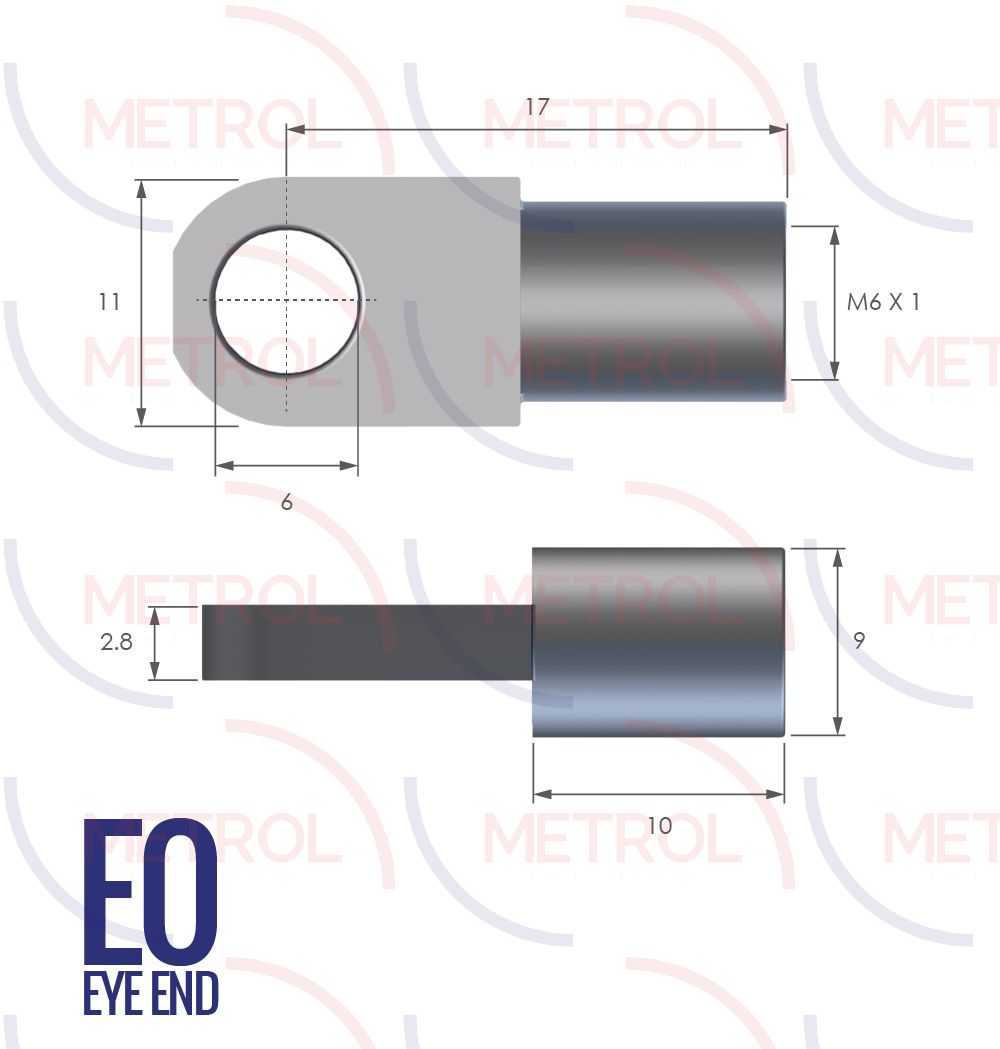
| Material | Steel |
|---|---|
| Female Thread (A) | M6 |
| Fitting Length (B) | 17mm |
| Outer Radius (C) | 13mm |
| Eye Hole Diameter (D) | 6mm |

| Material | Steel |
|---|---|
| Female Thread | M6 |
| Length | 24mm |
| Eye Diameter | 6mm |

| Material | Steel |
|---|---|
| Female Thread (A) | M6 |
| Fitting Length (B) | 20mm |
| Outer Radius (C) | 15mm |
| Eye Hole Diameter (D) | 8.5mm |

| Material | Steel |
|---|---|
| Female Thread (A) | M6 |
| Fitting Length (B) | 18mm |
| Outer Radius (C) | 15mm |
| Eye Hole Diameter (D) | 8.5mm |

| Material | Steel |
|---|---|
| Female Thread (A) | M6 |
| Fitting Length (B) | 30mm |
| Outer Radius (C) | 15mm |
| Eye Hole Diameter (D) | 8.5mm |

| Material | Steel |
|---|---|
| Female Thread (A) | M6 |
| Fitting Length (B) | 25mm |
| Outer Radius (C) | 15mm |
| Eye Hole Diameter (D) | 8.5mm |

| Material | Steel |
|---|---|
| Female Thread (A) | M6 |
| Fitting Length (B) | 22mm |
| Outer Radius (C) | 15mm |
| Eye Hole Diameter (D) | 8.5mm |

| Material | Steel |
|---|---|
| Female Thread | M6 |
| Length | 16mm, 20mm |
| Eye Diameter | 8.25mm |
| Eye Thickness | 8mm |
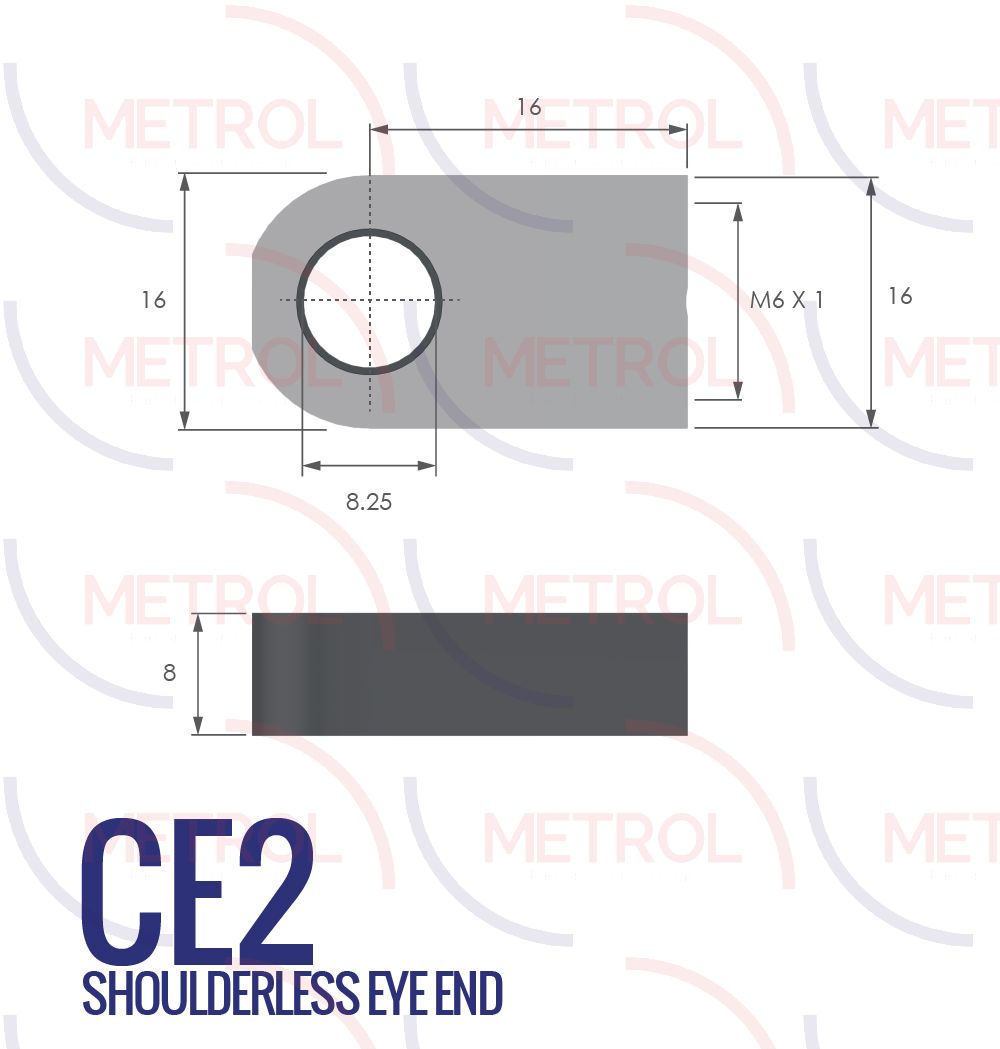
| Material | Steel |
|---|---|
| Female Thread | M6 |
| Length | 16mm, 20mm |
| Eye Diameter | 8.25mm |
| Eye Thickness | 8mm |

| Material | Steel |
|---|---|
| Female Thread | M8 |
| Length | 32mm |
| Eye Diameter | 8mm |

| Material | Steel |
|---|---|
| Female Thread (A) | M8 |
| Fitting Length (B) | 30mm |
| Outer Radius (C) | 18mm |
| Eye Hole Diameter (D) | 8mm |

| Material | Steel |
|---|---|
| Female Thread (A) | M8 |
| Fitting Length (B) | 20mm |
| Outer Radius (C) | 14mm |
| Eye Hole Diameter (D) | 8mm |

| Material | Steel |
|---|---|
| Female Thread (A) | M8 |
| Fitting Length (B) | 25mm |
| Outer Radius (C) | 18mm |
| Eye Hole Diameter (D) | 8.5mm |

| Material | Steel |
|---|---|
| Female Thread (A) | M8 |
| Fitting Length (B) | 22mm |
| Outer Radius (C) | 14mm |
| Eye Hole Diameter (D) | 8mm |

| Material | Steel |
|---|---|
| Female Thread (A) | M8 |
| Fitting Length (B) | 18mm |
| Outer Radius (C) | 18mm |
| Eye Hole Diameter (D) | 8mm |

| Material | Steel |
|---|---|
| Female Thread | M6 |
| Length | 22mm |
| Ball Diameter | 8mm |
| Stud Thread | M5 |

| Material | Steel |
|---|---|
| Female Thread | M6 |
| Length | 25mm |
| Ball Diameter | 10mm |
| Stud Thread | M6 |
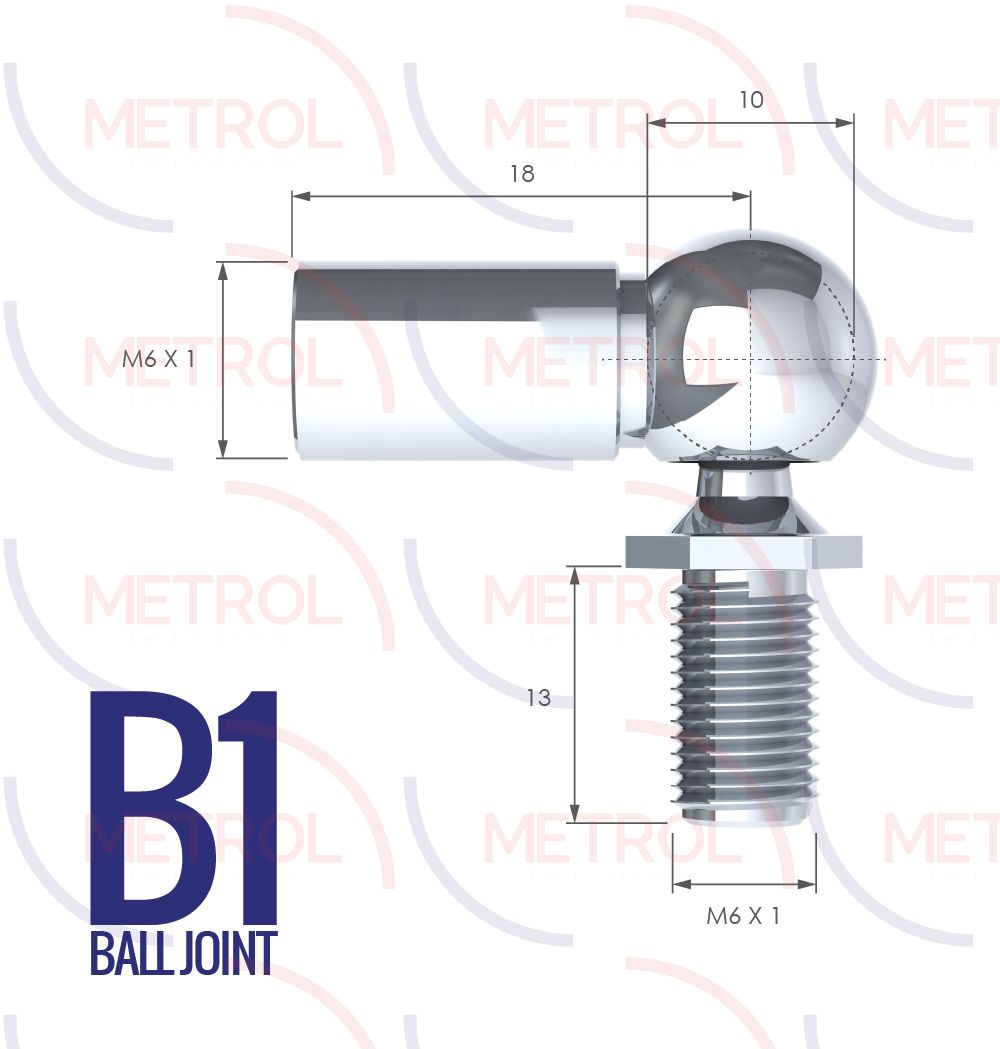
| Material | Steel |
|---|---|
| Female Thread | M6 |
| Length | 20mm |
| Ball Diameter | 10mm |
| Stud Thread | M6 |

| Material | Steel |
|---|---|
| Female Thread | M6 |
| Length | 18mm |
| Ball Diameter | 10mm |
| Stud Thread | M6 |

| Material | Steel |
|---|---|
| Female Thread | M6 |
| Length | 30mm |
| Ball Diameter | 8mm, 10mm |
| Stud Thread | M6 |

| Material | Steel |
|---|---|
| Female Thread | M6 |
| Length | 25mm |
| Ball Diameter | 10mm |
| Stud Thread | M8 |

| Material | Steel |
|---|---|
| Female Thread | M6 |
| Length | 20mm |
| Ball Diameter | 10mm |
| Stud Thread | M8 |

| Material | Steel |
|---|---|
| Female Thread | M6 |
| Length | 30mm |
| Ball Diameter | 10mm |
| Stud Thread | M8 |
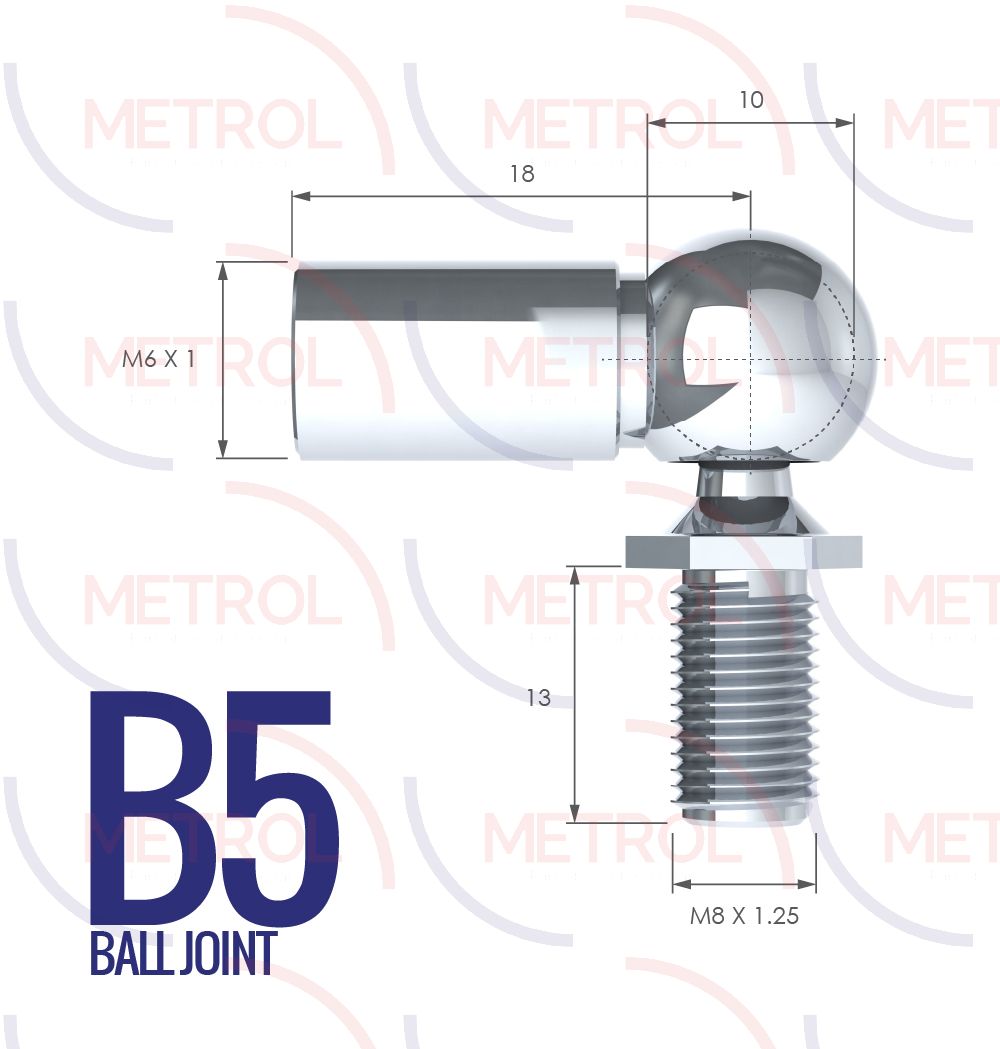
| Material | Steel |
|---|---|
| Female Thread | M6 |
| Length | 18mm |
| Ball Diameter | 10mm |
| Stud Thread | M8 |

| Material | Steel |
|---|---|
| Female Thread | M10 |
| Length | 40mm |
| Eye Diameter | 10mm |

| Material | Steel |
|---|---|
| Female Thread | M8 |
| Length | 20mm |
| Ball Diameter | 13mm |
| Stud Thread | M8 |

| Material | Steel |
|---|---|
| Female Thread | M8 |
| Length | 25mm |
| Ball Diameter | 10mm |
| Stud Thread | M8 |
By sharing your email, you agree to our privacy policy & terms of service


 Cart
Cart


 POPULAR CATEGORY


