



 Cart


 POPULAR CATEGORY


Worn Anti-Vibration Mounts? How to Size and Choose Captive Mounts
Your generator, compressor or engine has started to rumble, or its rubber mounts have cracked or hardened. Check the old mounts for wear, size each new one for the weight at its corner, choose the hardness for that load, and fit captive mounts if the machine travels.
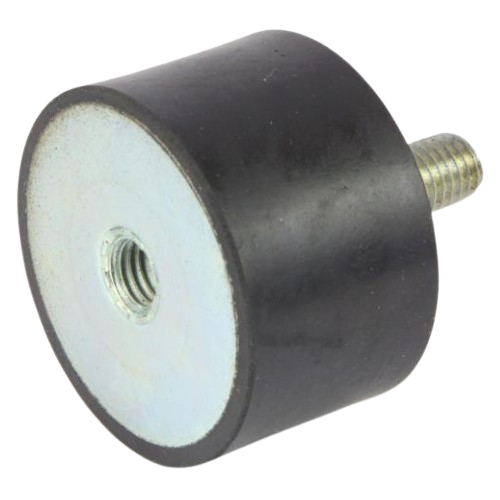
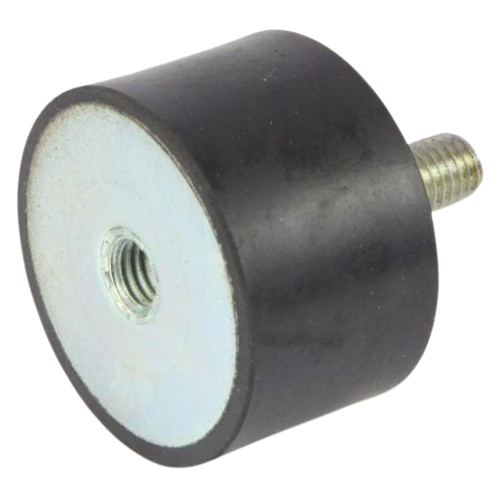
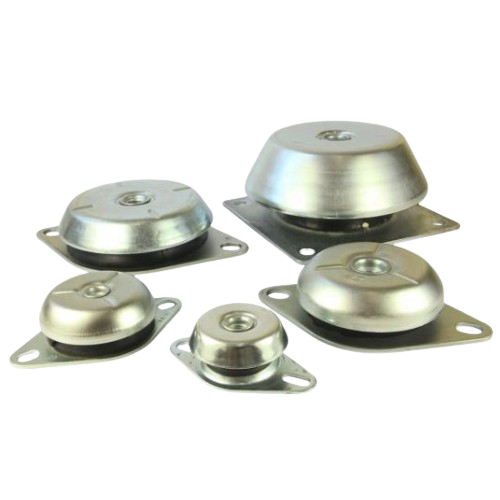
The captive and failsafe mounts range at PartsForMachines has more than 170 AV Industrial Products mounts, from captive transit and square flanged to armoured plate and rail mounts.
How Can I Tell if Anti-Vibration Mounts Are Worn?
Cracks, splits or rubber pulling away from its metal plates mean a mount is due for replacement. So does rubber that has turned hard and brittle, or soft and swollen with oil. A unit that now sits noticeably lower can also point to tired, settled mounts.
More vibration or hum through the frame than before is another warning sign. Watch with the machine running: if the unit visibly rocks or shifts on a mount, that mount is suspect. Replace worn mounts promptly, following any interval in the maker’s service schedule. It usually pays to change the whole set, so the load stays evenly shared.
How Much Weight Should Each Mount Carry?
Each mount needs a rating above the weight at its own position, not the total divided by four, because many machines are heavier at one end. With a 200kg marine engine and gearbox carrying 75% on the front pair, each front mount takes about 75kg and each rear mount about 25kg.
A 100kg grade such as the CTM633510-3 captive transit mount gives the front pair headroom, and the 40kg CTM633510-1 on the same footprint suits the rear. If a mount would run near the top of its rating, step up a grade. Don’t oversize either: a mount carrying far less than its rating barely deflects, so it isolates poorly.
Which Hardness Should I Choose: 45, 60 or 70 Shore?
Choose the grade that gives the right deflection under each mount’s load. Shore is a scale of rubber hardness: a softer grade moves more and isolates better under a light load, while a harder one takes more weight and moves less. On a Ø60mm armoured plate mount, for example, the 45 Shore grade carries up to 224kg, the 60 Shore ATP60271310-60 armoured plate mount up to 387kg and the 70 Shore grade up to 622kg.
The more the mounts squash under the load, the lower the natural frequency. Isolation only works when the running speed is well above that frequency; close to it, mounts can amplify vibration. So mounts too hard for the load isolate less.
What Stops the Machine Coming Off if the Rubber Fails?
A captive, or failsafe, mount does: it is a rubber mount with restraint built in. On captive transit and square flanged mounts, an integral overload stop limits movement in transit, and under shock loads the captive construction is designed to fail safe.
That matters on anything that travels, because mobile plant and boat engines see acceleration and shock forces on top of their static weight. Captive mounts go up to 5,000kg per mount; the SFCM220-60 square flanged captive mount, for example, takes 4,000kg on an M24 thread.
What Should I Check Before I Order?
- The weight at each mount position, allowing for an uneven split.
- A load rating with headroom, without oversizing.
- The Shore grade, for similar deflection at every corner.
- The old mount’s number, or its thread, diameter, height and fixing centres.
- The load direction, and any oil, fuel or heat nearby.
Browse the captive and failsafe mounts range, or contact the PartsForMachines team by WhatsApp, telephone or email with the machine, its weight and the measurements of your old mount.
Product options, delivery options and returns terms are shown on each product page. A 30-day return policy applies to eligible items.
Frequently Asked Questions
Why did my mounts collapse after only a couple of years?
Overload, oil and heat can all shorten a mount’s life. Oil and fuel soften many rubbers, and heat ages rubber faster. Fix leaks above the mounts, step up a grade if a mount runs near its limit, and ask about oil-resistant or high-temperature rubber.
Should all four mounts be the same hardness?
Not necessarily. Aim for similar deflection at every corner, so the heavier end can take a harder or higher-rated grade. Grades on one body often share footprint and fixings: the CTM633510-1 to -6 run from 40kg to 225kg without re-drilling.
Will harder mounts stop a generator sagging?
They can help. A firmer grade carries more weight with less movement, so a heavy unit holds its height better. Check the old mounts aren’t simply worn, and go only as hard as the load needs.
Can I replace worn mounts with washers or solid packing?
No. A rigid fixing can give vibration a direct path into the frame, which is exactly what the mounts are there to stop. Fit a rated mount sized for the load at each position instead.
Would springs isolate a generator better than rubber?
Not necessarily. Coil springs give very soft mounting but little damping, so a sprung unit can build up large movements near resonance. Rubber has some damping built in, and engineered spring mounts add limit stops or snubbers.
Will exhaust hangers, a rubber mat or old rubber studs do the job?
Rarely as well as a rated mount. They were made for another job, so there is no rating to check your load against and no overload stop to hold the unit if it jumps or tips. A loose mat holds nothing in place.
Can a mount hang in tension or take propeller thrust?
None of our captive, armoured plate or rail mounts carries a tension or thrust rating: they work in shear, compression or both. If equipment will hang from its mounts or must resist thrust, send our team the weight, layout and load direction first.
How do I bolt mounts down without defeating the isolation?
Don’t let a bolt or packing clamp metal to metal past the rubber; where a fixing passes through, use rubber washers. Pipes, hoses and cables to the machine need flexible connections too, or they can short-circuit the mounts.
Can I fit a non-original mount in place of an expensive genuine one?
Yes, if it matches. Compare thread, diameter, height and fixing centres with the technical specification: the CTM833512-60 captive transit mount, for example, has an 83mm flange and fixings at 108-110mm centres. Then match load and hardness, and send our team any measurements that differ.
What should I do before changing engine mounts on a mini digger?
Follow the workshop manual for anything to disconnect or drain, and support the engine securely before taking weight off its mounts. Change one mount at a time where you can, then fit the new set without clamping metal to metal.


