


 Filters


Cut type names the saw and each one leaves a different edge. A circular saw runs a line through sheet and board. A mitre saw crosscuts at a set angle with the stock held still. A reciprocating saw cuts roughly wherever the blade can reach. A bandsaw follows a curve. None of them substitutes for another.
Blade size then sets the depth. Circular saws run 85mm on the mini bodies up to 185mm at 1200W and 1300W, with 20V brushless machines alongside. Mitre saws run 185mm on the cordless sliding compound bodies up to 255mm on the double bevel sliding machine at 2000W, and the sliding action is what lets a wide board be crosscut. A mitre saw at 210mm and 1100W covers general crosscutting where the sliding action is not needed.
Reciprocating saws are sized on power rather than blade, at 710W and 1400W with orbital action on the larger body. Orbital action moves the blade in an oval rather than straight back and forth, which cuts faster in timber and rougher in metal. Cordless 10.8V and 20V bodies cover work away from a supply.
Bandsaws at 305mm and 340mm come with stands and cut curves and resaw stock, which the other saws cannot do. A 254mm planer thicknesser and a 505mm 3kW electric log saw sit on the same leaf for the jobs beyond sawing. Blades are matched to machine and material. Questions go over WhatsApp on 07754288583. Clarke hold the bandsaws and the planer thicknesser, with a mortiser seated on the same leaf.


| Battery | 10.8V Li-ion |
|---|---|
| Batteries per item | Sold separately |
| Charger type | Sold separately |
| Cutting capacity | 65mm (wood), 8mm (steel), 50mm (plastic pipe) |
| Stroke length | 14.5mm |

| No-load speed | 500-3,000spm |
|---|---|
| Stroke length | 20mm |
| Voltage | 230V |
| Weight | 2.10kg |
| Max metal cutting depth | 8mm |

| Max Metal Cutting Capacity | 6mm |
|---|---|
| Max Wood Cutting Capacity | 55mm |
| No Load Speed | 0-3000rpm |
| Stroke Length | 18mm |
| Supplied In Case | No |

| Battery system | D20 20V Li-ion |
|---|---|
| Batteries per item | Sold separately |
| Charger type | Sold separately |
| Cutting capacities | 35mm (with branch holder), 60mm (without branch holder), metal 3mm |
| Stroke length | 13mm |


| Max Metal Cutting Capacity | 10mm |
|---|---|
| Max Wood Cutting Capacity | 80mm |
| No Load Speed | 0-3000rpm |
| Stroke Length | 19mm |
| Supplied In Case | No |

| Battery | 20V Storm Force® Li-ion |
|---|---|
| Batteries per Item | Sold separately |
| Bore | 20mm |
| Charger Type | Sold separately |
| Cutting Depth | 55mm at 90°, 41mm at 45° |
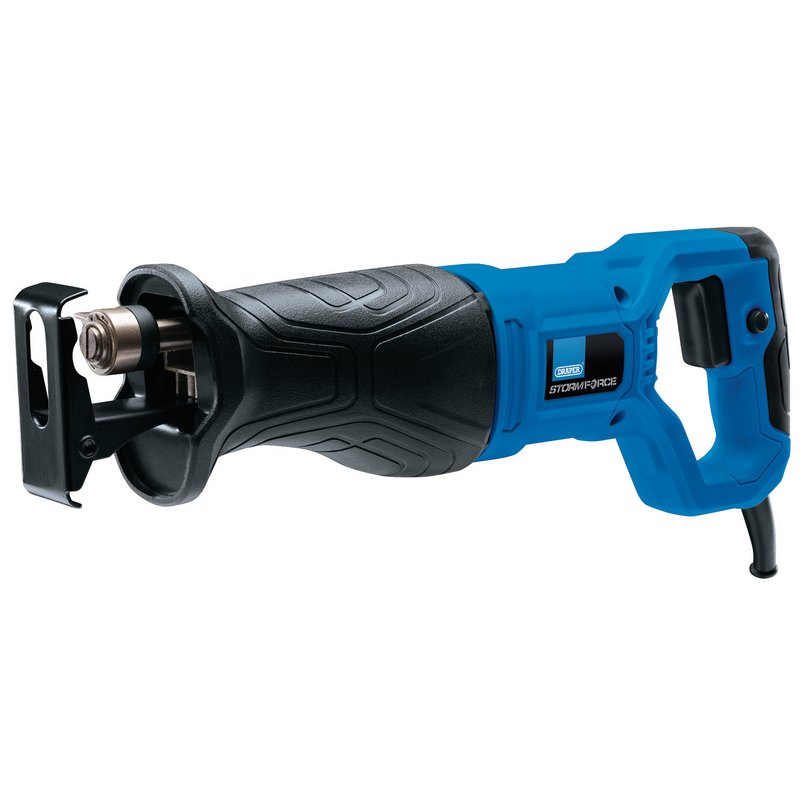
| No Load Speed | 2800rpm |
|---|---|
| Sawing Capacity (Metal) | 6mm |
| Sawing Capacity (Plastic) | 80mm |
| Sawing Capacity (Wood) | 115mm |
| Voltage | 230V |

| Blade Diameter | 185mm |
|---|---|
| Bore | 20mm |
| No Load Speed | 4800rpm |
| Supplied In Case | No |
| Voltage | 230V |

| Model No | SRS850 |
|---|---|
| Brand | Sealey |
| Consumable Parts | SBS3150 - Reciprocating Saw Blade Set 3pc 150mm, WRS3013*, WRS3018*, WRS3021* pack of 5 recipracting saw blades. |
| Motor Power | 900W |
| Nett Weight | 2.9kg |

| Voltage | 230V |
|---|---|
| Power | 600W |
| No-load speed | 500–3,000spm |
| Weight | 2.6kg |
| Max stroke length | 24mm |

| Battery | 20V Storm Force® Li-ion |
|---|---|
| Batteries per Item | Sold separately |
| Charger Type | Sold separately |
| Cutting Capacity (Aluminium) | 10mm |
| Cutting Capacity (Steel) | 6mm |

| No-load speed | 500-3,000spm |
|---|---|
| Stroke length | 20mm |
| Voltage | 230V |
| Weight | 2.25kg |
| Power | 750W |

| Max Metal Cutting Capacity | 10mm |
|---|---|
| Max Wood Cutting Capacity | 100mm |
| No Load Speed | 0-3000rpm |
| Stroke Length | 22mm |
| Supplied In Case | No |

| Model No | CP108VRSBO |
|---|---|
| Battery | 10.8V 2Ah - 4Ah Lithium-ion (not included) |
| Brand | Sealey |
| Max Cutting Depths | |
| Wood | 80mm |

| Model No | CP20VRS |
|---|---|
| Battery | 20V 2Ah - 6Ah Lithium-ion (not included) |
| Brand | Sealey |
| Cutting Specifications | |
| Wood | 115mm |

| Blade Diameter | 185mm |
|---|---|
| Bore | 16mm |
| No Load Speed | 4500rpm |
| Supplied In Case | No |
| Voltage | 230V |

| Blade Length | 550mm |
|---|---|
| Blade Width | 45mm |
| Gross Weight | 8.5kg |
| Max Cutting Height | 100mm |
| Max Cutting Width Clamped at 45° | 115mm |

| Bevel Cut (L) | 33 x 120mm |
|---|---|
| Bevel Cut (R) | N/A |
| Blade Diameter | 210mm(8.27”) |
| Bore | 30mm |
| Compound Cut (L) | 33 x 80mm |

| Model No | CP1208 |
|---|---|
| Battery | 12V 1.5Ah Lithium-ion (not included) |
| Brand | Sealey |
| Cutting Capacities | |
| Metal | 8mm |

| Model No | CP20VJS |
|---|---|
| Battery | 20V 2Ah - 6Ah Lithium-ion (not included) |
| Brand | Sealey |
| Wood | 80mm |
| Plastic | 12mm |
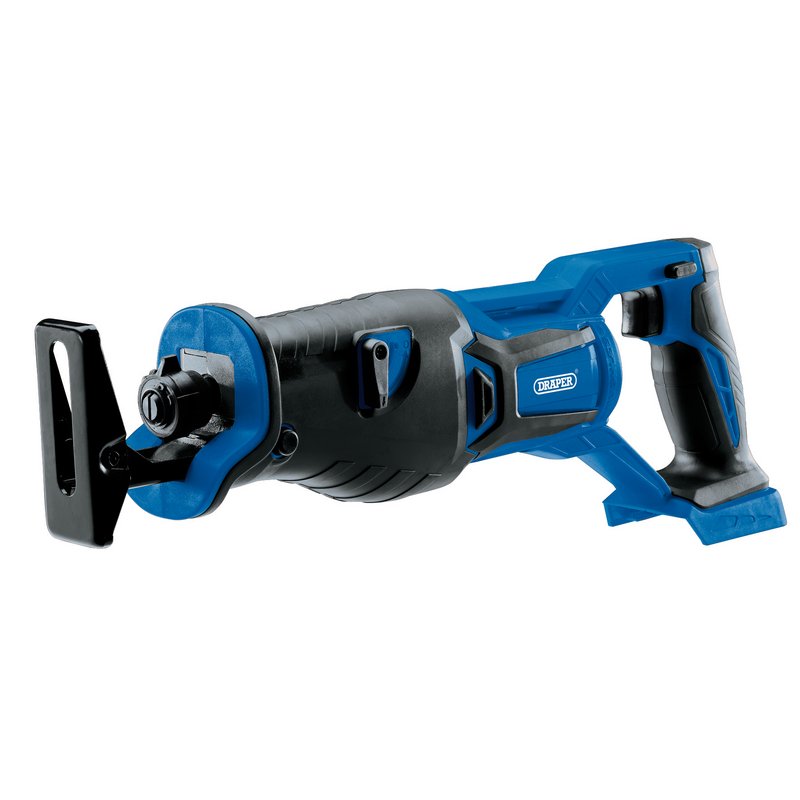
| Battery | D20 20V Li-ion |
|---|---|
| Batteries per Item | Sold separately |
| Charger Type | Sold separately |
| Cutting Capacity (Mild Steel) | 6mm |
| Cutting Capacity (Wood) | 115mm |
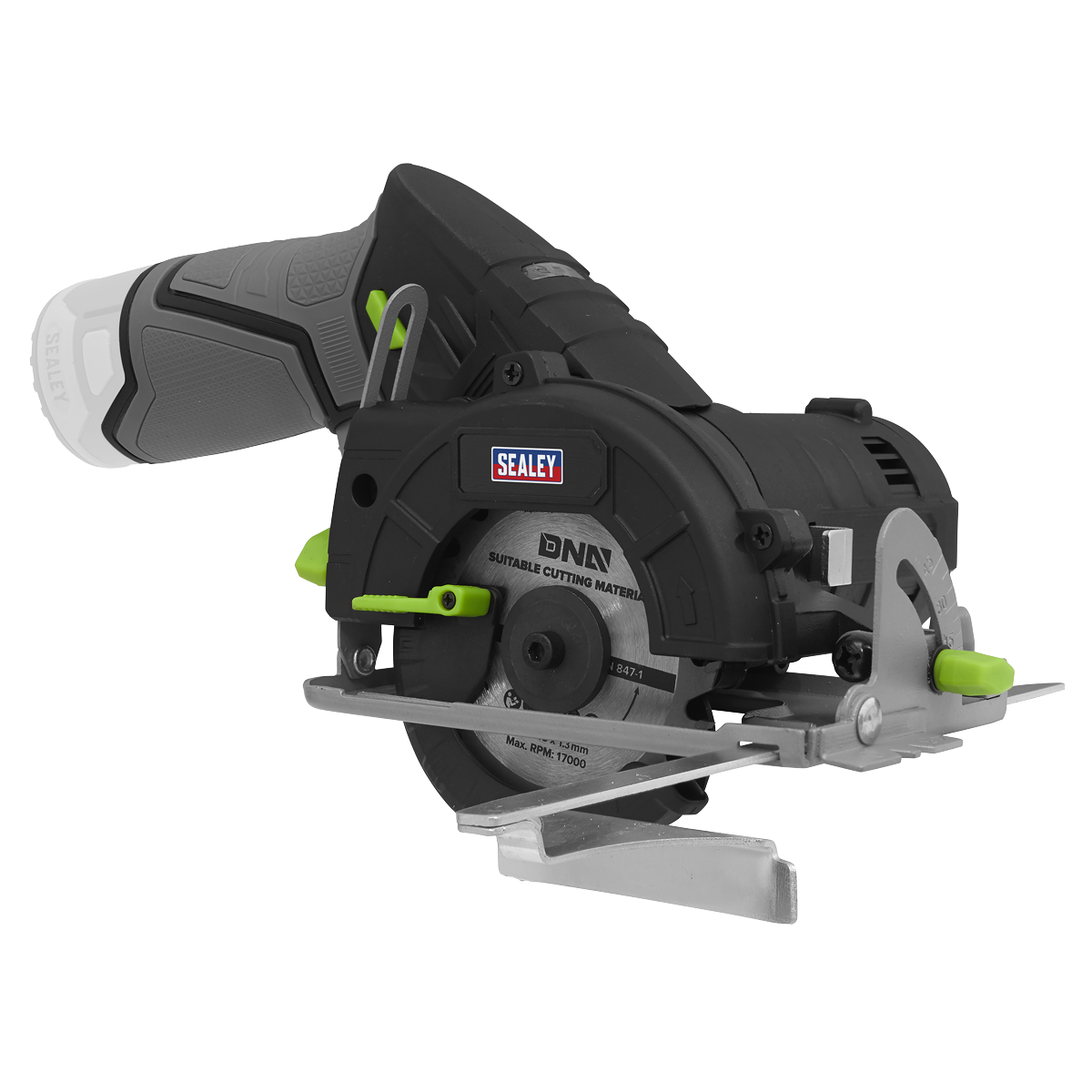
| Model No | CP108VCSBO |
|---|---|
| Battery | 10.8V 2Ah or 4Ah Lithium-ion (not included) |
| Blade Diameter | Ø85mm |
| Brand | Sealey |
| Cutting Depths |

| Model No | CP20VRSX |
|---|---|
| Battery | 20V 2Ah - 6Ah Lithium-ion (not included) |
| Brand | Premier |
| Cutting Specifications | |
| Wood | 120mm |

| Battery | D20 20V Li-ion |
|---|---|
| Batteries per Item | Sold separately |
| Bore | 20mm |
| Charger Type | Sold separately |
| Cutting Depth | 50mm at 90°, 35mm at 45° |

| Voltage | 18V |
|---|---|
| No load speed | 0-3,000rpm |
| Bevel angle | 0-45 degrees (left & right) |
| Stroke length | 25mm |
| Cutting capacity | 90mm (wood), 10mm (mild steel) and 20mm (aluminium) |

| Model No | CP108VRS |
|---|---|
| Battery | 10.8V 2Ah Li-ion (included) |
| Brand | Sealey |
| Consumable Parts | WRS3021/150 - Reciprocating Saw Blade 150mm 6tpi - Pack of 5, CP108VBP - 2Ah Battery, CP108VBP4 - 4Ah Battery |
| Noise Power/Pressure | 95.3/84.3 dB(A) |
By sharing your email, you agree to our privacy policy & terms of service





 Cart
Cart


 POPULAR CATEGORY


